Optimal Furniture Size Selection for Singapore HDB Living Rooms
Last month, I visited a friend's new 4-room HDB BTO in Punggol and watched her try to squeeze a 2.4-metre sofa through a corridor that, by HDB standards, measured just 1.2 metres wide. Two deliverymen, one neighbour's potted plant sacrificed to the cause, and forty sweaty minutes later, the sofa sat in the living room — but only after being tilted to a 45-degree angle and pushed through with centimetres to spare. The next afternoon, I drove over to a client's resale flat in Bedok to measure a different sofa that was arriving the following week. That visit, more than any catalogue page, reminded me how unforgiving Singapore corridors, lift cars, and compact living rooms can be — and how the wrong size in any one of those three places turns a furniture purchase into a logistics headache.
This guide walks through the actual numbers involved in fitting an outdoor patio-adjacent, light-luxury living room layout into a typical HDB or condo unit around Tampines, Punggol, and Bedok, where flats range from 65 sqm 2-room Flexi units to 110 sqm 5-room layouts. I will lean on what I have seen on site visits, what I have helped clients re-measure after a wrong delivery, and what MIDHILL's Foshan workshop — a 16-year-old solid-wood specialist exporting to 15+ countries with a 10-year structural warranty and lifetime refinishing — builds for apartments exactly like these.
Start with the lift, not the sofa: Singapore HDB access dimensions
The single biggest mistake I see Singapore buyers make is measuring the living room and ignoring the lift and corridor. An HDB passenger lift in a typical block in Tampines or Punggol has an internal car of roughly 1.1 m wide × 1.4 m deep × 2.3 m tall, with a door opening around 0.9 m wide and 2.1 m high. A newer lift upgrade (the HDB LUP programme has rolled out across many estates since 2018) can push door width to about 1.0 m, but the car depth rarely exceeds 1.5 m. That is the gate every box, every sofa frame, and every solid wood sofa armrest must pass through.
Corridors in HDB blocks typically run 1.2 m to 1.5 m wide, with right-angle turns at stair landings. So when MIDHILL crating a Nordic solid wood sectional sofa, the team splits the L-shape into two or three modules, none heavier than 35 kg per carton and none exceeding 1.05 m in any single dimension — those numbers are not arbitrary. They come from years of watching the same sofa succeed in a Sengkang flat and fail in a Tiong Bahru walk-up.
For your own planning, the practical rule is: subtract 10 cm from every lift dimension to allow for the dolly, the carton overhang, and the resin-cotton foam that wraps the corners. If your largest carton is 1.05 m wide, 0.95 m deep, and 1.95 m tall, you are within safe territory for nearly every HDB lift in Singapore. If it is not, ask your supplier to break the piece into two crates — most quality workshops will do this without charging a second delivery fee.
Is American country queen bed furniture worth it?
Yes, an American country queen bed furniture set is worth the spend for a Singapore HDB master bedroom if you measure first and buy a true queen (152 cm × 188 cm) rather than a king (182 cm × 198 cm), because the queen leaves you roughly 80 cm of walking space on either side in a typical 3.2 m × 3.6 m HDB bedroom, which is the clearance you actually need for a wardrobe door to swing open without hitting the nightstand.
That is the short answer. Now the long answer. The American country queen set — usually a queen bed frame plus two nightstands plus a 6-drawer dresser in matching light-luxury oak or ash — has become quietly popular in Punggol and Tengah BTOs over the last two years, because the proportions suit the room. A standard HDB master bedroom in a 4-room flat is around 3.4 m × 3.8 m after plastering, which gives a usable floor area of about 12.9 sqm. A queen bed frame at 1.65 m × 2.15 m (the outer frame, not the mattress) eats up 3.55 sqm, leaving 9.35 sqm for the rest of the furniture and walking paths. A king frame at 1.95 m × 2.15 m eats 4.19 sqm and leaves 8.7 sqm — still workable, but you start giving up either the dresser or the wardrobe depth.
Where American country queen furniture pulls ahead of a flat-pack Scandinavian alternative is construction weight and longevity. A solid-wood queen frame from a workshop like MIDHILL — kiln-dried ash or white oak, mortise-and-tenon joinery, no veneers on the load-bearing slats — typically weighs 55 kg to 70 kg. That weight is your friend: it means the frame does not wobble after the second move, and it survives the refinishing service that serious suppliers offer for the lifetime of the piece. Cheaper frames from mass-market channels weigh 25 kg to 35 kg because they are mostly MDF with a 0.6 mm oak veneer. They look identical on day one. They look very different in year six.
The practical price band in Singapore, delivered, GST-inclusive (9% as of 2024), runs from about S$2,400 for a three-piece queen set in engineered wood to S$5,800 for a solid-wood set with dovetailed drawers and hand-rubbed oil finish. A bed frame alone in solid ash sits around S$1,650 to S$2,200 delivered; each nightstand around S$480 to S$650. Worth it, in my view, if you plan to stay in the flat at least five years. Less worth it if you expect to flip the lease in 24 months.
Living room sizes that actually work in Tampines, Bedok, and Punggol flats
Most 4-room HDB living rooms in these estates measure between 4.5 m × 3.2 m and 5.2 m × 3.6 m after skirting, giving a usable floor area of 14.4 sqm to 18.7 sqm. A 5-room can stretch to 6.0 m × 3.6 m, or about 21.6 sqm, which is the threshold where an L-shaped outdoor patio-facing sofa starts to breathe rather than crowd the television console.
Here are three concrete living-room layouts I have sketched on graph paper for clients over the last six months, all with sofa, coffee table, TV console, and a 60 cm walking path:
Layout A — 4-room HDB, 4.5 m × 3.2 m (14.4 sqm): Two-seater solid wood sofa, 1.6 m wide × 0.85 m deep; a 1.0 m × 0.55 m marble table coffee table; a 1.4 m TV console with 30 cm clearance behind for cable access. Total footprint 6.4 sqm, leaving 8.0 sqm of clear floor. This is the smallest I would push for a family of three. The two-seater keeps the room from feeling like a furniture showroom.
Layout B — 4-room HDB, 5.0 m × 3.4 m (17.0 sqm): Three-seater sofa, 2.1 m wide × 0.9 m deep; a 1.2 m × 0.6 m marble-top coffee table; a 1.6 m TV console with display shelves. Total footprint 8.5 sqm, leaving 8.5 sqm of walking space. This is the most-requested layout for new BTOs in Punggol.
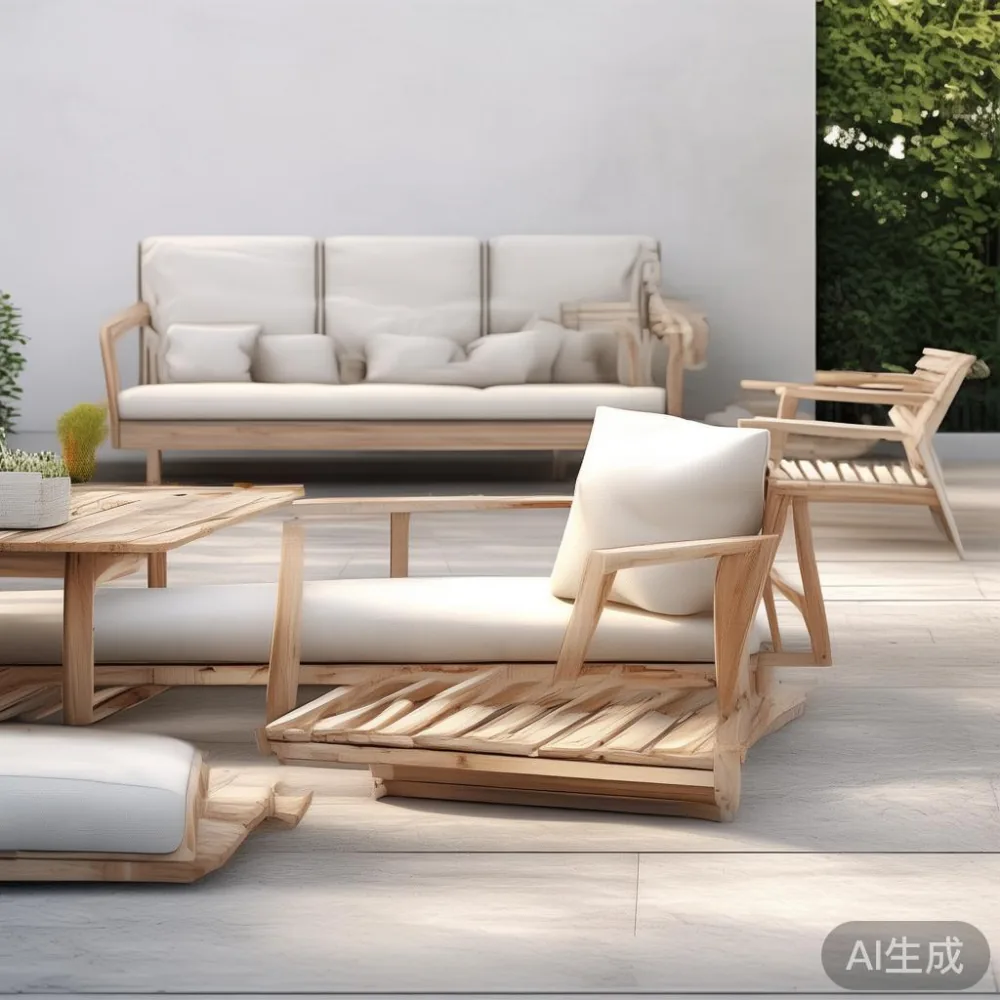
Layout C — 5-room HDB, 6.0 m × 3.6 m (21.6 sqm): L-shaped sectional, 2.4 m long-side × 1.6 m short-side × 0.9 m deep, paired with a single armchair (0.85 m × 0.85 m), a 1.3 m × 0.7 m marble table, and a 1.8 m TV console. Total footprint 12.0 sqm, leaving 9.6 sqm of open floor — enough for a 90 cm × 60 cm indoor plant or a child's playmat. This is where the Nordic solid wood sectional sofa starts to shine, because the longer chaise end gives you the visual anchor you usually only get in a condo.
Dining tables, wardrobes, and the corridor-to-room handoff
The dining area in a typical HDB is the wet kitchen dry counter, a built-in bench seat, or a 1.2 m to 1.4 m table tucked against the living-room wall. For four adults, you need at least 1.3 m × 0.8 m of clear tabletop. For six, push to 1.6 m × 0.85 m, which is also the size that fits through an HDB lift once disassembled — a 1.6 m dining table from MIDHILL ships as a 0.9 m tabletop plus two 0.35 m detachable legs, each leg wrapped and crated separately. Total weight for a solid-ash six-seater runs 48 kg to 55 kg, light enough for two movers to carry up three flights without a service lift.
Wardrobes are where I see the most sizing regret. A 3-door sliding wardrobe at 2.4 m wide × 0.6 m deep × 2.4 m tall fits a standard HDB bedroom wall, but its 2.4 m length becomes a problem if your lift door is on the narrower side and the corridor turn is tight. Splitting the wardrobe into two 1.2 m units costs you about S$180 in extra delivery and crating, but saves an hour of frustration on moving day. For HDB bedrooms specifically, I recommend wardrobes no deeper than 0.58 m so the sliding doors do not interfere with the bed-frame edge.
One last piece of sizing context: if your flat is on a high floor — 21st and above in newer Punggol or Tampines blocks — confirm the lift weight capacity. Most HDB passenger lifts are rated 1,000 kg or 1,350 kg. A full solid-wood bedroom set (bed frame, two nightstands, dresser, wardrobe) can weigh 220 kg to 280 kg total across multiple cartons. Spread across two trips, that is no problem. Try to push it all in one go and you risk the overload alarm.
What about balcony and outdoor patio spaces in HDB flats?
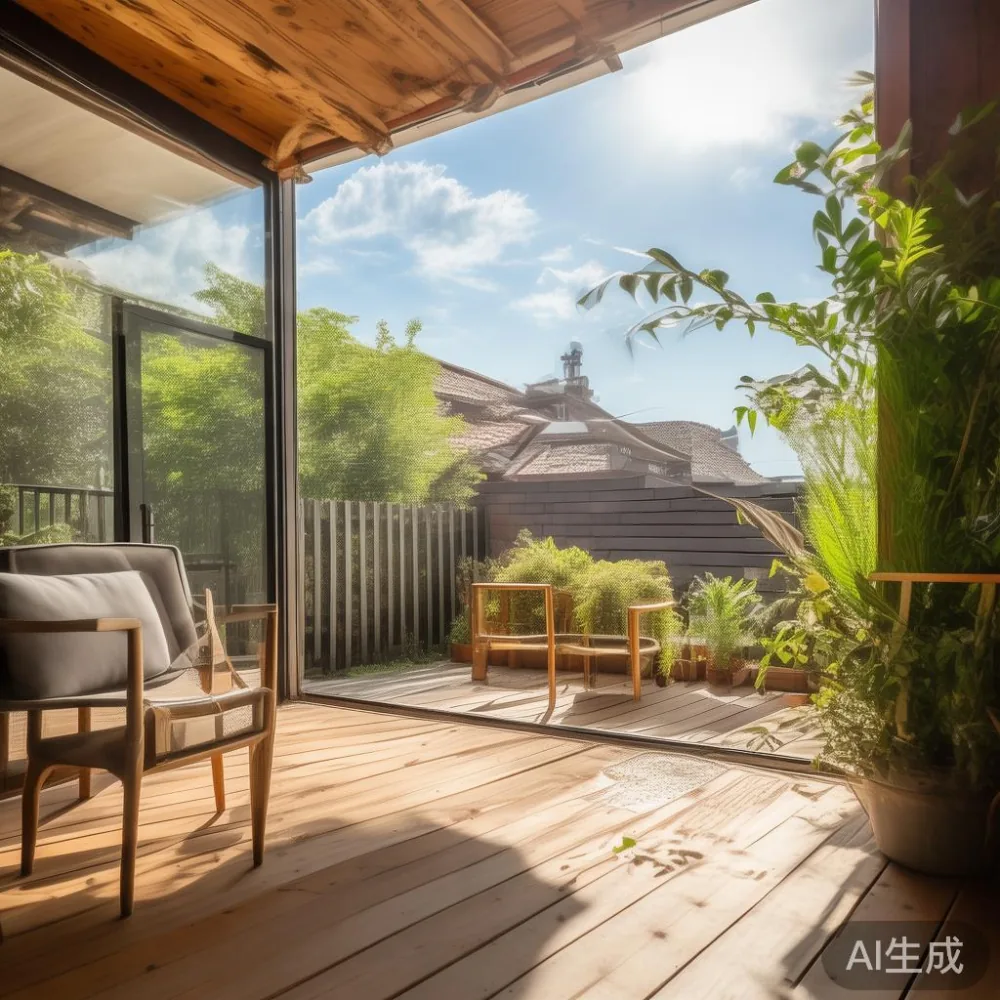
Almost every HDB in Singapore has either a service yard or a small balcony — usually 1.5 m × 3.0 m to 2.0 m × 3.5 m. These count as part of the same unit for furniture-flow purposes, because moving anything in or out of the balcony means going through the living room or kitchen door. Plan your outdoor patio furniture footprint at 1.2 sqm to 1.8 sqm per chair, and keep the depth of any balcony piece under 0.65 m so the sliding door can still close behind it. A 1.0 m × 0.6 m balcony bistro set, or a 1.4 m × 0.7 m two-seater bench, fits without forcing the door open permanently.
For condo residents with a larger outdoor patio — common in Punggol Waterway, Bedok Reservoir, or the newer Tampines developments — the limits shift. You can run a 2.0 m × 0.85 m outdoor sectional, a 1.2 m × 0.6 m coffee table, and still keep 80 cm of walking path. Outdoor-grade solid teak or eucalyptus handles Singapore's humidity cycles far better than the untreated pine sold at mass-market channels, which goes silver and furry within nine months of afternoon sun.
Light-luxury style choices that flatter a small Singapore living room
French light luxury, with its soft curves, brushed brass feet, and bone-coloured upholstery, suits compact HDB living rooms because it carries visual weight without physical bulk. A French-style solid wood sofa with a 0.95 m depth reads larger than its Scandinavian equivalent at 1.05 m, simply because the rolled arms and tufted back push the eye outward. Post-modern light luxury, with cleaner lines and an occasional marble table in calacatta or carrara veining, suits the 5-room layouts where you want one statement piece rather than three competing accents.
If your taste runs American country — wider frames, shaker panels, an oak or ash finish with a matte hand-rubbed oil — keep the rest of the room quiet. A single 1.6 m TV console in the same wood species, two matching nightstands, and one dining table of the same family will hold the room together. Mixing three wood tones in a 17 sqm living room is the fastest way to make the space feel like a clearance rack.
Colour-wise, HDB living rooms in Tampines, Bedok, and Punggol tend to face either north-west (afternoon sun) or south-east (morning sun). For south-facing rooms, cooler greys and bone whites keep glare from overloading the space. For north-facing rooms, warmer honey and wheat tones pull in what little natural light arrives. Singapore's tropical light is generous between 11 am and 3 pm, but it goes neutral-grey for the rest of the day, which makes mid-tone woods read darker than they would in a showroom.
Delivery, GST, and what to expect on the actual moving day
For a typical 4-room HDB in Punggol or Bedok, allow between 35 and 60 days from order to delivery for a made-to-order solid wood set shipped from Foshan, with another 7 to 14 days for sea transit to Singapore and a final 5 to 10 days for last-mile delivery and assembly. Free shipping usually kicks in above US$350 (roughly S$475 at current rates); below that, expect a S$60 to S$120 surcharge per trip. A 14-day return window covers change-of-mind on pieces that have not been used, but custom upholstery or custom wood finishes are usually final-sale once production starts.
GST of 9% applies on top of the displayed SGD price for all goods imported into Singapore, regardless of where the supplier is registered. Reputable suppliers, including MIDHILL, will show the GST-inclusive price on the quotation rather than springing it on the invoice. Confirm this before you pay the deposit. If a quote only shows an ex-GST figure, ask for the inclusive number — it protects you from a surprise 9% markup on the final bill.
On the day itself, clear the corridor outside your unit (HDB by-laws ask that common corridors stay at least 1.2 m wide for emergency access), measure the lift one more time with a folding rule, and have a roll of brown paper ready to protect your fresh paint. Two movers and a foreman should handle a full living-and-dining set in 90 to 120 minutes, including uncrating, positioning, and removing the packaging. The foreman is the person who, in my experience, makes or breaks the day — a good one will measure the doorway before they bring a piece in, and stop you from buying a wardrobe that simply will not turn the corner.
Final sizing checklist before you click pay
Before you confirm any order, run through this six-point list. It has saved my clients at least three return trips in the last year alone.
1. Lift dimensions: door width, car width, car depth, car height — measured with a folding rule, not estimated.
2. Corridor turns: every right angle from lift to door, including the swing into your unit.
3. Largest piece per carton: ask the supplier for the actual crated dimensions, not the assembled dimensions.
4. Room footprint: draw the room on graph paper at 1:20 scale (1 cm on paper = 20 cm in the room) and cut out scaled furniture templates. Move them around until the walking paths are clear.
5. Weight per carton: confirm that no single carton exceeds 35 kg, the practical limit for two movers without a trolley.
6. GST-inclusive total: the number on the quotation, not the number on the website price tag.
Run those six checks, and your furniture will arrive, fit through the door, and sit where you planned it — without sacrificing any neighbour's potted plant along the way.