Solid Wood vs Veneer Over 5 Years: What a Singapore Patio Actually Costs
Last month I sat down with a resale HDB owner in Tampines who asked me a very Singapore question: "My corridor is only 1.2 m wide and my service lift opens 80 cm deep, so whatever I bring home has to come in flat-packed or I throw away my deposit. Over five years, what really costs more — a solid wood dining table or a veneer one?" We pulled out a calculator, two invoices, and the delivery notes from her last furniture purchase. The numbers surprised her, and they will probably surprise you too.
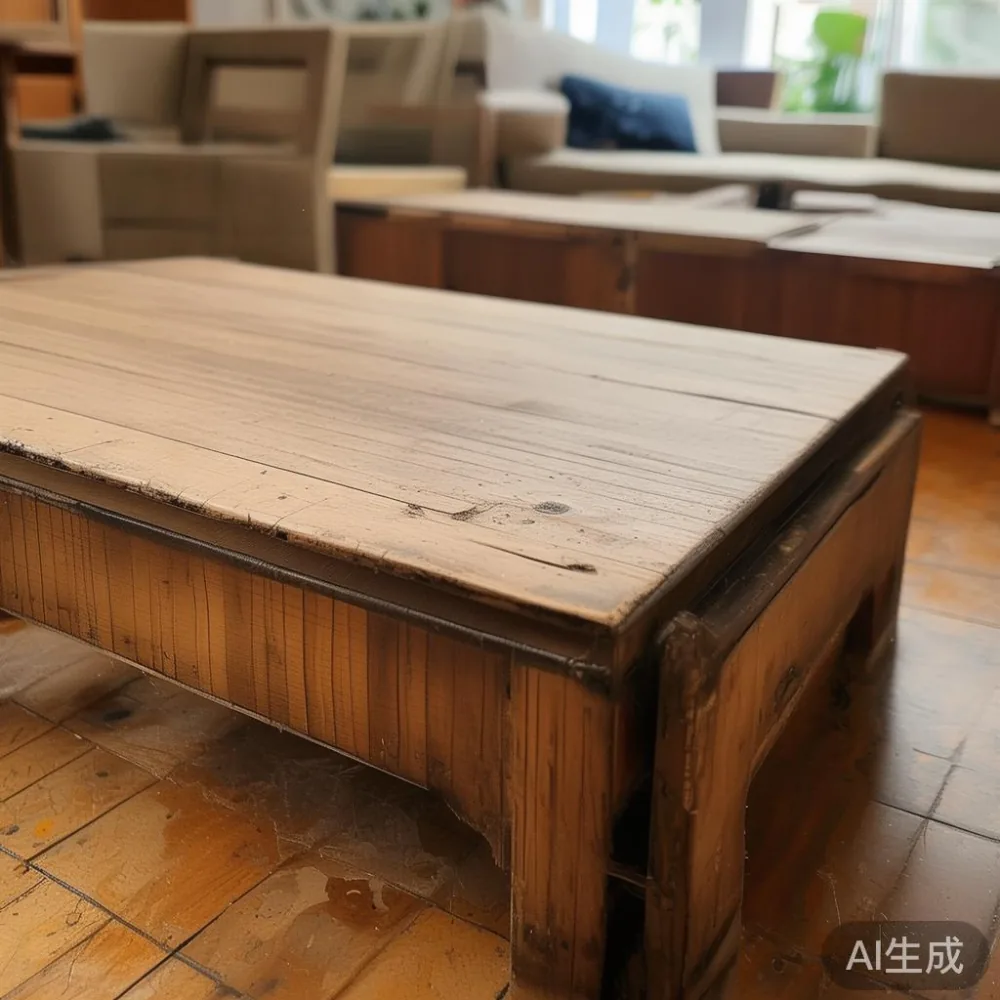
This piece is a five-year cost comparison written for anyone furnishing an outdoor patio, terrace, or balcony in a Singapore flat or condo. I will use SGD throughout, factor in the 9% GST, account for the lift and corridor constraints you actually live with, and compare real numbers across a solid wood sofa, bed frame, dining table, wardrobe, nightstand, and a marble table for the patio. Along the way, I will talk about post-modern light luxury and how a piece made by a maker like MIDHILL (a Foshan workshop established in 2008 that ships to more than fifteen countries) is engineered to survive this climate.
Why veneer looks like a bargain in year one and rarely stays that way
Veneer is a thin slice of real wood — usually between 0.5 mm and 3 mm — glued onto a substrate such as MDF, plywood, or particleboard. When you walk into a Jurong East furniture showroom and see a 1.4 m dining table priced at S$699 before GST, the substrate is doing the structural work and the veneer is doing the cosmetic work. That price is genuinely attractive for a first home in Punggol or a young couple in Bedok.
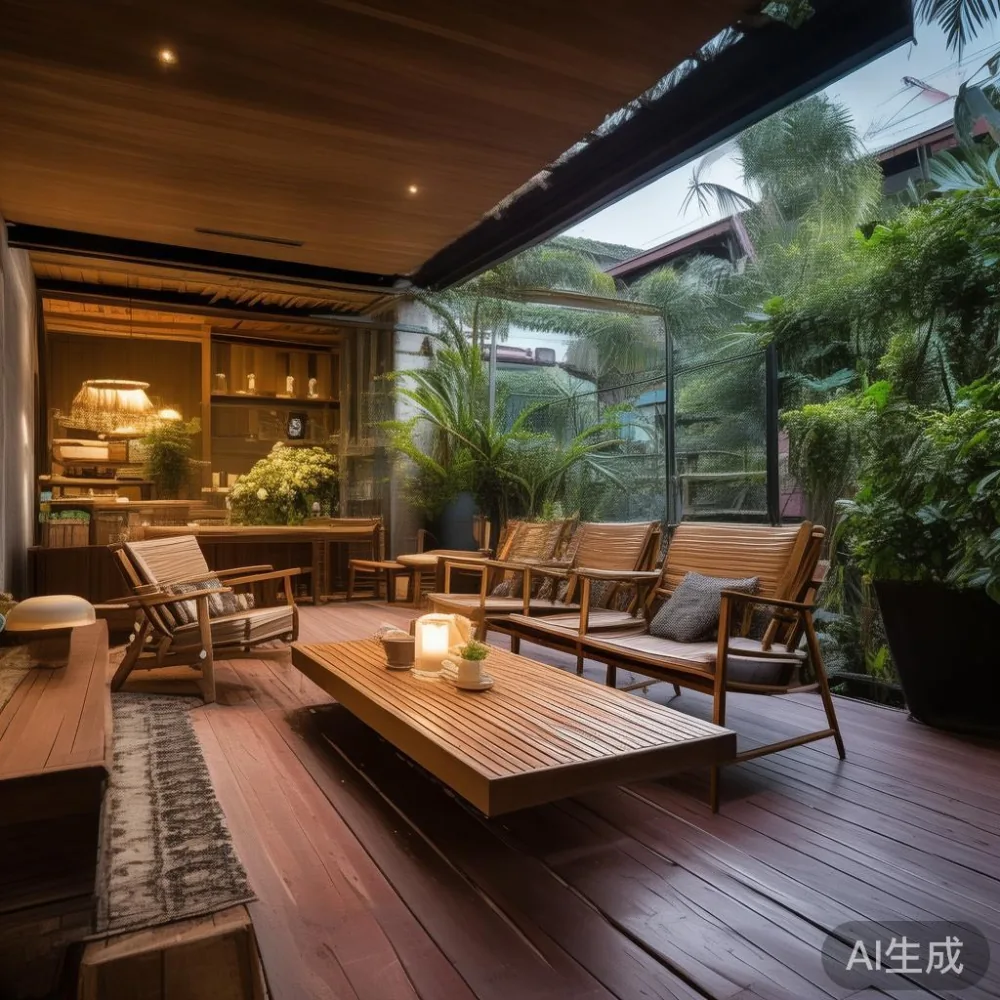
The problem is what happens when the veneer meets Singapore. Relative humidity sits between 70% and 85% for most of the year. Afternoon thunderstorms push it above 90%. The substrate and the veneer expand at different rates. Within 24 to 36 months you start seeing:
• Peeling along edges where the glue line was thinnest — usually within 5 cm of any corner.
• Bubbling near heat sources, including the afternoon sun that hits a west-facing patio from about 2 pm to 5 pm.
• Swelling of the MDF core if water ever sits on the surface, even for 20 minutes, during a sudden equatorial downpour.
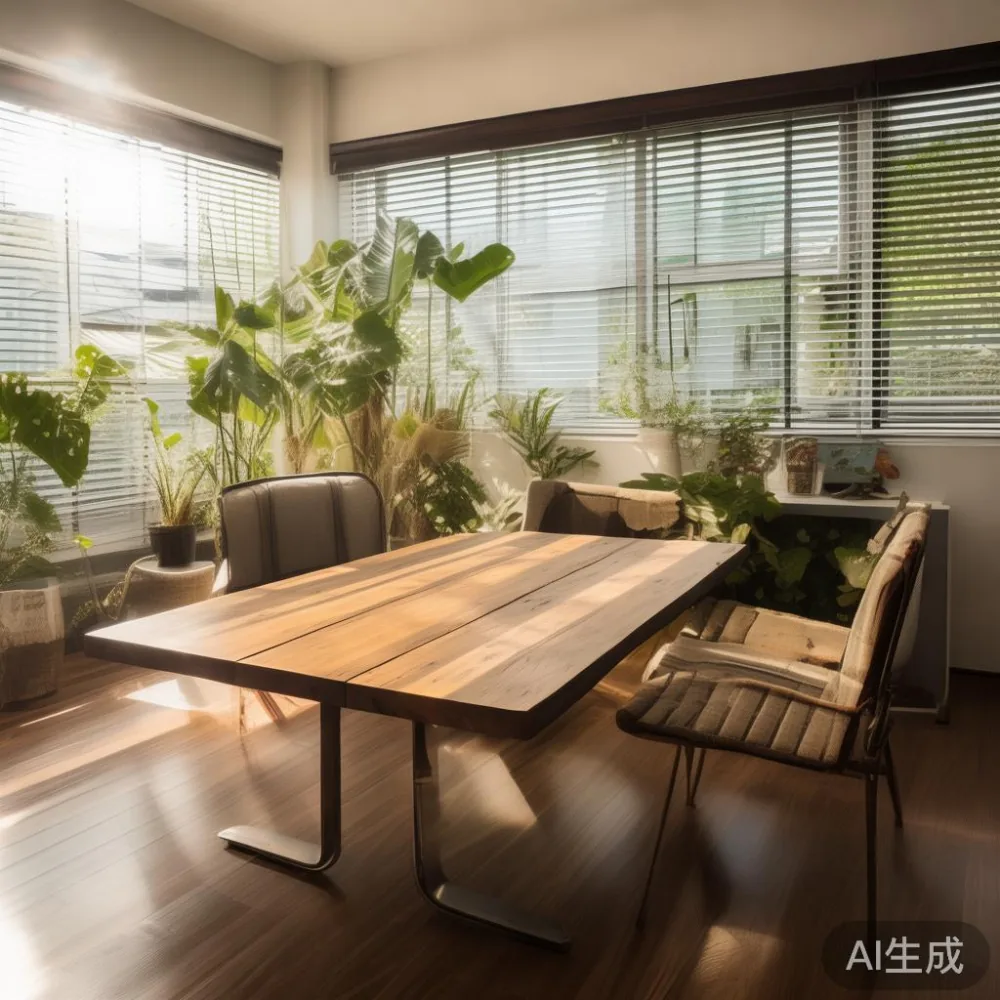
A 1.4 m veneer dining table that cost S$769 with GST in 2024 typically needs replacement or full re-veneering around year three. Re-veneering in Singapore runs S$280 to S$450 per panel for a table top, which is more than half the original purchase price.
What you actually pay for a real solid wood piece in 2025 SGD
Solid wood is exactly what it sounds like: the load-bearing parts of the furniture are one continuous piece of timber, kiln-dried to roughly 8% to 12% moisture content. For a patio setting in Singapore, the species that hold up work fairly well are teak, shorea, eucalyptus, and kiln-dried white oak. Avoid untreated pine for outdoor use; it will pit within a season.
Here are the realistic 2025 prices I see across local showrooms and direct-from-Foshan suppliers such as MIDHILL, including 9% GST:
• 1.4 m solid wood dining table (seats 4–6): S$1,450 to S$2,400
• Solid wood bed frame, queen size: S$1,800 to S$3,200
• Solid wood wardrobe, 2-door, 180 cm tall: S$2,200 to S$3,800
• Solid wood nightstand, 50 cm tall: S$380 to S$620 each
• Solid wood sofa frame (3-seater, fabric upholstery sold separately): S$2,400 to S$4,200
• Marble table for the patio, 80 cm round: S$950 to S$1,800
Yes, the entry price is roughly 1.8 to 2.6 times higher than veneer. But you are paying for timber that can be sanded, refinished, and repaired, not a paper-thin layer glued to sawdust.
The five-year ledger, line by line, in Singapore dollars
I built a simple ledger comparing a veneer set against a solid wood set across the same five pieces: one solid wood sofa, one bed frame, one dining table, one wardrobe, and two nightstands. All figures include 9% GST and assume an outdoor patio lifestyle with afternoon sun exposure.
Scenario A — Veneer set, purchased 2025:
• Dining table (1.4 m): S$769
• Bed frame (queen): S$890
• Wardrobe (2-door): S$1,290
• 2 nightstands × S$220: S$440
• Sofa frame (3-seater): S$1,150
• Year 1 total: S$4,539
• Year 2 minor repair (edge re-gluing, S$180): S$180
• Year 3 replacement dining table (same model): S$769
• Year 4 wardrobe door re-veneering: S$380
• Year 5 sofa frame replacement: S$1,150
• Five-year total: S$7,018
Scenario B — Solid wood set, purchased 2025 from a maker such as MIDHILL:
• Dining table (1.4 m, white oak): S$1,950
• Bed frame (queen, ash): S$2,400
• Wardrobe (2-door, teak): S$3,200
• 2 nightstands × S$520: S$1,040
• Sofa frame (3-seater, eucalyptus): S$3,100
• Year 1 total: S$11,690
• Year 2 light teak oil refresh (DIY, S$45): S$45
• Year 3 nothing required: S$0
• Year 4 wardrobe hinge adjust only: S$40
• Year 5 full sand-and-refinish of dining table (S$280): S$280
• Five-year total: S$12,055
The gap between the two scenarios is S$5,037 across five years. Spread over sixty months, that is S$84 per month. For a piece of furniture you sit on, eat on, and sleep on every day, paying roughly S$2.80 a day for the solid wood set is the real apples-to-apples number. The veneer set is not free in year three and year five; it is just invoiced differently.
How do I choose a dining chairs for a living room?
Pick a dining chair that is solid wood at the load-bearing joints, joins the seat rails with mortise-and-tenon rather than staples or glue alone, and weighs at least 4.5 kg per chair so it does not slide on a polished patio tile. For open-plan HDB living rooms in Punggol or Tampines where the dining area flows into the outdoor patio, a Japandi fabric dining chairs pairing gives you a low-back, linen-upholstered seat on a solid oak frame that visually extends the indoor space to the balcony without breaking the sightline. Choose fabric with a Martindale rub rating above 30,000 so the seat survives five years of daily use, and skip any chair where the back leg is a single bent piece of veneer over MDF — they snap at the knee joint within 18 months.
What Singapore delivery and access constraints do to your buying decision
I helped my colleague's family in Bedok measure their access route last quarter. The corridor between lift and front door was 1.18 m at the narrowest point. The service lift car measured 1.5 m deep by 1.4 m wide, with a door of only 0.8 m. Their new solid wood wardrobe from a Foshan workshop arrived flat-packed in three cartons, the largest being 192 cm × 52 cm × 18 cm and 41 kg. It fit. The same wardrobe fully assembled would not have made it past the first turn.
This is the practical reason Chinese factories that export to direct SIDs and have been refining flat-pack standards for almost two decades — workshops like MIDHILL that have been operating since 2008 — win the long game in Singapore. Their cartons are sized for HDB corridors, and their assembly time for a 2-door wardrobe is typically 45 to 70 minutes with two people and a hex key. Free shipping kicks in above US$350, which at current exchange works out to roughly S$470 — under the price of a single nightstand in the solid wood scenario above. Returns within 14 days are standard for unused cartons.
For heavy items that cannot be flat-packed, such as a marble table for the patio, ask the supplier for the crate dimensions before paying. A 90 cm round marble top in a proper crate is usually 105 cm × 105 cm × 25 cm and 78 kg. That fits a standard passenger lift but exceeds many service lift load limits at 800 kg, so the crated marble table often needs to come up on the passenger lift with protective blankets.
Why post-modern light luxury fits Singapore's patio climate
Post-modern light luxury as a design language works particularly well in Singapore patios because it pairs warm-tone solid wood (white oak, ash, or teak) with cool-tone accents (brushed brass, marble, linen) and keeps the silhouettes simple. A 1.4 m solid oak dining table with gently rounded corners and a 22 mm thick top reads as light luxury rather than heavy traditional, even though the timber itself will outlast two flat leases.
The same logic applies to a solid wood sofa frame in white oak with a 65% linen, 35% cotton blend — the fabric will need replacing around year six or seven, but the frame is a 25-year piece. That is the structural warranty most reputable Foshan workshops (including MIDHILL, which offers a 10-year structural warranty and lifetime refinishing on solid wood pieces) put behind their joinery.
If your taste runs more toward American light luxury — slightly chunkier proportions, shaker-style doors on the wardrobe, a thicker 35 mm tabletop — specify that to your supplier before production, because post-export modification is impossible on solid wood. If your taste runs toward French light luxury — thinner 18 mm tops, cabriole-inspired legs on the nightstands, a slightly more ornate marble table base — again, lock the spec at order time.
The hidden five-year costs nobody quotes at the showroom
Three costs that rarely appear on the price tag but always appear on the five-year ledger:
• Disposal fees. In Singapore, bulky item disposal through a town council or a private contractor runs S$60 to S$150 per piece. A full bedroom set replacement (bed frame, wardrobe, two nightstands) is S$240 to S$600 in disposal alone.
• Downtime. A veneer wardrobe that delaminates in year three means three to five days without functional clothing storage. A hotel stay, even a S$120/night budget room, plus laundry costs adds up. Solid wood furniture rarely fails catastrophically; it ages gradually.
• Resale value. A solid wood piece in usable condition retains roughly 35% to 50% of its value after five years on the secondhand market (Carousell, Facebook BSSG groups). A delaminated veneer piece has effectively zero resale value beyond scrap timber.
Factor those three lines in and the S$5,037 five-year gap I calculated earlier narrows further. By year six or seven, the solid wood set usually pulls into the lead on a pure dollar basis, not just on an emotional one.
So, what should a Tampines or Punggol buyer actually do this weekend?
Measure your corridor and your lift before you browse. Write down the narrowest point in centimetres and the lift door width in centimetres. Keep those numbers on your phone. Any reputable supplier — including Foshan makers like MIDHILL that have spent more than fifteen years refining export packaging for HDB access — will quote you the carton sizes before you pay a deposit.
Then buy solid wood for the pieces you actually use every day: the dining table where the family eats, the bed frame you sleep on, the wardrobe that holds your work clothes for the next five years. You can use veneer or lacquered MDF for low-traffic pieces such as a side table or a console that sees one cup of tea a day, where the cosmetic wear is genuinely low. That hybrid approach gives you the best of both worlds: solid wood where it earns its keep, veneer where it does not.
And if you want the marble table on the outdoor patio to anchor the whole space, spend the money once on a real stone slab on a solid wood or powder-coated aluminium base. A fake marble print on MDF will fade and peel within two monsoon seasons. Real marble weathers into a softer surface that looks better at year five than at year one.
Five-year cost comparison is rarely about the sticker. It is about what survives the lift, the corridor, the humidity, the afternoon sun, and the next two lease cycles. Solid wood survives all five. Veneer survives the first one.