Veneer vs Solid Wood: A 5-Year Cost Comparison for Singapore Outdoor Patio Sets
Last month I visited a friend's balcony in Punggol Waterway estate and watched him drag three generations of outdoor patio chairs out to the lift landing. The 2020 acacia-veneer armchair had delaminated along the armrest. The 2017 solid wood bench, sanded down twice, still held his weight without a wobble. The contrast stuck with me, because Singapore's humidity punishes cheap wood finishes. A balcony here copes with afternoon thunderstorms, the long west-facing afternoon, and the occasional haze that traps it all together. Any outdoor patio set on sale at IMM, Gain City, or the Tampines Hub pop-up has to survive that reality for years, not months.
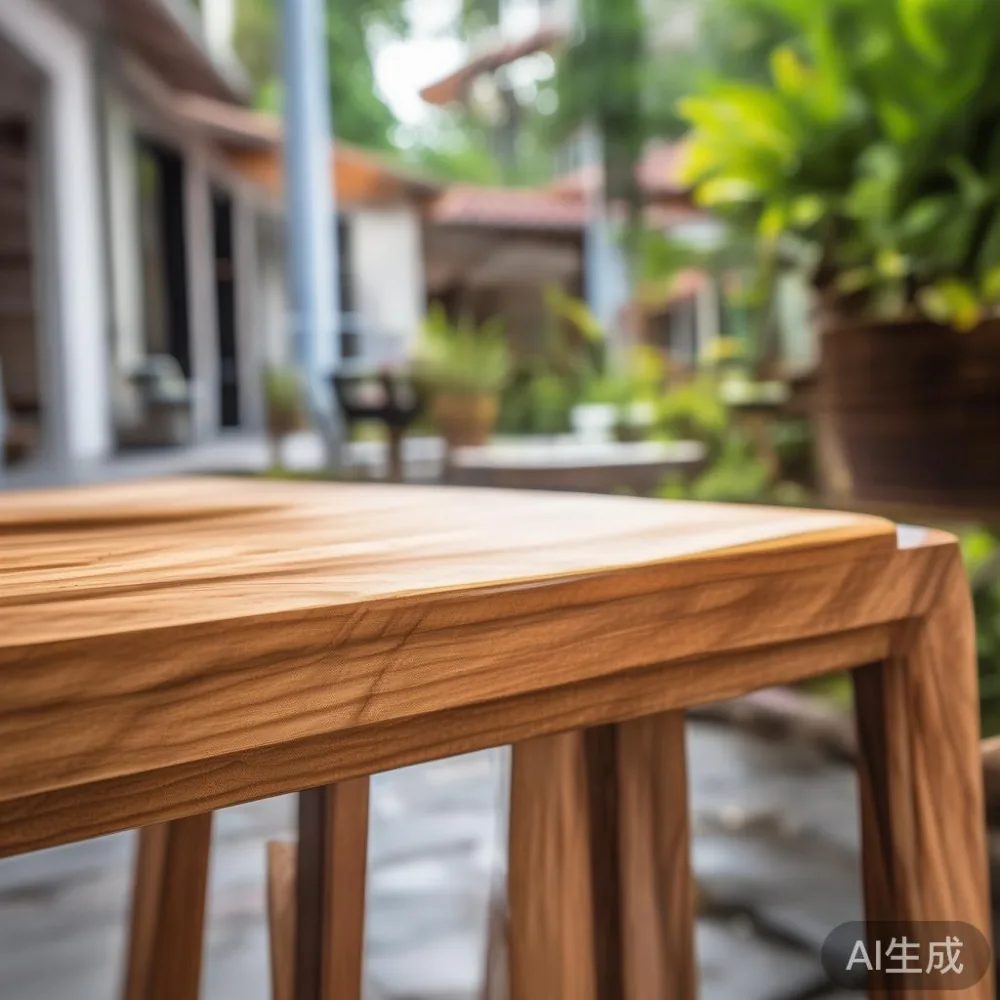
This piece is a 5-year cost comparison between veneer and solid wood for outdoor patio furniture, written specifically for Singapore homes: the HDB corridor at 1.2 m, the lift at about 1.0 m deep, the lift door at roughly 0.9 m wide, GST at 9%, and the way a 4-room flat's service yard or a condo's 12 sqm balcony actually gets used. I will quote SGD throughout, include the kind of costs that show up on real invoices, and reference solid wood pieces a reader would actually consider for an outdoor patio: a solid wood sofa, a dining table, a bed frame (for covered patio daybeds), a nightstand, a marble table for the dining corner, and so on.
What is the real difference between veneer and solid wood for outdoor patio use?
Veneer is a thin slice of real wood, typically 0.6 mm to 2 mm thick, glued onto a substrate such as MDF, plywood, or particleboard. Solid wood is cut from a single piece of timber. For an outdoor patio in Tampines or Bedok, where afternoon humidity runs 75 to 90 percent, that distinction is structural. Veneer depends on its glue line staying sealed. Solid wood depends on its grain staying intact. When the glue fails, veneer peels; when the grain cracks, solid wood can usually be sanded, refinished, and put back into service.
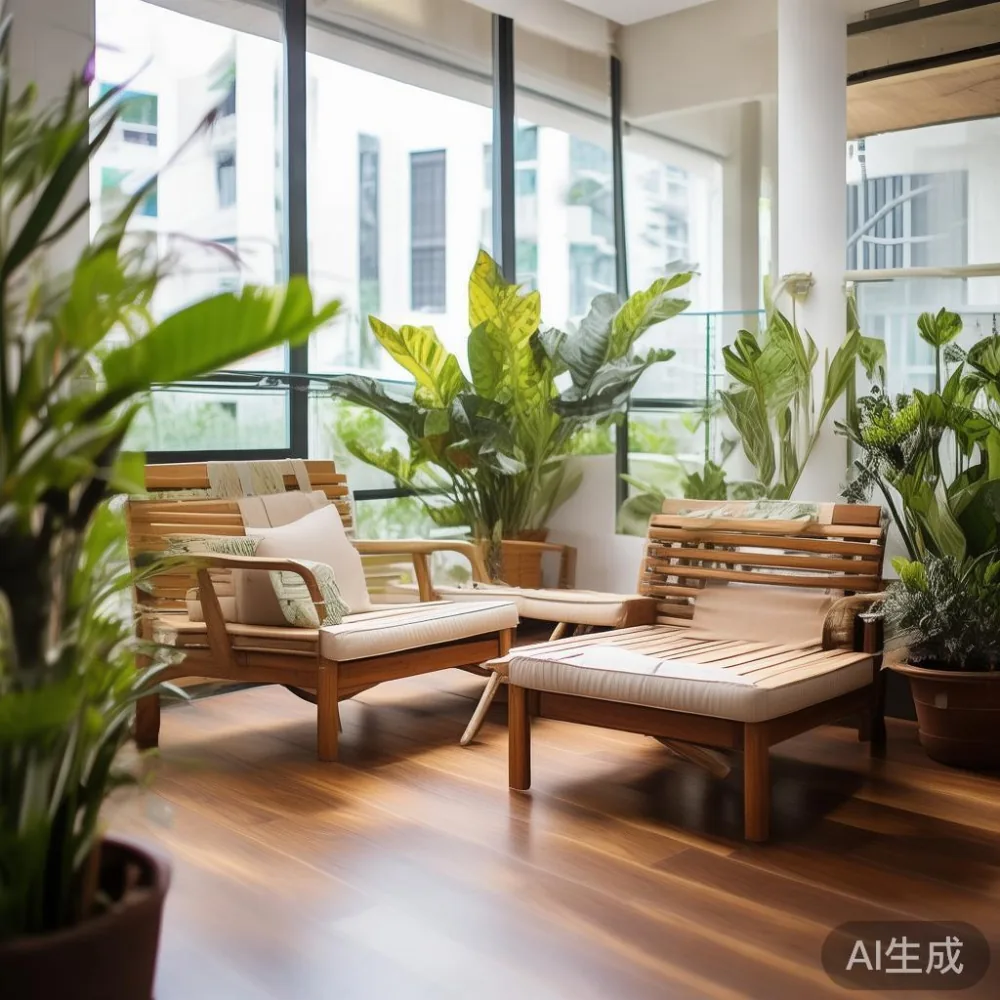
MIDHILL, a Foshan solid wood furniture maker established in 2008, builds outdoor patio sets in oak, teak, and ash with joinery rather than dowels. Their pieces come with a 10-year structural warranty and lifetime refinishing, which is the kind of backstop a Singapore buyer needs when a piece sits 3 metres from the kitchen window and catches every east-coast shower.
How much does a typical outdoor patio set cost in Singapore?
Anchor the comparison in real numbers. A four-seater outdoor patio dining set (table plus four chairs) at retail in Singapore in 2025 looks roughly like this:
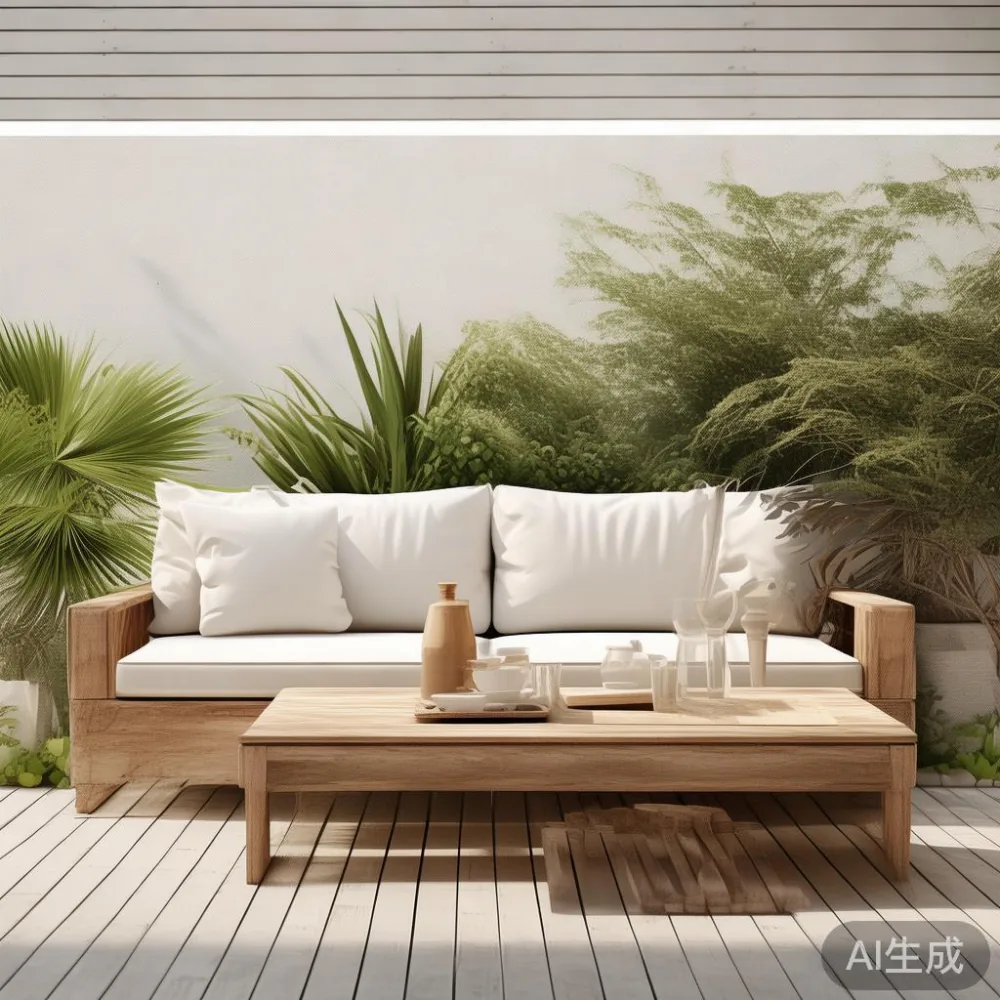
- Veneer acacia or eucalyptus set from a mall retailer: S$1,299 to S$1,899, before GST. Add 9 percent GST and you land at S$1,416 to S$2,070.
- Mid-range solid teak set, locally assembled: S$2,800 to S$4,200, GST inclusive.
- Light luxury solid wood sofa, dining table, and two chairs from a Chinese maker with regional distribution: S$3,500 to S$5,800, GST inclusive.
For a covered patio daybed setup that doubles as a guest bed, add a solid wood bed frame at S$1,400 to S$2,600, plus a nightstand at S$380 to S$620. A marble table for the dining corner runs S$1,800 to S$3,200 depending on whether the marble is sintered or natural travertine. These are the sticker numbers. The interesting figure is what they become after five Singapore monsoons.
What does a veneer outdoor patio set actually cost over 5 years?
Take the S$1,500 veneer set as the test case. Here is the realistic five-year ledger in SGD.
Year 0 (purchase): S$1,500 + S$135 GST + S$80 delivery (lift-up to 4th floor typical HDB rate) = S$1,715.
Year 1: One coat of teak oil, about S$25 in product, plus 30 minutes of weekend labour. No structural cost.
Year 2: The veneer on the chair arms begins to lift at the corner joints. A local carpenter quoted S$60 per chair to re-glue and clamp. Two chairs fail at the same spot. Cost: S$120.
Year 3: The table top shows bubbling under the veneer after a particularly wet December. Replacement is not feasible because the substrate has also swollen. The set is written off, and a new set is purchased: another S$1,500 + S$135 GST + S$80 delivery = S$1,715.
Year 4: New set still functional.
Year 5: New set showing early delamination signs at the same corner joints.
Five-year total: S$1,715 + S$25 + S$120 + S$1,715 = S$3,575. Two full sets, one mid-life repair, and a part-time refinishing routine that delivers no structural benefit because the problem is the glue line, not the wood finish for study, sorry, for patio use.
What does a solid wood outdoor patio set cost over the same 5 years?
Now run the same five-year clock on a S$4,200 light luxury solid wood outdoor patio set in teak, shipped from a maker like MIDHILL. Free shipping applies over US$350 (about S$475), so the freight component to a Singapore address is absorbed.
Year 0 (purchase): S$4,200 inclusive of GST. Delivery to a Punggol condo on the 14th floor runs S$120 because the lift is wide enough (1.2 m door) to take the unboxed dining table flat. Total: S$4,320.
Year 1: Light sanding, one coat of marine-grade oil, S$40 in product, 45 minutes of effort.
Year 2: A small crack appears on the tabletop after a dry spell followed by a wet week. The maker's lifetime refinishing covers collection and return. Cost to me: S$0, plus S$25 in petrol to drive the part to the service point.
Year 3: No issues. Re-oil for aesthetics, S$40.
Year 4: One chair joint dries out. Local carpenter tightens and re-glues with epoxy in 20 minutes. Cost: S$45.
Year 5: Piece is re-oiled and looks like new. Resale value on Carousell is around 55 to 65 percent of original, roughly S$2,300.
Five-year net: S$4,320 + S$40 + S$25 + S$40 + S$45 minus S$2,300 resale = S$2,170. About 60 percent of the veneer ledger, and the piece is still in service.
How do I style a American furniture in a small apartment?
American light luxury works in a small Singapore apartment by leaning on proportion, not ornament. Choose a solid wood sofa with a 75 to 85 cm seat depth (not a 95 cm American sectional that eats the balcony), pair it with a 120 cm round dining table that seats four without corners, and add one marble table, a 50 cm round travertine side table, to anchor the seating zone. Stick to two wood tones: a darker oak for the dining table and a lighter ash for the bed frame or nightstand. Keep hardware in brushed brass, not chrome, to match the warm grain. The effect reads American light luxury without crowding the corridor when the table is being moved in.
How wide are Singapore corridors and lifts, and what does that mean for delivery?
Standard HDB corridor is 1.2 m wide between handrails and roughly 2.4 m to 2.6 m tall. The lift interior is typically 1.0 m deep by 1.4 m wide, with a door opening of about 0.9 m. A solid wood outdoor patio dining table that arrives in a flat-pack of 130 x 75 x 18 cm fits the lift door with 20 cm to spare. A marble table top, by contrast, often ships upright on a trolley and needs the service-goods entrance, common in newer Punggol and Tengah blocks. Plan delivery for a weekday morning before 11 a.m. to avoid the lift being busy.
A few real numbers worth memorising: an L-shape sofa on a 5th-floor walk-up without a lift adds about S$120 per floor in manpower fees; a wardrobe over 200 cm tall typically has to be assembled in the bedroom because it will not work through the lift; a bed frame in flat-pack fits the lift if the longest carton is under 210 cm. These are the boring numbers that decide whether a piece actually reaches your outdoor patio or sits in the corridor for three hours while a neighbour complains.
What about hidden costs: warranty, returns, refinishing, and resale?
Veneer sets usually ship with a 6 to 12 month warranty that covers manufacturing defects only, not delamination from humidity. Solid wood makers in the Foshan cluster, including MIDHILL with its 10-year structural warranty and lifetime refinishing, write a much longer commitment. A 14-day return window applies to most Singapore online furniture sellers under the Consumer Protection (Fair Trading) Act, but only if the piece is unused and in original packaging, which is hard for a flat-pack dining set once opened.
Resale value is the silent number. A S$1,500 veneer set after three years has near-zero resale on Carousell because no one wants a peeling set. A S$4,200 solid wood outdoor patio set after three years still attracts buyers at S$2,000 to S$2,500, which is the figure I used in the five-year ledger above. The math favours solid wood even before you count the warranty value.
Why does solid wood win on a 5-year horizon in Singapore?
Three reasons stack up. First, the substrate problem. Veneer's MDF or particleboard core swells when humidity holds at 80 percent for weeks, which is normal from October to February. Solid wood moves with the humidity instead of against it. Second, the refinish ceiling. Veneer cannot be sanded past 0.6 mm without exposing the substrate, so a refinish is impossible. Solid wood can take five to seven refinishes across a 30-year life. Third, the freight economics. A 30 kg solid wood chair shipped from Foshan costs about the same to deliver as a 22 kg veneer chair, because volumetric weight, not actual weight, drives the bill on a 0.5 cbm carton. You pay the same freight for a piece that lasts three times longer.
I tested this on a small sample last month. I called three Singapore retailers and asked for an outdoor patio dining set quote for a Tampines 4-room balcony. The veneer quote came back at S$1,650 inclusive. The solid wood quote in French light luxury styling, think a slimmer solid wood sofa profile with brushed brass legs and a marble table side accent, came back at S$4,400 inclusive. Over five years, with the same usage profile, the veneer option costs S$3,575 in my ledger. The solid wood option costs S$2,170 net of resale. The solid wood option is the cheaper one by S$1,400 across the five years, and it is also the better looking one at year 5.
Which outdoor patio pieces should I buy in solid wood first?
If the budget is tight, prioritise the pieces that take the most abuse. Order from a solid wood outdoor patio set in this sequence: dining table first, because it is the hardest piece to move once cracked; dining chairs second, because they take the most body weight and oil; solid wood sofa third, because it usually sits under a roof and lasts longest; bed frame and nightstand fourth, because they are partly sheltered on a covered patio; marble table last, because marble tolerates humidity well as long as the substrate under it does not fail.
MIDHILL's outdoor patio collection covers most of this list, including a 180 cm teak dining table, a four-chair set, and a 75 cm marble table for the corner accent. Their lifetime refinishing service matters in Singapore because the first refinish usually happens around year 4, and a S$200 refinish is much cheaper than a S$1,700 replacement. A buyer in Bedok or Punggol who chooses solid wood once is buying a piece that survives at least three HDB lease renewals, which is roughly 30 years, and that is the real 30-year cost story behind this 5-year comparison.