What Actually Drives the Price of Solid Wood Furniture
I spent the better part of last month visiting three workshops in Foshan with my colleague, who was spec'ing out an outdoor patio refresh for his new Tampines EC. He kept pointing at a teak dining table that looked identical to the one at the showroom down the road, priced roughly SGD 1,400 apart. Same six seats, same parasol hole, same general shape. So why the gap? That question is the entire reason this piece exists — because once you understand what drives the price of solid wood furniture, you stop guessing and start comparing like someone who actually knows what they're paying for.
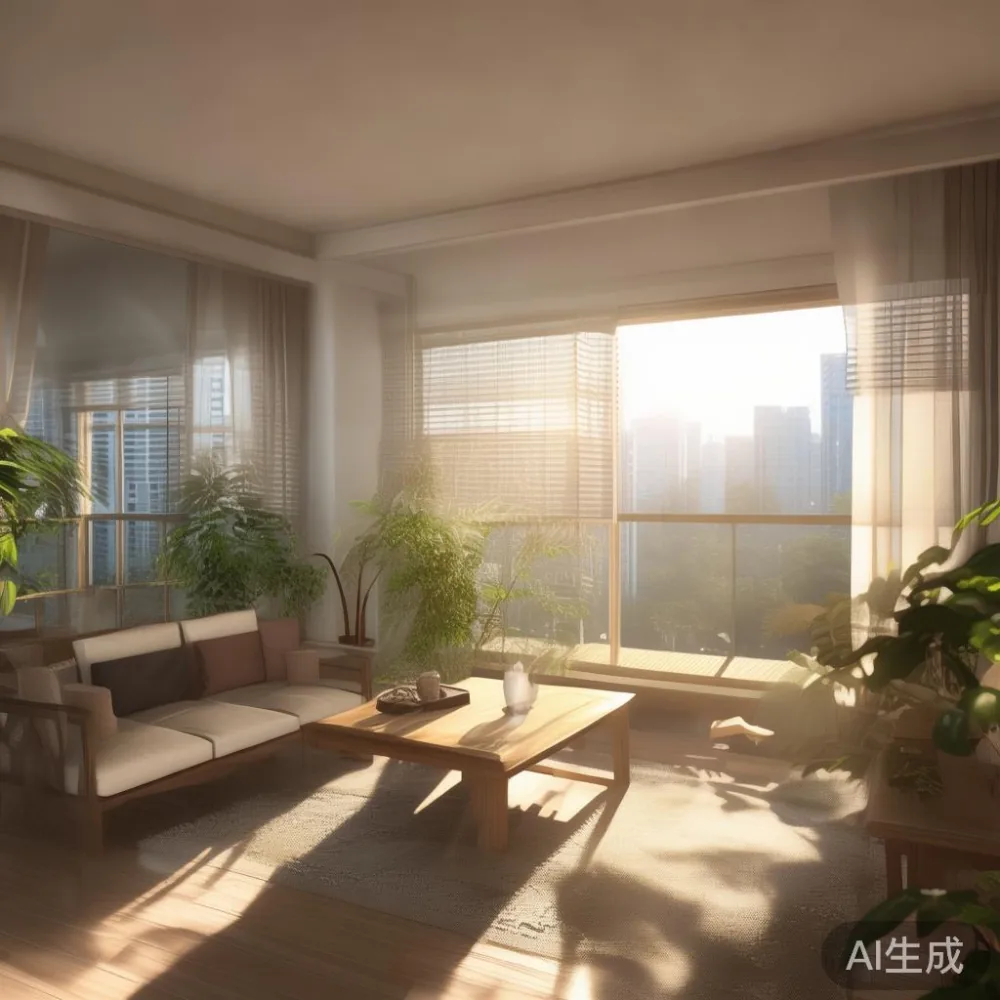
Most Singapore buyers I talk to in Bedok and Punggol assume furniture is furniture, and the difference between a SGD 1,200 outdoor patio dining table and a SGD 3,800 one is mostly the brand label. Sometimes that's true. Mostly, it isn't. The real levers are wood species, joinery, finishing labour, hardware, and shipping weight — and each one has a number attached to it. Below is what I learned walking those factory floors, plus what to ask before you sign anything for your HDB balcony or condo outdoor patio.
1. Wood Species: Where Roughly 40% of the Price Lives
If you remember nothing else, remember this: species is the single biggest cost driver in solid wood furniture, and it's the easiest one for a showroom to obscure. Teak for an outdoor patio dining set runs about SGD 2,800 to SGD 4,200 per cubic metre of kiln-dried stock as of this year. White oak — popular for indoor pieces — sits at SGD 1,600 to SGD 2,400 per cubic metre. Rubberwood, the workhorse of entry-level sets, can be had for SGD 450 to SGD 700 per cubic metre. Multiply that across a six-seat table, two benches, and a sideboard, and you can see how a species change of one tier moves the invoice by SGD 600 to SGD 1,200 without changing a single dimension on the spec sheet.
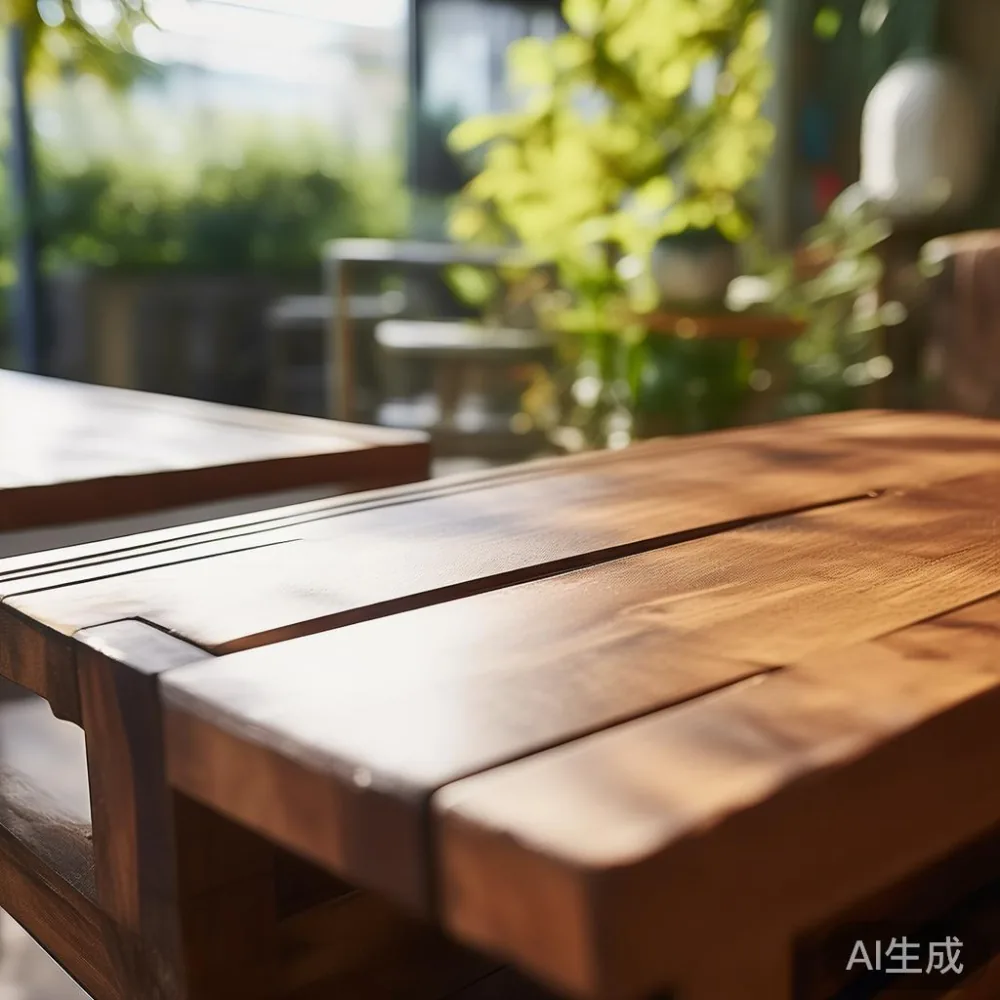
For outdoor patio use specifically, you want wood rated for exterior exposure. Teak, eucalyptus, and shorea (often sold as "golden teak" — be cautious of the wording) hold up to Singapore's humidity, which runs 70–90% for most of the year. Pine and rubberwood will work if you're keeping the set under a covered outdoor patio and re-oiling every 12 months, but they will not survive being rained on. I watched a workshop owner drop a moisture meter onto a rubberwood plank that had been stored outside for three days — it read 22%. The same meter on kiln-dried teak sitting beside it read 9%. That gap is rot, mould, and warping waiting to happen.
2. Joinery: The Quiet Hero of a 10-Year Warranty
Staples, glue, and dowels are how the budget sets are held together. Mortise-and-tenon, dovetail, and finger joints are how the long-lasting sets are held together. A single mortise-and-tenon joint costs about SGD 1.20 to SGD 2.50 in labour time at a Foshan workshop I toured, versus SGD 0.10 to SGD 0.30 for a staple-and-glue shortcut. A solid wood sofa frame with eight mortise-and-tenon joints adds SGD 10 to SGD 20 in build cost. A wardrobe with 40 of them adds SGD 50 to SGD 100. Over a full condo outfit, that's real money — but it's also the reason a properly joined piece carries a 10-year structural warranty while a stapled one gets 12 months.
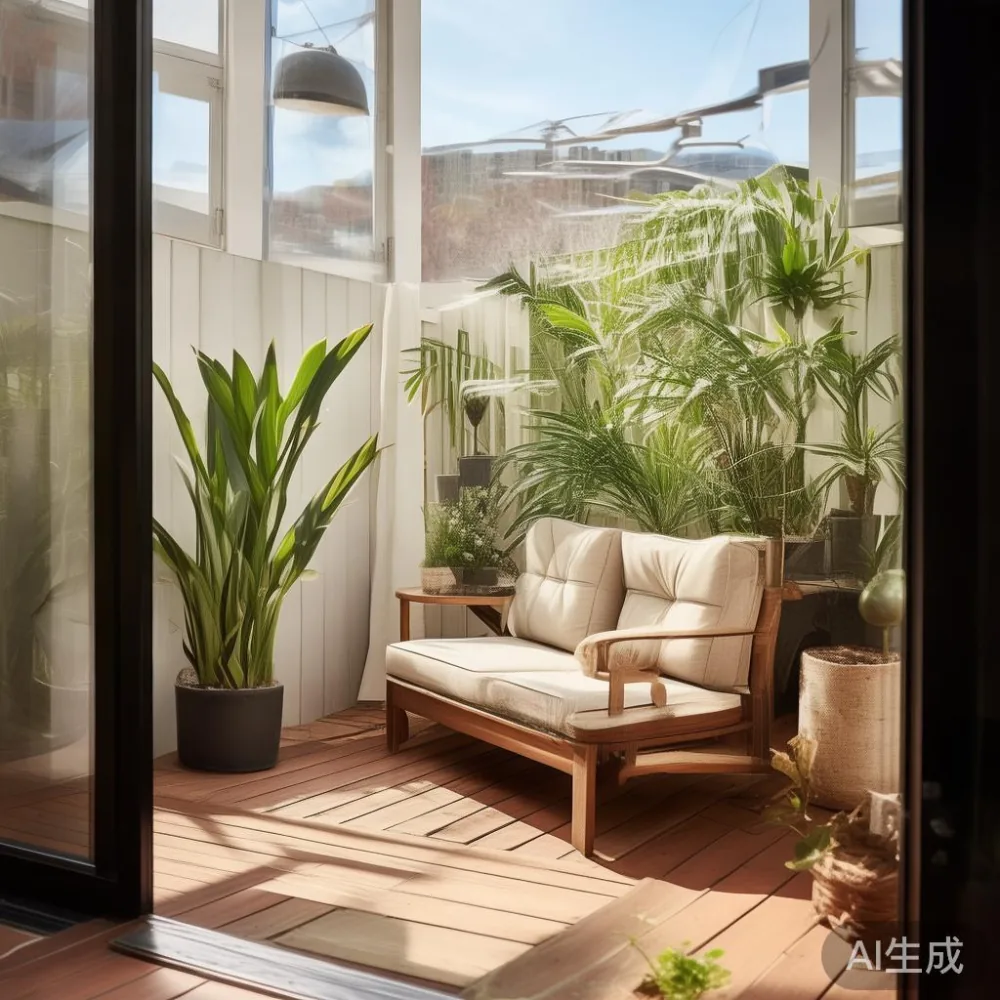
When my colleague inspected a candidate dining table from MIDHILL last month, he asked the sales rep to flip it over and show the corner blocks. They were solid wood, glued and screwed, not the hollow MDF blocks you see on lower-tier sets. That detail — invisible from the showroom floor — is exactly the kind of thing that separates a light luxury dining table you keep for 15 years from one that wobbles by year three. Solid wood bed frames are where this matters most, by the way: a bed frame with cheap corner blocks will crack at the rail joint within 18 months of nightly use, and Singapore's humidity accelerates that failure.
3. Finishing Labour: Sanding, Sealing, and the Hours You Don't See
A solid wood nightstand might have 6 hours of hand-finishing in it — sanding through four grits (80, 120, 180, 240), sealing with two coats of conversion varnish, then a final wax or oil. At a Foshan finishing line rate of SGD 6 to SGD 9 per hour, that's SGD 36 to SGD 54 of labour in the finish alone. A flat-pack import often has 45 minutes of automated spray finish on it, and the difference shows up the first time your kid spills milk on it: the cheap finish clouds, the conversion varnish wipes clean.
For outdoor patio sets, finishing is even more critical. A proper marine-grade teak oil application takes about 90 minutes per chair and needs to be repeated every 9 to 14 months in our climate. If the factory has done three coats of penetrating oil before shipping, your maintenance cycle stretches to 14 to 18 months. That's a meaningful quality-of-life difference if you're using the outdoor patio two or three nights a week.
4. Hardware, Marble Inserts, and Soft-Close Drawers
On a marble table or dining table with a stone top, the marble itself can be 18% to 35% of the landed cost. A 1.6m by 0.9m sintered stone top runs SGD 380 to SGD 720 depending on veining pattern; Carrara marble sits higher, often SGD 900 to SGD 1,400 for the same panel. Then there's the substrate beneath — typically plywood or aluminium honeycomb — and the support frame. A floating tabletop that doesn't sag at year five needs a sub-frame, which most budget listings quietly omit.
For drawers, Blum soft-close runners cost about SGD 18 to SGD 28 per pair at trade price; the generic Chinese equivalents run SGD 3 to SGD 6. Over a six-drawer wardrobe, that's SGD 90 to SGD 130 of difference — and the soft-close version will still feel soft at year eight. Hardware also matters on outdoor patio pieces: 304 stainless steel fixings cost about 2.4x what zinc-plated screws cost. If your set lives 20 metres from the sea in a Punggol Waterway condo, that 2.4x is non-negotiable.
5. Shipping Weight, Lift Access, and the Last 50 Metres
Solid wood is heavy. A 2m solid wood wardrobe weighs 110 to 160 kg fully assembled. A queen-size solid wood bed frame runs 65 to 95 kg. A six-seat outdoor patio dining table in teak weighs 90 to 140 kg. Shipping weight from Foshan to Singapore is roughly SGD 4.50 to SGD 6.80 per kg by sea, including 9% GST on the landed value, customs clearance, and last-mile delivery. So the freight on that wardrobe alone can hit SGD 600 to SGD 950 before it touches your corridor floor.
Then there's the last 50 metres, which is the part most online listings skip. HDB service lift openings in most 4-room flats in Tampines and Bedok measure 1.1m wide by 2.1m tall; condo service lifts in newer Punggol developments run 1.3m by 2.3m. A 2m wardrobe laid flat won't fit either, so it has to go in upright, which means tipping it through a 90-degree corridor turn. Any reputable seller — and yes, MIDHILL falls into this category — will ask for your lift dimensions and corridor width before shipping. If a seller doesn't ask, they're assuming it'll fit, and that's how wardrobes get refused at the door.
6. What Does "Light Luxury" Actually Mean at This Price Point?
The phrase gets thrown around until it loses meaning, so let me pin it down. French light luxury in furniture means restrained ornamentation, neutral palettes (oat, taupe, ivory, charcoal), brushed brass or matte black hardware, and one or two statement materials — usually marble, bouclé, or figured walnut. American light luxury is broader and warmer: bigger silhouettes, more visible wood grain, performance fabrics, and softer edges. Post-modern light luxury leans harder into geometry — chunky rounded corners, asymmetric marble tables, contrasting wood tones — and tends to use the bolder colour stories that show up in pieces with names like the post-modern leather colour mismatch collection, where the frame and cushions are intentionally split-tone rather than matched. None of these cost more because of the label; they cost more because the proportions, the fabric grades, and the QC tolerances are tighter across the run.
What is the difference between American country dressing table and modern furniture?
American country dressing tables use solid wood (usually pine, oak, or walnut) with turned legs, shaker-style or panel detailing, and a warm honey or distressed painted finish, while modern furniture uses flat surfaces, mixed materials such as metal and engineered panels, and matte neutral finishes. The country piece emphasises handcraft and visible joinery, often weighing 35 to 55 kg for a single-drawer unit, whereas the modern equivalent prioritises visual lightness, hidden storage, and a lower weight through hollow-core or plywood construction. In practice, an American country dressing table will age visibly — gaining patina and small marks that read as character — while a modern piece is designed to look the same at year eight as at year one.
7. Real-World Singapore Pricing, Compared Honestly
Here's a four-item budget for a typical 4-room HDB outdoor patio plus main living area, in SGD, delivered to a Tampines block:
- Six-seat teak outdoor patio dining set, marine-grade oil finish, 304 stainless fixings: SGD 2,400 to SGD 3,600
- Queen-size solid wood bed frame with mortise-and-tenon rails: SGD 1,100 to SGD 1,850
- Three-seat solid wood sofa in performance fabric, 8-way hand-tied springs optional: SGD 2,200 to SGD 3,400
- 1.6m marble dining table with sintered top and aluminium substrate: SGD 1,800 to SGD 3,100
Freight, GST, and lift-up delivery for the lot: SGD 480 to SGD 780, depending on whether the building has a loading bay. Total: SGD 7,980 to SGD 12,730. That's a meaningful range, but every line item in it has a specific reason to be where it is — and once you've walked a workshop floor, you can identify which lever each set is pulling on.
8. What Should I Ask Before I Pay?
Five questions, in this order, before you wire any deposit. (1) What species, and is it kiln-dried to what moisture content? Anything above 12% for indoor pieces, or above 14% for outdoor patio, is a problem. (2) What joinery at the stress points — corner blocks on wardrobes, rail joints on bed frames, seat frames on sofas? (3) What finish system — conversion varnish, polyurethane, oil? How many coats? (4) What hardware, specifically — Blum, Hettich, DTC, or unbranded? 304 stainless or zinc for outdoor patio? (5) What is the actual landed weight, and what are the packed dimensions against my lift opening? A seller who answers all five without hesitation is a seller you can trust with a SGD 5,000 order. One who deflects on lift dimensions is not.
There is no such thing as a free lunch in solid wood furniture, and there is no such thing as a hidden either — only the levers you didn't know to ask about. Once you know them, the SGD 1,400 gap between two teak outdoor patio dining tables stops looking mysterious and starts looking like a checklist.