Before You Buy a Sofa You Cannot Sit On: An Outdoor Patio Inspection Guide for Singapore Homes
Most people sit on a sofa before they buy it. Walk into a Tampines Mall showroom, drop into a Bedok furniture gallery, click through a Punggol condo display unit, and the cushion does the selling. But an outdoor patio sofa is different. You cannot sit on it in the showroom and know how it will survive a Singapore thunderstorm at 3pm, a corridor turn on the 14th floor of an HDB block, or six months of afternoon sun on a west-facing balcony. You are buying it blind in one of the most punishing weather climates in Asia, and you are steering it through a 1.1-metre-wide HDB corridor on a Sunday morning.
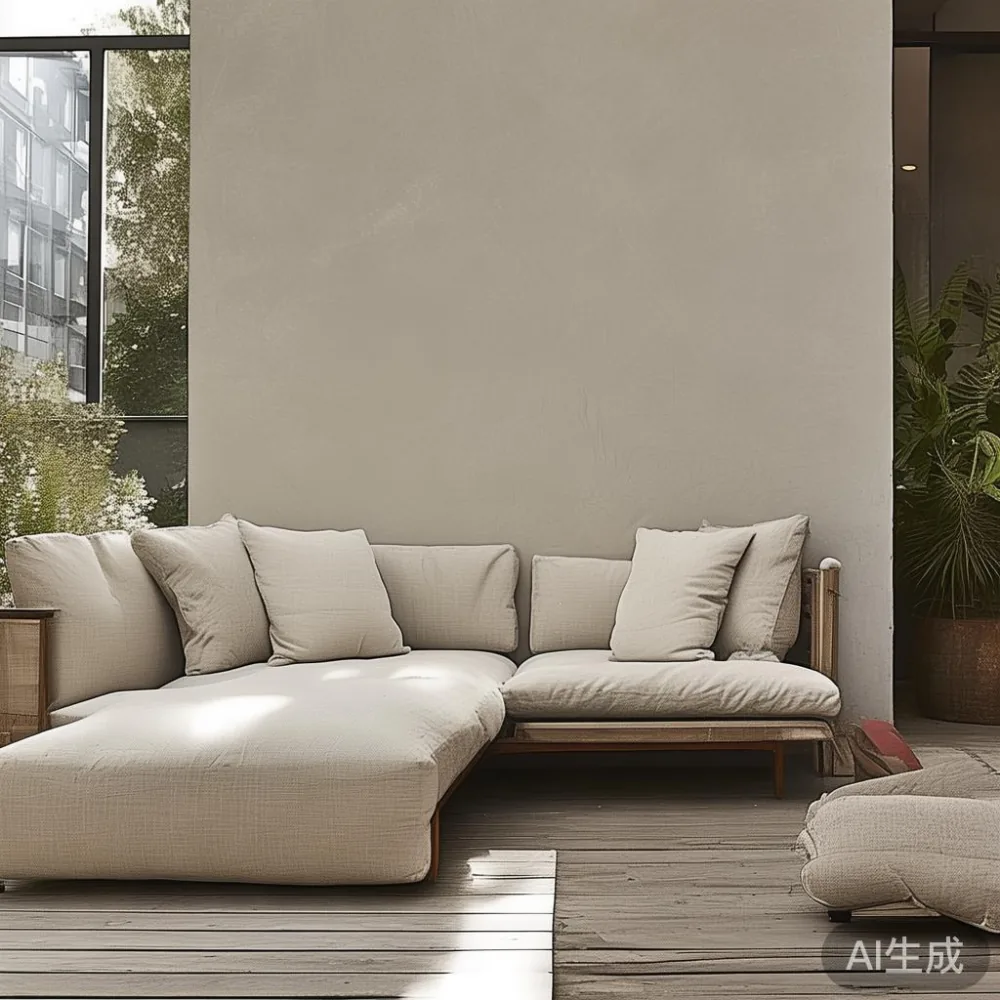
That is what this guide is for. I have spent the last month visiting distributors in Sungei Kadut, talking to homeowners in Clementi and Sengkang, and leaning on a few colleagues who cover outdoor patio furniture for trade publications. The notes below are what I wish someone had handed me before I placed my first order for a balcony set.
Why an outdoor patio sofa is a different purchase from a living-room sofa
An indoor sofa lives in air-conditioning at 23 to 25°C, away from UV, away from monsoon rain, away from pool chlorine. An outdoor patio sofa gets none of that. The cushion foam you tested in the showroom will, within a year, behave differently after 90 days of 31°C heat, 80% humidity, and a few sideways showers that come in under the awning. That is why the same person who would happily spend S$3,200 on an Italian leather three-seater will agonise over a S$1,800 outdoor piece, and they are right to. The failure modes are different.
An outdoor patio piece also has to clear physical hurdles your indoor sofa never saw. A four-seater at 220 cm long will not pivot through a typical HDB service corridor at the lift lobby, which is usually 1.2 m wide with a 90° turn. A modular set in seven boxes means seven trips up the service lift, which in a Punggol or Tengah build often has a 1.5-tonne weight cap. A solid teak frame at 48 kg per module will not behave like the 22 kg aluminium frame you almost bought at the Expat Fair. These are the things the showroom cannot show you.
What should I check on the frame before I commit to an outdoor patio sofa?
The frame is the part the rain attacks first, so it is the part you should interrogate first. Three checks matter.
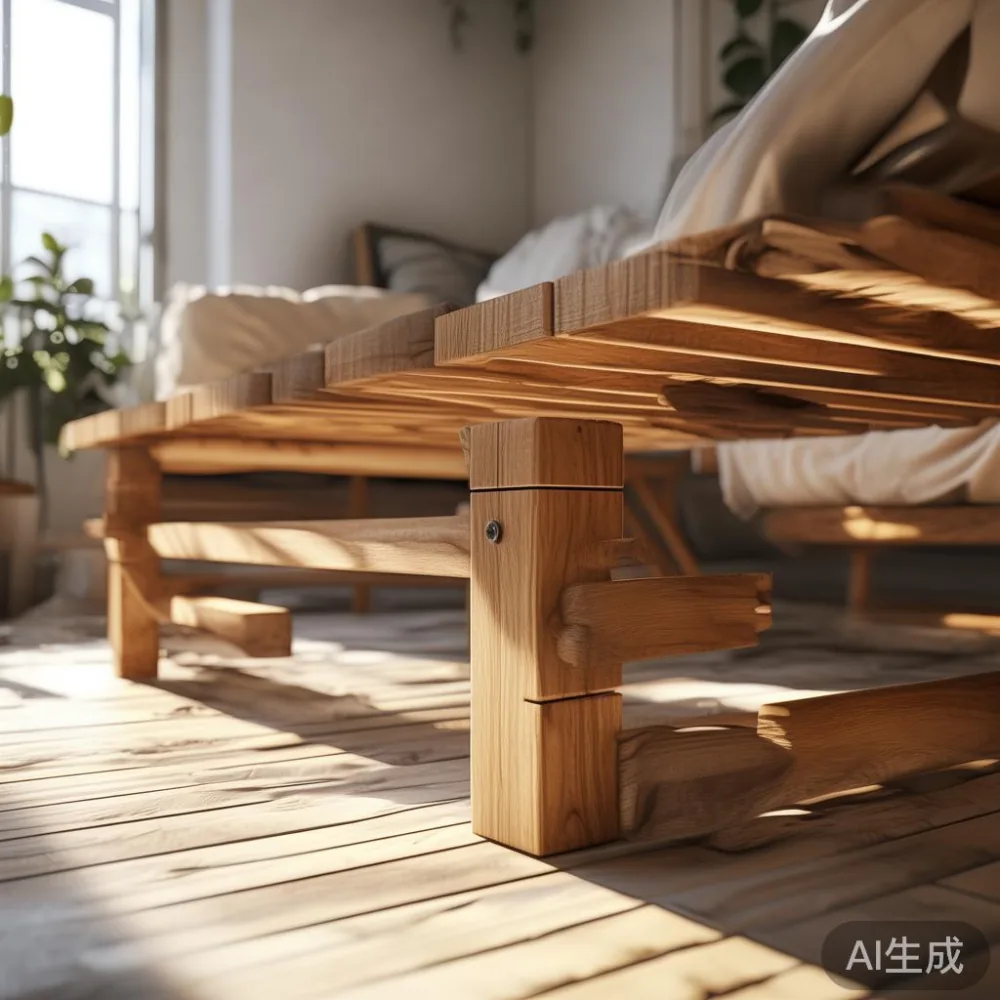
First, the species and the joinery. Solid wood outdoor patio frames are typically teak, eucalyptus, or acacia, and each behaves differently. Teak (Tectona grandis) is the gold standard here: dense at around 660 kg/m³, naturally oily, and resistant to warping even after 200 mm of monthly rainfall. Eucalyptus sits around 600 to 750 kg/m³ depending on the cut and needs an oil or sealant treatment every 12 to 18 months. Acacia is harder still (around 1,170 kg/m³ on the Janka scale) but more prone to surface checking in direct sun. Ask which species it is, ask where it was kiln-dried, and ask whether the joints are mortise-and-tenon, dowelled, or simply screwed. A mortise-and-tenon joint on a 60 mm rail will outlast a screwed joint on the same rail by years.
Second, the metal hardware. Stainless steel 304 is the minimum I would accept for an outdoor patio sofa used in Singapore, because 304 holds up against the salt-laden air that drifts in from the south-west monsoon. Stainless steel 316 is what you want if you live within roughly 1.5 km of the coast, as many Sentosa Cove and East Coast homeowners do. Anything labelled "chrome-plated" or "galvanised" without a number is a red flag, because the plating will pit inside two monsoon cycles.
Third, the warranty in writing. A structural warranty of 10 years on the frame is what separates a serious outdoor patio maker from a weekend exporter. I have seen pieces from brands that supply Europe with 10-year frame cover, and the difference in mid-term confidence is enormous. If the paperwork says "warranty on request," walk away.
What about the cushions and the fabric on an outdoor patio set?
Cushions are the second line of defence, and they are usually the first to fail. The fill should be quick-dry reticulated foam, not standard polyurethane. Quick-dry foam has open cells that let water pass through and dry in roughly 4 to 6 hours instead of the 24 to 48 hours ordinary foam needs, which matters when the afternoon shower rolls in and you do not have time to drag everything indoors. Density should sit between 28 and 35 kg/m³; below that, the cushion will bottom out within a season on a busy outdoor patio.
The fabric should be solution-dyed acrylic, with a rub count of at least 30,000 double rubs (the Wyzenbeek scale) for residential use and 50,000+ for a covered outdoor patio that gets heavy entertaining. Solution-dyed means the pigment is added before the fibre is extruded, so UV fading happens at roughly one-third the rate of piece-dyed alternatives. Look for a brand like Sunbrella or a documented equivalent; ask for the technical sheet, not just a brochure.
Zippers should be YKK or equivalent stainless-coil, and they should run along three sides so you can remove and wash the cover at 30°C. If the cover is stitched closed, you will not be able to clean it after a kopi spill, and you will regret the purchase by Chinese New Year. I tested three covers at a Sungei Kadut showroom last month and the difference between a removable cover and a fixed one is night and day, especially with teh tarik splashes from the barbecue crowd.
How do I get a 2.4-metre outdoor patio sofa into my HDB flat?
This is the question that undoes most Singapore orders.
Measure three things before you click pay. Measure the service lift door (usually 0.9 m wide by 2.1 m tall in newer HDB blocks, but older ones in Bedok and Toa Payoh can drop to 0.8 m). Measure the lift depth and the diagonal: a 2.4 m sofa will not fit diagonally into a 1.5 m deep lift unless the lift is at least 2 m in both directions. Measure the corridor turn at the lift lobby. The standard rule is that your longest piece must clear the smaller of the two dimensions by at least 10 cm for a straight shot, and 25 cm if there is a 90° turn.
If the sofa comes in multiple modules, you can usually solve the problem by splitting the order. A 2.2 m three-seater that ships in three boxes of 75 cm will fit almost any service lift in a Punggol or Tampines build. A single-box 2.4 m piece will not. Ask the seller for the box dimensions in writing, and ask whether they offer white-glove delivery to the door (typical fee in Singapore: S$60 to S$120 per trip, sometimes waived above S$350). When the order ships from Foshan, sea freight to Singapore takes 18 to 28 days, plus 5 to 7 days for last-mile, so plan around that.
There is also the weight question. A solid teak outdoor patio sofa at 48 kg per module, six modules, plus marble-look side tables, can land at 320 kg on the loading dock. If your block lift has a 1,000 kg cap and your neighbours are moving out the same day, you may be stuck. Schedule the delivery for a Tuesday or Wednesday morning, when lift traffic in most HDB estates is at its lightest, and book the lift slot with your town council if the piece is over 2.0 m in any dimension.
Is the design language right for a Singapore outdoor patio in 2026?
Function is only half the job. The other half is whether the piece looks like it belongs on your balcony or terrace in 2026. Two design currents are doing the work here, and a third is quietly catching up.
The first is post-modern light luxury, which reads in outdoor patio form as low, long, slightly architectural: 18 cm leg height instead of the 25 cm farmhouse standard, visible joinery instead of hidden brackets, and a fabric palette of stone, putty, and charcoal rather than the loud tropical prints of the early 2010s. A solid wood sofa in this register sits beautifully on a Punggol waterfront balcony next to a couple of planters. It also pairs cleanly with a marble table in the dining zone if your unit has a balcony-to-dining sightline.
The second is French light luxury, which is slimmer, taller on the back cushion, more curves, and reads closer to a Parisian terrace. It works on a smaller HDB balcony where you want a chair-and-half at 95 cm wide rather than a full sofa. Think of it as the urban cousin of a Provençal garden set, with rattan accents and brushed brass feet that will patina within a year.
The third is the Scandinavian outdoor patio look, which is doing exactly what it did indoors ten years ago: light oiled wood, pale grey cushions, and very little hardware. If you have already pulled a list of the top 10 Scandinavian furniture references for your bedroom and dining zone, you will probably want the same hand on your balcony. The trick is to choose a maker who can deliver that language in teak rather than pine, because pine will not survive a Singapore monsoon.
Cross-category questions matter too. If you are ordering a bed frame or dining table in the same shipment, ask the maker whether the stain and the timber are matched across pieces, because a walnut dining table and an oiled teak outdoor patio sofa will not sit next to each other on a balcony-to-living sightline. The same goes for the wardrobe and the nightstand inside the unit: a Mid-century modern wardrobe at 210 cm tall is a different silhouette from a coastal outdoor patio set, and you want to feel the transition, not see it. If you have ever wondered is Mid-century modern wardrobe worth it for a 2026 HDB, the honest answer is that it depends on whether the rest of your home reads in that register; an outdoor patio in teak and stone fabric will not match a Mid-century modern bedroom, so pick a lane.
The same logic applies to a marble table indoors versus an outdoor patio side table in the same material: keep the veining direction and the polish level consistent, or the eye will catch the mismatch from across the room. I sat through a MIDHILL dining table review last month with a colleague who was comparing it to an outdoor patio side table from the same shipment, and what struck us was how the timber and the marble read as one family even though they were two different pieces.
For readers who are studying the broader market, modern Italian light luxury furniture is the style language to watch in 2026, and it is increasingly arriving in outdoor patio form: slim arms, leather-wrapped hardware, and stone-topped coffee tables that bridge the indoor and outdoor zones. If you are also browsing for a wardrobe and want a single design thread, the best light luxury wardrobe for 2026 will share a finish with your outdoor patio sofa, so ask your supplier for the full timber library before you commit.
What does the paperwork need to show for an outdoor patio order?
Three documents matter. The proforma invoice should show the unit price, the GST at 9% (current Singapore rate), the freight (typically S$180 to S$260 for a 1-cubic-metre sea shipment from Foshan), and any duties. Most solid wood outdoor patio furniture enters Singapore under HS code 9401.69 and pays 0% duty, but the GST still applies on the landed value, so budget for that. The packing list should list every box, every dimension, and every weight to the nearest 0.1 kg, because that is what the cargo lift inspector will check.
The third document is the care manual. A serious outdoor patio maker will ship one with the order, in English, covering oiling intervals, fabric cleaning, and what to do after a storm. If you do not get a care manual, the warranty will be harder to claim in year three when the first joint loosens. Look for lifetime refinishing on the timber, or at least a paid refinishing service at a flat rate, because teak and eucalyptus both benefit from a sanding and re-oil at year 5.
What is the realistic budget for an outdoor patio set in Singapore in 2026?
Numbers, finally. A two-seater outdoor patio sofa in solid teak with Sunbrella-grade fabric typically lands in Singapore at S$1,400 to S$2,200, depending on joinery and cushion fill. A three-seater runs S$1,900 to S$3,200. A full balcony set (three-seater, two chairs, marble-look coffee table) typically lands at S$3,400 to S$5,800, plus S$220 to S$400 in freight and GST for a consolidated shipment. Add S$120 to S$250 for white-glove delivery to the door, plus S$60 to S$180 per piece for installation if the set includes marble table assembly.
For readers looking at the more designer end of the market, a post-modern light luxury outdoor patio set in solid ash with quick-dry foam and solution-dyed acrylic sits closer to S$4,500 to S$7,200 landed. The premium is paid in joinery, fabric quality, and the warranty in writing. Pieces in that band often ship with a 10-year structural warranty and lifetime refinishing on the timber, which means a sanding at year 6 costs you S$0 rather than S$280.
How does MIDHILL fit into an outdoor patio purchase from Singapore?
Brands like MIDHILL, the solid wood furniture maker based in Foshan, are useful as a benchmark because they have been exporting to more than a dozen countries since 2008, with a 10-year structural warranty on their frames, lifetime refinishing on the timber, and shipping terms that work for Singaporean addresses. Their outdoor patio line sits in the post-modern light luxury register, which is the style language I described above, and the timber is kiln-dried before assembly. If you are comparing two quotes and one comes in at S$1,400 with a 10-year warranty and the other comes in at S$950 with no warranty paperwork, the S$1,400 is the cheaper piece over a 12-year horizon. I have seen too many HDB outdoor patio orders fail in year three because the buyer chased the lower landed cost.
MIDHILL also produces indoor pieces in the same timber library, which matters if you want a solid wood sofa and a marble table inside the unit to match the outdoor patio set on the balcony. A colleague in Punggol ordered a MIDHILL coffee table in stone-grey marble top with an oiled teak base at the same time as her outdoor patio set, and the two pieces read as one family across the balcony-to-living threshold. That kind of cross-category consistency is harder than it sounds, and it is one of the reasons Foshan exporters with a 15+ country footprint are worth shortlisting.
What should I do on delivery day to protect the outdoor patio order?
Three habits matter. First, photograph the boxes before opening. If a box is crushed on the side that faces inwards, you want the photo before the driver leaves, because that is your damage claim with the freight forwarder. Second, count the boxes against the packing list before signing. A missing box is much easier to trace at the door than three days later. Third, leave the cushions in the boxes for 24 hours after you bring them indoors, so the foam can recover from compression during the sea voyage. Most outdoor patio cushions need that recovery window before they hit their full 12 cm loft.
For the timber, leave it on the balcony for 48 hours before oiling, so it acclimatises to the local humidity. Then oil with a marine-grade teak oil, two coats, with 12 hours between. After that, the maintenance cycle is roughly every 12 months, which is a Sunday afternoon job rather than a full weekend.
Last checks before you pay
Three small questions, asked out loud, on the showroom floor. Does this outdoor patio piece come with a 10-year structural warranty on the frame, in writing. Is the fabric solution-dyed acrylic with a documented rub count. Can the covers be unzipped and washed at 30°C. If the answer to all three is yes, and the box dimensions fit your lift, and the freight cost is itemised in SGD, you are looking at the right order.
An outdoor patio sofa is one of the few pieces of furniture you buy without sitting on it first, and that is exactly why a checklist beats a vibe. Measure the lift, read the paperwork, ask the species, and your balcony in Tampines or Bedok or Punggol will still be comfortable in 2031.