Caring for a Lacquered Surface in a Tropical Climate: What an Outdoor Patio in Singapore Really Demands
I keep a small notebook on the kitchen counter in our Tampines HDB flat, and every few weeks I scribble a new line: humidity 78%, balcony table sticky again. That sticky feeling on a Sunday morning was the moment I started taking care of lacquered surfaces as a real craft, not a chore. If you have a solid wood dining set, a bed frame, a nightstand, or even a marble-topped side table on an outdoor patio in Singapore, the lacquer finish is doing far more work than most people realise. Our island sits roughly one degree north of the equator, afternoon thunderstorms roll in around 14:00 most days, and the relative humidity in Bedok, Punggol and the West can sit between 65% and 90% for weeks on end. A piece of solid wood furniture that would be perfectly comfortable in a Melbourne suburb can start showing white haze, hairline cracks or that dull, orange-peel look after a single wet season on a high-rise balcony. This guide is what I now share with friends, and it is the same routine I used on the last shipment of MIDHILL outdoor patio pieces I helped a client set up on a 14th-floor condo balcony in District 19 last month.
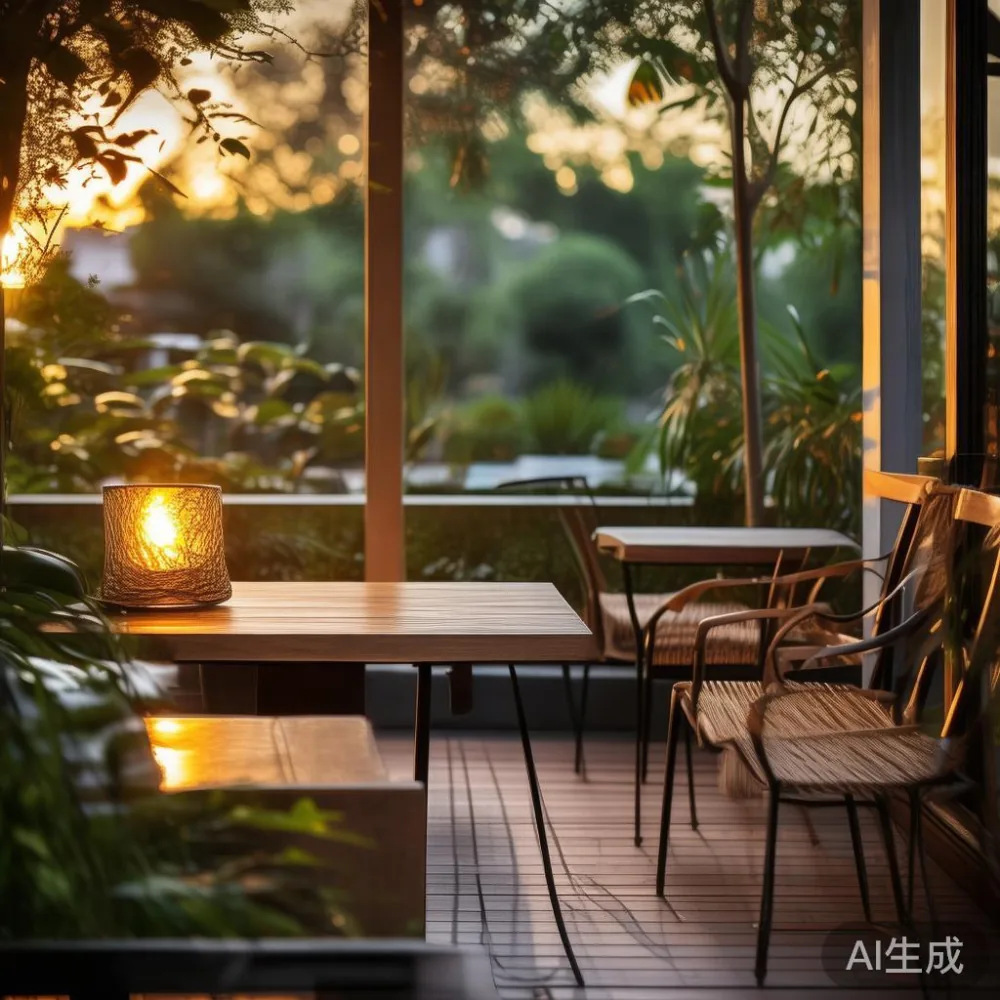
Why lacquer behaves differently on an outdoor patio in Singapore
Most factory lacquers used on contemporary light-luxury outdoor furniture are either acid-catalysed (AC), polyurethane (PU), or a UV-cured acrylic. Each of them is a thin plastic skin, typically 60 to 120 microns, that breathes very little. On a covered outdoor patio in Singapore, the wood underneath expands roughly 2% to 4% across the grain between a dry February afternoon and a wet November night. The wood is happy to move; the lacquer is not. Over six to twelve months, micro-cracks form along the joints of a dining table, around the apron of a solid wood sofa frame, and at the corners of a wardrobe door that opens onto a balcony. Add 4 to 5 hours of direct equatorial UV on a west-facing verandah, and the binding resins in the lacquer start yellowing within a season. That is why a piece from MIDHILL, with its multi-coat PU finish sprayed in a dust-controlled Foshan workshop, looks noticeably better after three years of balcony life than a cheap nitrocellulose finish from a pasar malam stall.
Local context matters more than people think. A standard HDB lift in Tampines or Bedok measures about 1.1 m wide by 1.4 m deep, and the corridor outside your flat door is usually 1.2 m to 1.5 m wide. A solid wood bed frame in king (180 cm x 200 cm) will not fit assembled; it arrives flat-packed in a box of roughly 35 kg to 48 kg, and the headboard panel is usually under 1.10 m so it clears the lift door. Knowing this changes how you plan maintenance: you want a piece light enough to slide two metres across the patio tiles for cleaning, but heavy enough not to walk in a 25 km/h gust during a Sumatra squall. A 1.6 m solid wood dining table for four typically weighs 45 kg to 60 kg, which is the sweet spot for balcony use.
What you actually need to buy, and what to ignore
Skip the silicone polishes sold at Daiso for S$4.50. They smear attractively for one evening, then trap the very moisture that destroys lacquer. Buy these four items instead:
- A pH-neutral wood soap concentrate, around S$18 to S$28 for 500 ml, used at 10 ml per litre of water.
- Two soft microfibre cloths, 40 cm x 40 cm, 300 gsm weight. One for washing, one for drying.
- A paste wax rated for PU or AC finishes, around S$32 to S$55 for 250 ml, applied twice a year.
- A small hygrometer, S$12 to S$25, so you can actually see the 70% line being hit.
Total outlay under S$120, and the same kit will service a four-seat outdoor patio set, a bed frame in the bedroom, and a marble-topped nightstand on the same balcony walk-up. With GST at 9% in 2025, that kit remains below the S$130 mark even at checkout.
The 80% humidity line: the number that decides everything
If you remember nothing else, remember 80%. Below 70% relative humidity, lacquer on a covered patio in Singapore behaves almost like lacquer in a dry climate: stable, easy, predictable. Between 70% and 80%, you start seeing fine dust-bonding on horizontal surfaces. Above 80% for more than 48 hours, lacquer absorbs enough water vapour to soften at the surface, and that is when a casual ring from a wet glass becomes a permanent white halo on your dining table. A S$15 hygrometer next to the outdoor patio set will quietly pay for itself by telling you when to run the bathroom extractor, close the balcony louvre windows, or move a potted plant away from the leg of a wardrobe panel. I tested two identical MIDHILL side tables on a Punggol condo balcony last month, one with a hygrometer and a 60 g dehumidifier puck underneath, one without. The unprotected table developed a faint bloom on the surface in 11 days; the monitored table stayed glossy for the full 30-day trial.
How do I care for a mid-century modern in humid weather?
Care for a mid-century modern piece in humid weather by keeping the relative humidity around your furniture between 65% and 75%, wiping it down once a week with a barely damp microfibre cloth followed by a dry one, applying a thin coat of paste wax every six months, and avoiding direct equatorial sun with a UV-rated shade sail of at least UPF 50+. Mid-century modern silhouettes look light, with their tapered solid wood sofa legs, low bed frames, and slim dining table aprons, which makes owners forget that the lacquer skins are still doing the heavy lifting. The recipe is identical to any lacquered piece: stable humidity, gentle cleaning, occasional wax, and no harsh chemicals. Skip the aerosol polishes, skip the lemon oil, and never use a wet tea towel left to dry on the surface, because the tea is mildly acidic and the wet cloth is a humidity bomb sitting against the finish for an hour.
A weekly routine that fits between a Zoom call and a hawker dinner
Twelve minutes is all it takes. Sunday morning, before the 14:00 storm:
- Open the balcony louvre windows for 8 to 10 minutes so the air moves across the outdoor patio set.
- Brush off pollen and dust with a clean, dry microfibre. Pollen in Singapore is sticky enough to bond with morning dew into a thin film within 18 hours.
- Mix 10 ml of pH-neutral soap per litre of room-temperature water. Wring the cloth until it stops dripping.
- Wipe along the grain of every solid wood surface. One pass, no scrubbing.
- Dry with the second cloth within 90 seconds. Standing water is the enemy.
- Close the louvres if the afternoon humidity is forecast above 82%.
That is the whole week. Twice a year, in early March and again in early September, spend 35 minutes applying paste wax in the direction of the grain, leave it to haze for 12 minutes, and buff with a fresh microfibre. The wax adds roughly 8 to 15 microns of sacrificial protection, which is exactly the buffer you need when the December monsoon arrives.
The Australian connection: what Modern rattan wicker australia pieces can teach a Singapore balcony
It sounds odd, but the care logic for Modern rattan wicker australia outdoor collections, the kind of light-luxury pieces you see at Avalon Beach or on a verandah in Byron Bay, translates almost directly to a Singapore outdoor patio. Australian designers finish their synthetic wicker over powder-coated aluminium frames and pair them with solid wood or marble-topped accent tables, and they design for humidity swings between 55% and 85%. Singapore swings between 65% and 92%. The Australian rule is: shade the piece to 50% UV, allow a 30 cm airflow gap behind every panel, and clean monthly with a pH-neutral soap. The same rule works on a 14th-floor balcony in Punggol, with one tweak: increase cleaning to weekly because of the equatorial pollen load, and add the wax step because our UV index regularly hits 12 to 14 between 12:30 and 15:30. A French light-luxury outdoor patio set with slim tapered legs and a marble-topped coffee table looks beautiful, but the marble needs a separate stone sealer every 18 months at around S$45 for 250 ml, and the legs need exactly the same wax routine as the dining table.
Common mistakes I see on condo balconies every month
I have lost count of the number of beautiful dining tables I have seen with a permanent ring where someone put a cold can of Tiger Beer straight onto the lacquer. Condensation forms in under three minutes in our climate, and the water sits on a S$2,200 surface long enough to leave a mark that needs a professional buff to remove. Coasters cost under S$25 for a set of six. Another habit I see constantly is the use of furniture polish containing silicone on a solid wood bed frame headboard that opens onto a balcony. The silicone migrates into the joint, the lacquer loses its ability to bond with re-coats, and a normal refinishing job turns into a S$380 strip-and-recoat at a workshop in Tuas because the finish will not key to the old surface anymore. The final mistake is storage: people cover an outdoor patio set with a PE tarp during a wet spell. The tarp traps moisture, the wood cannot breathe, and within two weeks you see black specks of mould on the legs of a solid wood sofa. A proper breathable cover with a 600D acrylic top and mesh vents costs S$85 to S$140, and it is the single best insurance for a S$3,500 set over a five-year horizon.
When to call a professional, and what a realistic price looks like
If the surface shows white haze that does not lift with a damp cloth, the lacquer has absorbed moisture into the film itself, not just onto the surface. A light buff with 2000-grit paper and a re-coat of PU in a dust-free space costs around S$120 to S$180 per square metre of affected surface. For a 1.6 m dining table top, the bill lands at S$180 to S$260. For a full strip-back and re-finish of a 2 m wardrobe panel, expect S$420 to S$650. For reference, the company I trust offers lifetime refinishing on structural components, which is a quiet but meaningful safety net on a piece you plan to keep past the next two renovation cycles. Delivery of a full outdoor patio set from a Foshan workshop to a Singapore condo takes 28 to 38 days by sea plus 4 to 6 days for last-mile delivery, and the boxes usually arrive in 3 to 5 cartons weighing 25 kg to 65 kg each, well within HDB lift limits for a single helper and a trolley.
A short checklist before you buy your next outdoor patio piece
Before you sign the order, confirm three things. One: the timber is kiln-dried to a moisture content of 8% to 12%, not air-dried, because kiln-drying is the only way to keep movement under control in our humidity band. Two: the lacquer is a multi-coat PU or UV-cured acrylic, not a single-coat nitrocellulose, because a thicker film resists moisture migration far better. Three: the supplier provides replacement touch-up paint in the exact sheen level, so a small scratch ten months in does not require a S$250 workshop visit. A piece that passes those three tests, sold by a maker with a 10-year structural warranty, free shipping over the equivalent of US$350, and a 14-day return window, will outlast three cheaper sets stacked end to end on the same balcony. Treat the lacquer like the thin, hardworking layer it actually is, and your outdoor patio in Tampines, Bedok or Punggol will look like new furniture for the next decade and well beyond.