How to Style a Compact HDB or Condo So It Feels Open, Warm, and Calm
I live in a 980 sqft walk-up near Tampines, and the corridor outside my door measures 1.1 m wall to wall. The lift interior is 1.4 m deep. Every time I bring home a piece of furniture, I think about those numbers before I think about colour. Last month I visited a colleague's new 2-bedroom Punggol condo, 689 sqft, with a balcony off the living room that opens onto a small outdoor patio shared between four units. Watching her try to slot a 2.6 m wardrobe down the service lift was the moment I realised most small-space advice online ignores how Singapore homes are actually built: narrow doors, tight corridors, and a love-hate relationship with balconies that double as laundry zones. This article is the playbook I wish I'd had, written with lift widths, HDB corridor measurements, GST-inclusive pricing, and solid wood furniture in mind.
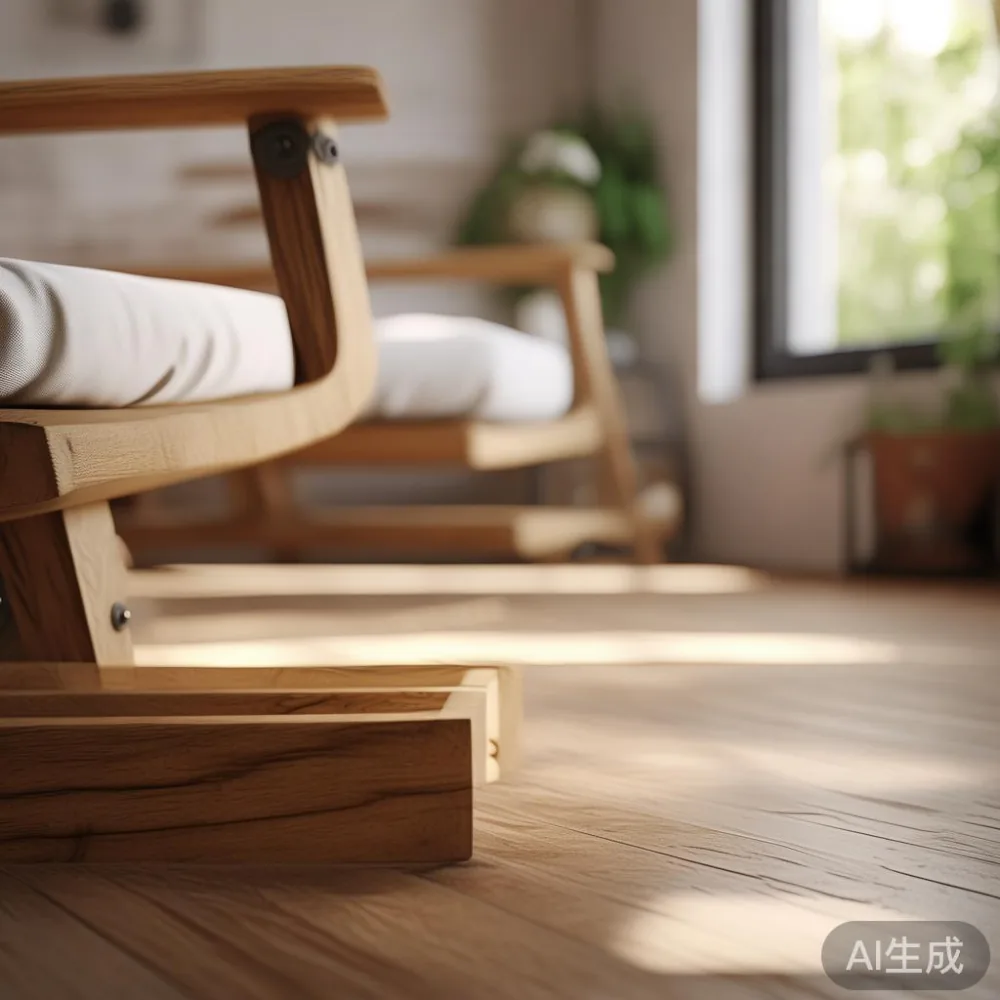
Why Singapore Flats Punish Oversized Furniture
A standard HDB door is 0.9 m wide and 2.1 m tall. A condo service lift is often 1.1 m wide by 2.3 m deep. A regular 1.8 m bed frame fits, but a 2.2 m American-style king does not, even diagonally. I learned this the hard way when a friend's reclaimed teak dining table, 2.4 m long, refused to turn into his Bedok lift, and the delivery men asked him to cut the legs off. He paid S$180 for the table, S$120 for the failed delivery, and another S$220 for a carpenter to reattach the legs.
Solid wood furniture tends to be heavier than engineered alternatives, so weight matters too. A typical 1.6 m solid wood dining table in oak or ash weighs 38-45 kg. A 1.8 m solid wood bed frame in the same species runs 45-55 kg. Two people can usually handle these on a trolley, but a marble table at 60-80 kg for a 1.2 m round top is genuinely a three-person job, especially up a service staircase. The fix is not to avoid heavy furniture. The fix is to plan every measurement in advance.
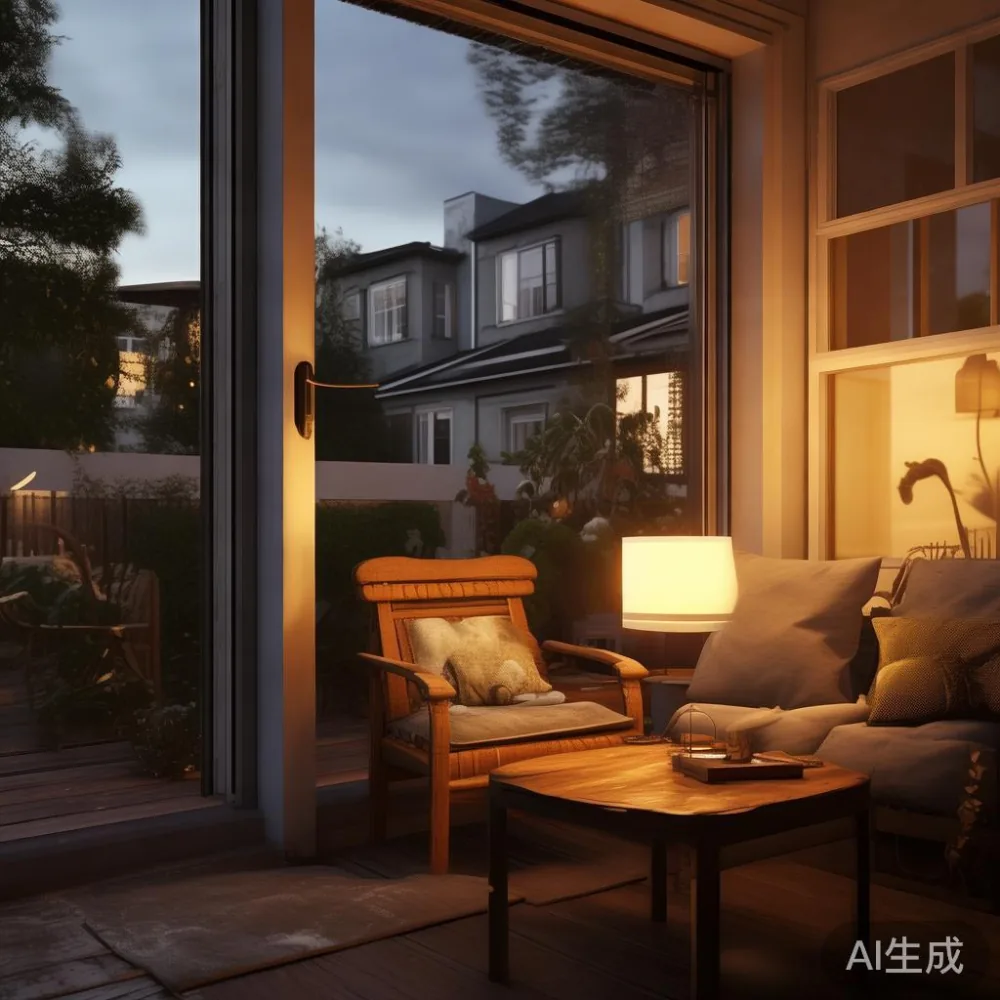
Here is the measurement checklist I now use before I order anything:
- Door width at the main entrance (usually 0.9 m for HDB, 0.95-1.0 m for most condos)
- Lift door width and cabin depth (write down both)
- Staircase width if you live above the 8th floor and the lift breaks down
- Corridor turning radius outside your unit, especially in older Tampines blocks
- Balcony door swing, since you may want to extend your living space to the outdoor patio
The First Rule of Small-Space Styling: Edit Before You Buy
My colleague in Punggol owned a three-seater sofa, a two-seater sofa, four dining chairs, a coffee table, and a marble side table, all in the same 689 sqft. After six months she had stopped using her outdoor patio entirely because the living room felt like a furniture warehouse. We spent a Sunday returning three pieces and rearranging the rest. The flat looked 20% bigger. None of us had touched a paintbrush.
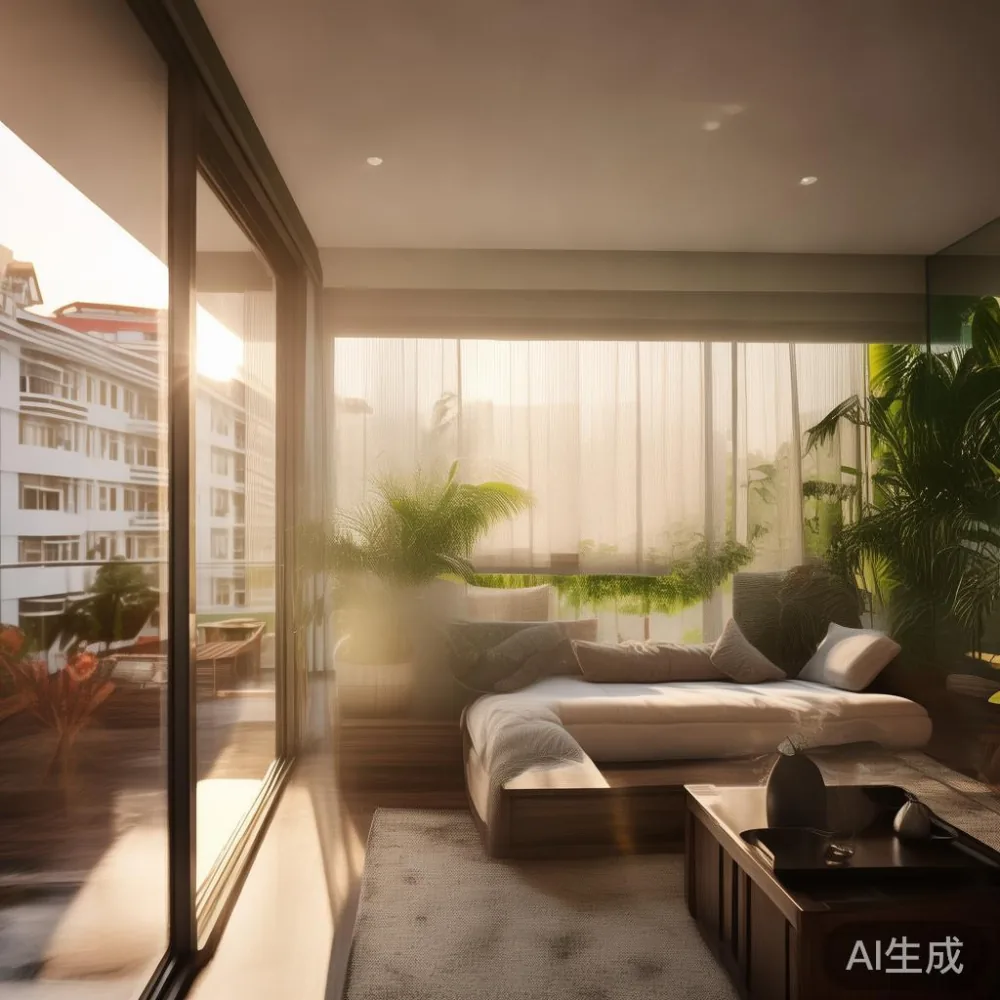
Editing is the unsexy part of styling. It is also where most people skip. Before you add anything, walk through your home with a tape measure and a notebook. Write down the wall length of every room in cm. Write down the existing pieces you would defend in a fire. Anything not on that second list is a candidate to leave the home.
For a small HDB or condo in the 500-800 sqft range, a working set looks like this:
- One solid wood sofa, ideally a two-seater at 1.5-1.7 m wide, or a compact three-seater at 1.9 m
- One dining table, 1.2-1.6 m long, seating four comfortably or six with the ends pulled
- One bed frame, sized to your room (a queen at 1.5 m by 2.0 m is the sweet spot for most Singapore bedrooms)
- One wardrobe, fitted or freestanding at 1.2-1.8 m wide
- One nightstand per adult occupant, 45-55 cm wide
- One accent piece (a marble table, a console, or a bookshelf)
That is six or seven objects. Anything beyond that starts to compete with your floor space and your walls.
Light Luxury, Small Footprint: Picking the Right Style
Light luxury, the softened cousin of full luxury, suits compact Singapore flats because it relies on materials, not mass, to read as expensive. French light luxury leans on slim brass-tipped legs, pale oak or ash solids, and boucle or linen upholstery. American light luxury skews darker, walnut and tobacco tones, with deeper cushions and lower seat heights. Post-modern light luxury mixes curves with geometric shapes, often pairing a solid wood sofa with a marble table for contrast.
For a 500-700 sqft home, French light luxury is usually the safer route. Its pale surfaces reflect what little daylight you have, and its thin profiles keep visual weight low. A 1.55 m French-style solid wood sofa in pale ash with a 78 cm seat depth and 42 cm seat height will feel grounded without filling the room. A matching ash dining table at 1.4 m by 80 cm seats four comfortably and leaves 70-80 cm of walking space behind each chair, which is the minimum you want in a small dining area.
If your flat gets strong afternoon sun, a Punggol or Bedok corner unit for example, consider American light luxury instead. The darker walnut absorbs some of that glare, and a low walnut bed frame paired with cream bedding is a calming combination. For balcony-facing units, a small marble table on the outdoor patio, 60 cm round or 50 by 70 cm rectangular, can become a coffee station that pulls morning traffic out of the kitchen.
Is Modern light luxury sectional sofa furniture worth it?
Yes, a modern light luxury sectional sofa is worth it for most small Singapore homes, provided you choose a configuration under 2.2 m wide and keep the seat height at 40-44 cm so it does not block sightlines to your TV or window. The catch is that sectionals eat floor space diagonally, and a 2.4 m L-shape will visually swallow a 280 sqft living room in a HDB jumbo flat. Stick to a compact L under 2.1 m, or a chaise-end two-seater around 1.9 m, and you get the lounging benefit without the crowding penalty.
The other catch is delivery. Sectionals often arrive in two or three boxes because they are too long for a single lift. A 2.0 m chaise module will not fit a 1.4 m-deep service lift upright, so it has to go in on its side. Make sure your supplier uses blankets and corner guards, and ask whether the assembler brings a cordless drill or expects you to provide one. Reputable Foshan factories, including makers I have written about before, will send two technicians with their own tools and a 30-minute assembly window. Free shipping thresholds vary; for cross-border orders over US$350 to Singapore, landed cost including 9% GST and a S$40-S$80 lift-door delivery fee usually lands between S$1,800 and S$3,200 for a single sectional.
Outdoor Patio: Extending Your Living Room by 4-7 Square Metres
The single most underused square footage in most Singapore flats is the outdoor patio or balcony. A typical HDB service balcony measures 1.5 m by 3.0 m, about 4.5 sqm. A condo balcony can run 1.8 m by 4.0 m or larger. If you treat this strip as a separate room, you buy more furniture and the flat feels smaller. If you treat it as an extension of the living room, the flat feels larger and you spend less on pieces you actually use.
For an outdoor patio that is sheltered but not enclosed, weather-resistant solid wood in teak, eucalyptus, or shorea works. A 1.2 m by 60 cm balcony dining table for two, paired with two folding chairs, costs roughly S$450-S$900 delivered. A compact outdoor lounge set with a 1.4 m bench and two armchairs runs S$1,200-S$2,200. Add a 60 cm marble table or a stone-resin side table if you want a coffee or wine spot that does not feel flimsy. Keep the total height of any piece under 95 cm so you retain the view from the kitchen window.
If your outdoor patio is enclosed with windows, you can push further into light-luxury territory: a French-style bistro set in powder-coated steel and solid ash, a pair of armchairs in weather-treated linen, or a single chaise with a 50 cm round marble pedestal table. The trick is consistency. If your indoor palette is pale ash and cream, your outdoor patio should rhyme, not shout. If your indoor palette is American light luxury walnut, repeat the walnut stain on the outdoor chairs so the eye reads the two zones as one.
What About Storage? Wardrobes, Nightstands, and the Dreaded TV Console
Storage is where small flats sink or swim. A poorly sized wardrobe will dominate a bedroom the way a badly chosen bed frame dominates a guest room. For a Singapore master bedroom of 3.2 m by 3.6 m (the typical HDB jumbo flat), a 1.5 m wide wardrobe with two doors and two drawers is the right scale. Anything wider eats the wall you need for a queen bed and two nightstands.
For nightstands, 45-55 cm wide and 55-65 cm tall is the working range. Anything shorter than your mattress height (usually 55-60 cm with legs) becomes a place to stub your toe. Solid wood nightstands in ash or oak weigh 8-12 kg each, which is light enough to move when you clean and heavy enough to feel anchored. Drawer depth matters more than people think: a 35 cm-deep drawer swallows three paperback rows, while a 25 cm drawer swallows one. Insist on the deeper drawer if you read at night.
The TV console is the piece that breaks most small living rooms. People buy a 1.8 m console to fit a 55-inch TV, then realise the console is wider than the sofa. Match your console width to your sofa width or go shorter, never longer. A 1.2 m console under a wall-mounted 50-inch TV, with 25 cm of wall on either side, looks intentional. The same console crammed under a 65-inch TV looks apologetic.
Buying From Overseas: What GST, Delivery, and Warranty Really Mean
Ordering solid wood furniture from a Foshan factory to Singapore is straightforward once you understand the maths. A solid wood dining table that retails at S$2,200-S$2,800 in a Singapore showroom will often land at S$1,400-S$1,900 shipped, after 9% GST, with a 14-25 day production window and 10-18 day sea freight to a Singapore door. Add S$60-S$120 for lift-door delivery and another S$80-S$200 if you live above the 10th floor without a loading bay access.
Warranty terms vary. Some factories offer 5-year structural cover; a smaller group, including MIDHILL, offers a 10-year structural warranty on solid wood frames and a lifetime refinishing service, which means you can send the piece back to the factory every 7-10 years and have it sanded, re-stained, and re-sealed for a small handling fee. For a S$1,800 dining table, paying S$220-S$280 to refinish it at year eight is cheaper than buying a new one and keeps the same timber in your home, which is a quiet win for the environment.
Returns are where small Singapore flats get burned. A 14-day return window is generous on paper, but the cost of returning a 45 kg solid wood sofa to a Foshan warehouse is roughly S$380-S$550 by sea, plus a 9% GST re-credit and a 14-21 day refund timeline. Read the return policy before you order. Measure twice, photograph the packaging on arrival, and keep all foam and corner protectors for at least 14 days.
A Two-Room HDB Makeover, Step by Step
Let me walk you through how I would style a 65 sqm two-room HDB flat in Tampines with a 1.5 m by 3.0 m outdoor patio, assuming a budget of S$6,500-S$8,500 for furniture.
Living room (3.5 m by 3.2 m). Anchor with a 1.9 m three-seater solid wood sofa in pale ash, around S$1,800-S$2,400. Add a 1.1 m by 60 cm ash coffee table at S$450-S$650. Wall-mount a 50-inch TV and skip the console, or use a 1.0 m low ash bench at S$320-S$450 with one basket underneath. Total furniture footprint: roughly 3.0 sqm.
Dining area (combined with living). A 1.4 m by 80 cm ash dining table at S$900-S$1,300, with four ash chairs at S$180-S$260 each. Total footprint with chairs pushed in: 1.4 sqm.
Bedroom (3.2 m by 3.0 m). A 1.5 m queen solid wood bed frame in ash or walnut at S$1,200-S$1,800. Two 50 cm-wide nightstands at S$260-S$380 each. A 1.5 m two-door wardrobe at S$1,400-S$2,000. Total footprint: 3.8 sqm.
Outdoor patio (1.5 m by 3.0 m). A 1.2 m by 60 cm balcony dining set in shorea or eucalyptus at S$600-S$900. Add a 50 cm round marble side table at S$280-S$420 if you want a wine spot. Total footprint: 0.9 sqm.
That is the entire flat, eight or nine objects, leaving the bathroom and kitchen untouched. The combined furniture footprint is roughly 9.1 sqm of a 65 sqm home, or 14% of the floor. Anything past 20% starts to feel crowded, so this leaves headroom for a rug, a floor lamp, and a plant or two without tipping into clutter.
The Quiet Power of Going Solid
Veneered MDF looks identical to solid wood for the first two years. By year five, the corners start to chip, the screws loosen, and the piece either wobbles or ends up in a skip. Solid wood, properly kiln-dried and joined, ages into itself. A solid wood sofa from a thoughtful maker can be re-strung, re-cushioned, and re-finished twice in its life. A solid wood dining table takes 20-30 years of family dinners before it needs anything more than a wax. A solid wood bed frame will outlast two mattresses, often three.
This is the part of small-space styling nobody talks about: the cost per year over 20 years. A S$2,000 solid wood dining table used for 20 years costs S$100 a year. A S$900 MDF table replaced twice in 20 years costs S$90 a year on paper, but it also means two moves, two disposal trips, and two afternoons choosing a replacement. The real cost is the friction.
If you take one idea from this article, take this one: buy fewer pieces, measure every door and lift, choose solid wood in a light-luxury palette that matches your flat's natural light, and treat the outdoor patio as part of the home rather than a separate project. The rest is just taste, and taste is what you build over years of looking at the same four walls and slowly making them yours.
For anyone researching a Nordic work from home japan aesthetic for a small Singapore flat, the same logic applies: pale timber, slim legs, one or two anchor pieces, and a balcony that earns its square metres. The shape of the room does not change. Only what you put in it does.