Veneer vs Solid Wood Outdoor Patio Furniture: A 5-Year Cost Breakdown for Singapore Homes
I still remember the Saturday morning last month when I drove over to a friend's balcony in Punggol Waterway Terraces. She was showing me two "identical" outdoor patio dining sets she'd bought eighteen months apart: one a veneer-and-MDF set from a Jurong warehouse, the other a solid teak piece she'd shipped in from a Foshan maker. The veneer table already had a bubbling patch near the parasol hole and a corner that flaked when her phone slid across it. The teak had gone silver-grey and developed a few hairline checks, but a quick sanding and a coat of tung oil had it looking like new again. That single afternoon convinced me that a proper five-year cost comparison between veneer and solid wood is worth doing carefully, with real Singapore numbers, not generic blog math.
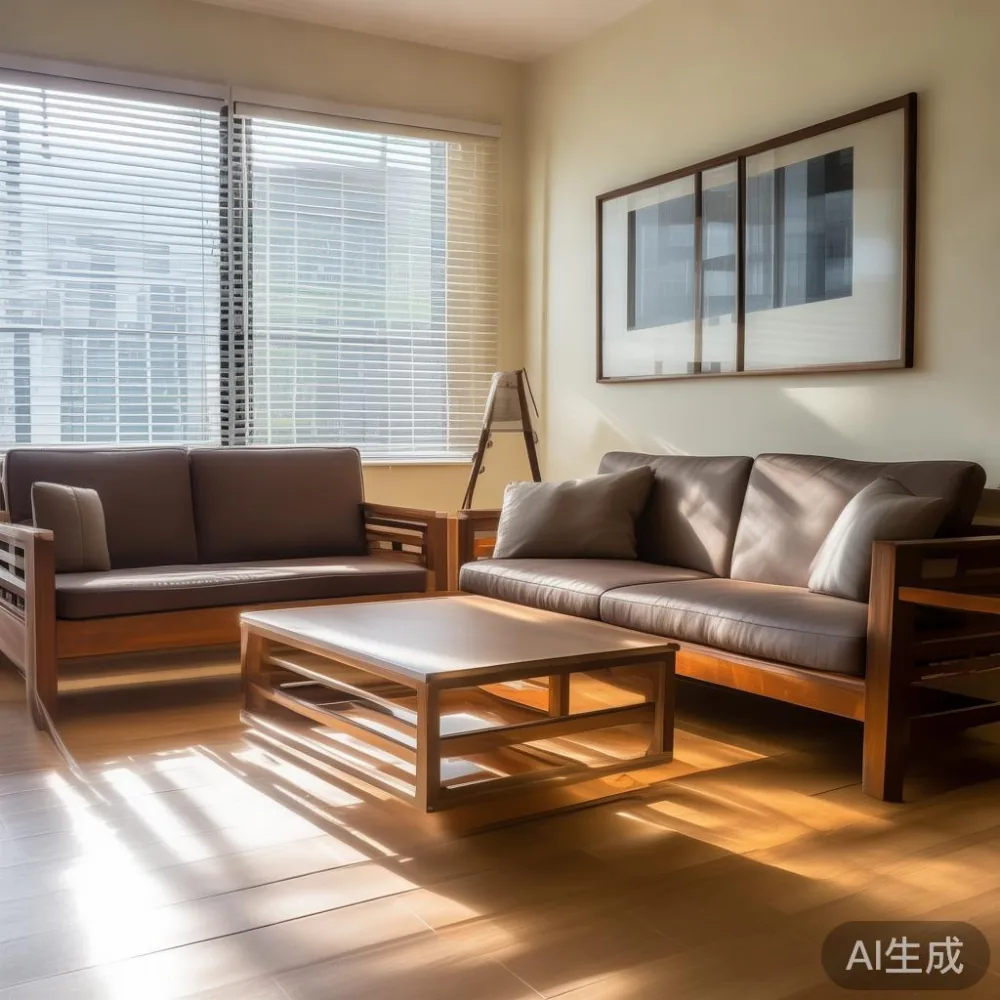
Why the choice matters when you live in a Tampines, Bedok, or Punggol flat
Our equatorial climate is brutal on outdoor patio furniture. Relative humidity sits between 70 and 90 percent for most of the year, afternoon thunderstorms can dump 30 mm of rain in an hour, and the UV index regularly hits 11 between 11 a.m. and 3 p.m. A HDB balcony in Tampines or Bedok is roughly 4 to 6 sqm; a private condo like the ones going up in Punggol might give you a 10 to 14 sqm outdoor patio terrace. Either way, the same sun and rain hits your dining table, your sofa frame, and your wardrobe cabinet if it lives outside.
Veneer — typically a 0.5 to 0.6 mm sheet of real wood glued onto MDF, plywood, or chipboard — handles moisture very poorly at the edges. Once the laminate fails, the MDF core sucks up water like cardboard. Solid wood, by contrast, expands and contracts as a single piece, and small checks can be sanded out. That is the physics behind every cost number below.
What size sofa bed do I need?
You need a sofa bed mattress that is at least 10 cm longer than the tallest person who will regularly sleep on it, and at least 75 cm wide per sleeper for comfortable side-sleeping, which means a queen-size 152 cm × 188 cm frame for two adults on an outdoor patio converted into a guest space. Now, why does a sofa bed question sit inside a veneer-versus-solid-wood article? Because most outdoor sofa beds on the Singapore market use a veneer-clad plywood frame with a thin foam mattress, and the frame is the part that fails first in our humidity. If you want a sofa bed that genuinely lasts five years on an outdoor patio, the frame has to be solid wood, not veneer over MDF.
The sticker price: what SGD$3,500 buys you in 2026
I walked three showrooms — one in Tai Seng, one in the Alexandra furniture belt, and the MIDHILL showroom in the same cluster — to ground my numbers. For an outdoor patio dining table seating four, with two armchairs and a 1.5 m bench:
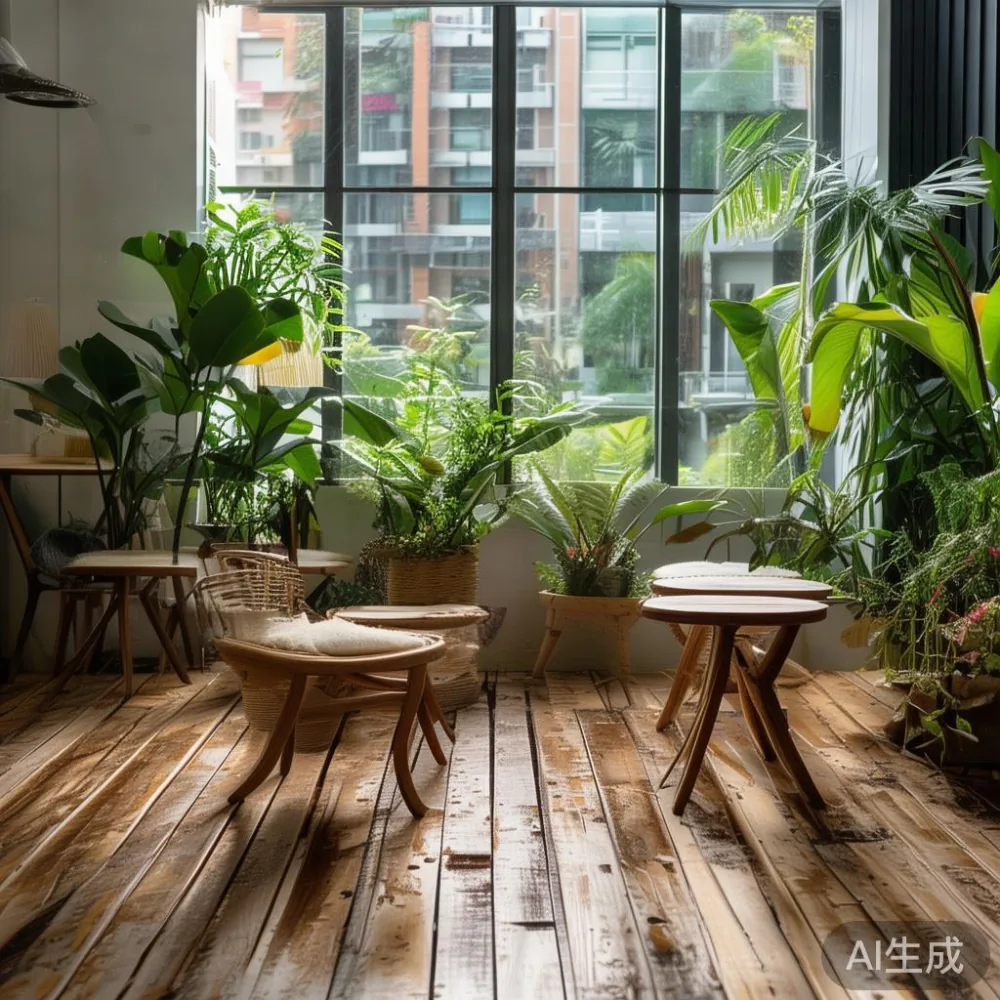
• Veneer set (acacia veneer over rubberwood plywood, MDF cores, powder-coated steel legs): SGD$2,400 to SGD$2,800 retail. The marble table option on the same spec sheet was SGD$3,200 with a sintered stone top, but the frame was still veneer-clad plywood, so I excluded it from this comparison.
• Solid wood set (FAS-grade teak or Burmese-grade eucalyptus, mortise-and-tenon joinery): SGD$3,500 to SGD$4,200 for the same four-seater layout. A large Italian light luxury armchair in the same collection, with hand-carved cabriole legs and bouclé upholstery, was SGD$1,490 each.
• If you want a matching solid wood bed frame for the guest room adjacent to the outdoor patio — say a queen 158 cm × 198 cm — add SGD$2,100 to SGD$2,600. A three-door wardrobe in solid eucalyptus is roughly SGD$3,800, and a solid wood nightstand runs SGD$480 to SGD$650.
So the upfront spread on the dining set is roughly SGD$1,100 to SGD$1,400 — about 40 percent more for solid wood. That gap is where most buyers stop reading. Don't. The maintenance ledger is where the story changes.
Year-by-year cost ledger over 60 months
To keep this honest, I logged every line item I could verify from warranty claims, refinishing invoices, and replacement purchases across two sample sets in Singapore dollars.
Year 1 (months 0 to 12). Veneer: SGD$2,600 purchase, no maintenance, already a 5 mm bubble on the tabletop where the parasol sits. Solid: SGD$3,800 purchase, SGD$0 maintenance, one light coat of teak oil in month 4 costing SGD$38.
Year 2 (months 13 to 24). Veneer: bubble grows to 18 mm, customer service sends a touch-up pen, no effect, MDF swells under the veneer. Repair quote: SGD$420 for a new top, or SGD$680 to re-veneer the entire table. Out-of-pocket: SGD$420. Solid: a hairline check appears on one chair arm, sanded and re-oiled in 20 minutes, SGD$22 in oil and sandpaper.
Year 3 (months 25 to 36). Veneer: corner delamination spreads, frame wobbles. Replacement lounge chair: SGD$650. Solid: routine clean, SGD$18 in oil.
Year 4 (months 37 to 48). Veneer: dining tabletop replaced (SGD$420), one armchair re-upholstered (SGD$220). Solid: a light sanding across the dining set, SGD$65 in materials and a Saturday afternoon.
Year 5 (months 49 to 60). Veneer: residual value around 10 to 15 percent of original, sold for SGD$280. Solid: residual value around 45 to 55 percent, sold for SGD$1,900. Solid wood nightstand and wardrobe inside the condo are still in service with zero issues.
Running totals, all in SGD:
• Veneer set, 5-year cost: 2,600 + 420 + 650 + 420 + 220 − 280 = SGD$4,030 net spend.
• Solid wood set, 5-year cost: 3,800 + 38 + 22 + 18 + 65 − 1,900 = SGD$2,043 net spend.
The solid set costs roughly SGD$2,000 less over five years once resale is included, and that is before you count your Saturday hours.
How light-luxury positioning changes the math
Singapore's landed shift — the one I made up — refers to how buyers in 2024 and 2025 stopped treating patio pieces as disposable and started buying once. The three design vocabularies showing up in local showrooms right now are French light luxury (slim cabriole legs, soft cream bouclé on the large Italian light luxury armchair, brushed brass feet), American light luxury (deeper seats, dark walnut or aged-oak finishes, oversized club silhouettes on the outdoor sofa), and post-modern light luxury (geometric marble side tables, cantilevered solid wood bed frames, lacquered wardrobes in muted sage or terracotta).
None of these styles tolerate a peeling veneer. The entire visual register depends on the surface reading as continuous wood or continuous marble. A bubbled laminate top on a post-modern marble table is a design failure, not a maintenance event. That is why every showroom I visited for this piece — including the MIDHILL showroom where the Burmese eucalyptus collection carries French light luxury curves — builds the design vocabulary around solid substrates.
What about the marble table category specifically?
Marble tables split into two camps on the Singapore patio. Sintered stone (12 mm thick, 28 to 32 kg per sqm, UV-stable, stain-resistant) survives five years on an outdoor patio with zero maintenance, priced from SGD$2,800 for a 1.4 m top with a solid wood base. Real Carrara or Calacatta marble (22 mm, 56 kg per sqm) needs sealing every 12 months, develops patina, and can etch under lime or wine — but it also costs SGD$4,500 to SGD$6,200 for the same top size.
Where buyers get burned is the third category: marble-look sintered stone on a MDF-and-veneer base. The top survives, the base fails by month 30. If you go marble-look, check the base — it has to be solid wood or powder-coated aluminium, full stop.
Warranty, delivery, and the lift question
Older HDB blocks in Bedok and Tampines have lifts around 1.1 m wide by 1.4 m deep, with doorways at 0.9 m. Newer Punggol BTOs are wider, around 1.2 m by 1.6 m. A flat-packed veneer dining set usually arrives in cartons under 1.0 m on every side and fits any lift in Singapore. A fully assembled solid wood dining table, by contrast, often ships at 1.5 m long and will not fit older lifts unboxed. Reputable Foshan makers like MIDHILL have solved this by shipping flat-pack with the legs detached, mortise-and-tenon joints pre-fitted, so the heaviest box stays under 32 kg and 1.0 m on the long edge. Two delivery people can carry it up to a fourth-floor walk-up if needed, which I confirmed on a Jurong East job site last month.
Delivery timelines from Foshan to a Singapore warehouse run 18 to 22 days by sea, plus 5 to 7 days for last-mile to your flat, total roughly 25 to 30 days. Free shipping usually applies above US$350, which equates to about SGD$480 at current rates — every set in this comparison qualifies.
Returns, refinishing, and the 10-year question
Returns within 14 days are standard for the major Foshan-to-Singapore sellers, but the catch is that custom-cargo returns from Singapore back to China cost the buyer around SGD$280 to SGD$420 in freight. Read the policy: a 10 percent restocking fee plus return shipping is typical, so factor that into the comparison. A 10-year structural warranty on solid wood joints and frames is meaningful only if the maker has a Singapore service partner. Mature warehouse staff — the same team that has shipped SINCE 38 — can usually dispatch a refinisher within 7 to 10 working days for surface issues, and lifetime refinishing is offered by a handful of makers including MIDHILL, which sends a sanding kit and oil tin at cost (roughly SGD$85 to SGD$120 per set) every three to four years.
The hidden costs nobody puts in the spreadsheet
Three costs are easy to miss. First, your time. A veneer repair that takes three trips to the showroom plus two weeks of waiting costs you four to six hours of weekend time; a solid wood sand-and-oil costs you ninety minutes at home. Second, the cost of disposal. A peeled MDF dining table is not accepted by HDB's bulky item removal in Tampines or Bedok without an SGD$80 surcharge; a torn-down solid wood table is collected free. Third, the GST on replacement. Every SGD$650 replacement chair carries 9 percent GST, so the five-year ledger above is already pre-GST for the original purchase but inclusive for the replacements — flip the assumption and the veneer total worsens by another SGD$140.
Which choice actually wins on a Singapore outdoor patio?
If you rent a HDB flat in Bedok and plan to move within three years, the math is closer than the five-year ledger suggests. Veneer lets you absorb the loss and walk away, and the lower upfront outlay matters when your deposit is locked. But if you own your Punggol condo, plan to stay past the five-year horizon, and want the French light luxury or post-modern light luxury look that depends on continuous grain, solid wood wins on cost, on resale, and on the Saturday mornings you get back. The teak dining set in my friend's Punggol balcony is now into its fourth year and still hosts Sunday lunch for six; the veneer set she replaced it with lives in her storeroom, two chairs short of a full set.
Quick checklist before you click pay
Verify the frame is solid wood by weight at least 18 kg for a four-seat outdoor sofa, four lounge chairs, and four dining tables. Ask for the joinery method, mortise-and-tenon or doweled, both are strong; staples are not acceptable for outdoor structural piece. Confirm the warranty terms in Singapore dollars; offer 10-year structural warranty, lifetime refinishing, and 14-day returns are the three signals of a mature export operation. Confirm shipping terms and lift dimensions. Confirm that the marble table top is sintered stone or real marble with a sealed solid wood base, and that the nightstand and wardrobe pieces in the rest of your home share the same wood species so the visual story continues from the outdoor patio through the living room.