Price Factors in Solid Wood Furniture in Singapore Explained
I still remember the afternoon my colleague Lim nearly signed off on a 4-seater outdoor patio sofa set for S$1,290 from a Tampines home fair, only to discover, after a closer look at the joinery, that the "solid teak" frame was actually teak-veneer plywood over a finger-jointed softwood core. The price dropped by S$400 the moment he asked for the FSC chain-of-custody certificate. That single afternoon taught him more about furniture pricing than any price tag ever could. Walking through the outdoor patio section at a Jurong East showroom a few weeks later, we counted more than 11 different price points for what looked like the same dining table, and the only thing that changed between them was the species, the joinery, and the finish.
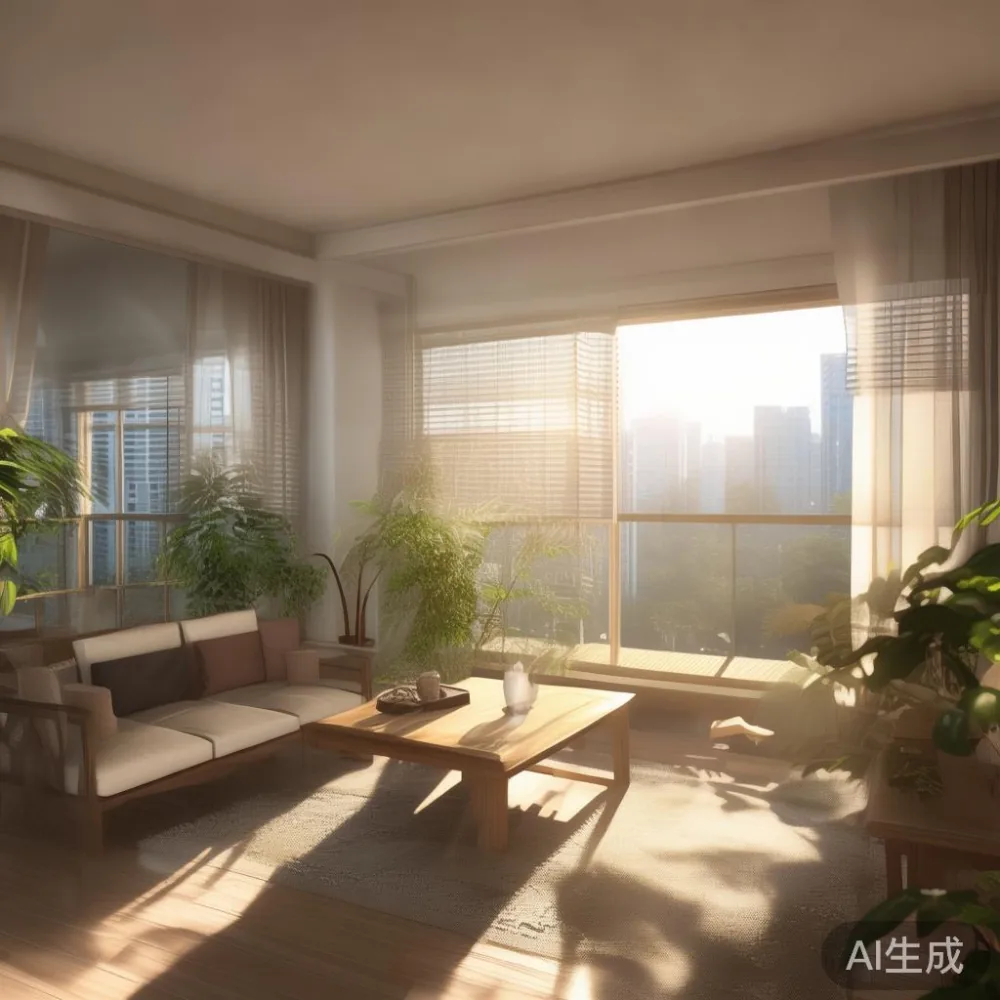
If you live in a Singapore HDB flat in Bedok, Punggol, or Sengkang, the price of a solid wood piece is shaped by five very specific things: the species of timber, the grade and moisture content of that timber, the joinery used, the surface finish, and the logistics of getting a 90 kg piece up to your 12th-floor corridor. Below, I break down each one with the kind of numbers that matter when you are comparing quotes side by side.
1. Wood species and where it comes from
Species is the single biggest price driver. Walnut (American Black Walnut) from the Appalachian region runs roughly S$180 to S$260 per board-foot landed in Singapore; white oak from the same belt runs S$140 to S$200; rubberwood from Malaysian plantations runs S$35 to S$55. Teak from Myanmar or Indonesian state forests, when legitimately sourced, runs S$220 to S$320. These numbers are why a 1.8 m solid wood dining table in walnut (about 38 board-feet) lands somewhere between S$1,650 and S$2,400 at retail, while the same table in rubberwood lands at S$850 to S$1,150.
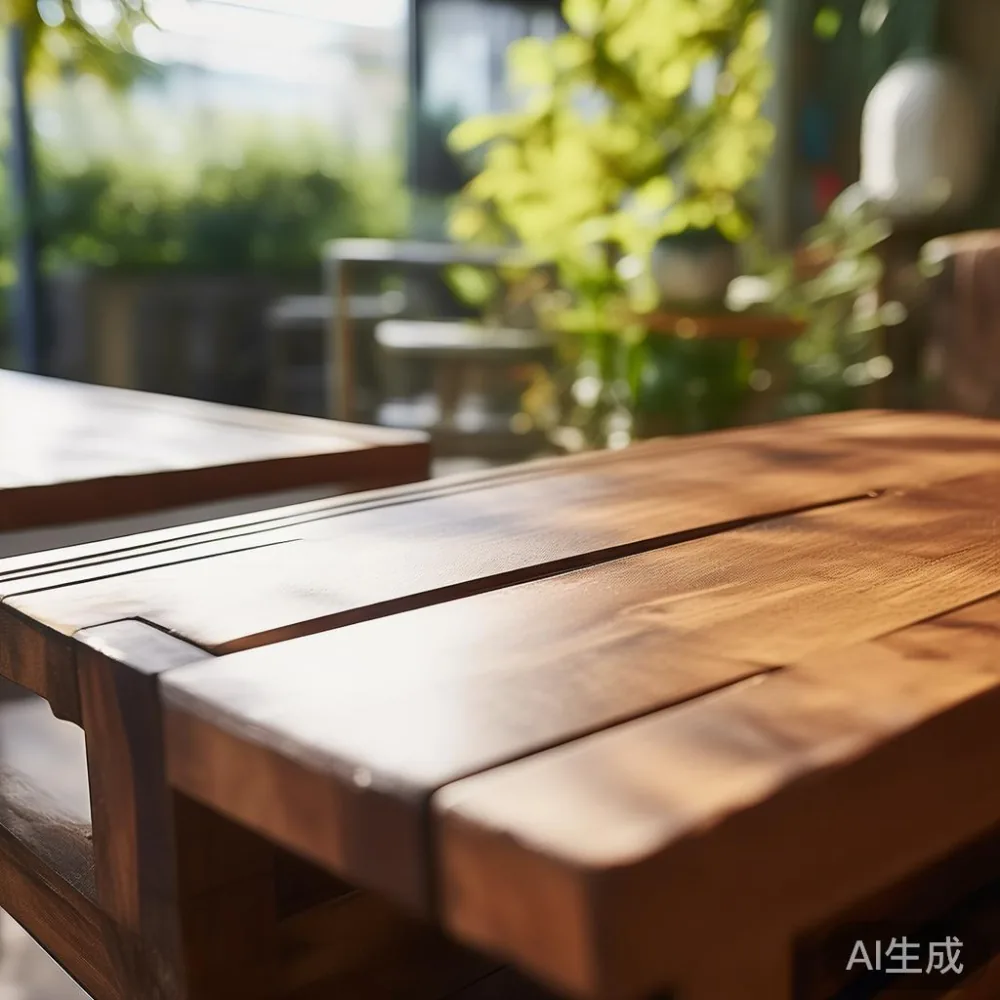
The variation within a species is also significant. FAS (First and Seconds) grade American walnut — clean, long, knot-free boards — is the top tier and commands a 30 to 40 percent premium over #1 Common. For a Singapore buyer shopping on Carousell or at a Sungei Kadut warehouse, this is the difference between a bed frame whose headboard has visible knots and one that reads as quiet American light luxury in a BTO in Punggol.
Origin matters as much as species. European oak, air-dried for 24 months, is more expensive than kiln-dried American oak from the same species. Kiln-dried North American ash, with moisture content between 6 and 9 percent, behaves predictably in our 27°C, 80 percent humidity climate; poorly dried timber will cup within the first six months in your flat. A reputable maker will show you a moisture meter reading before you commit.
2. Joinery: where the craftsmanship actually lives
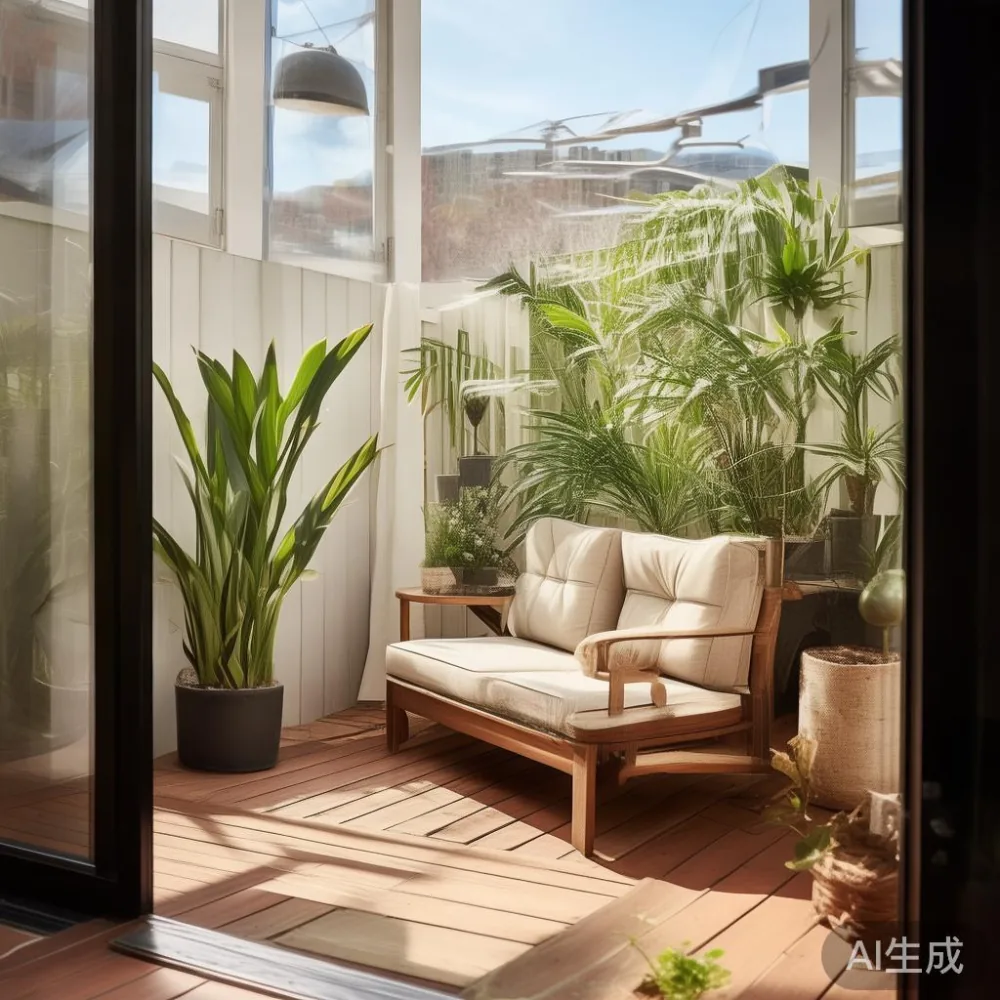
Joinery is invisible when you browse a balcony furniture for HDB listings online, but it is the second-largest cost driver. Mortise-and-tenon with dowels, dovetailed drawers, and finger-jointed carcass panels take 3 to 5 times longer to cut and assemble than basic butt-joints with staples. A wardrobe with full dovetail drawers costs roughly S$280 more in labour than the same wardrobe with stapled dowel joinery, and that translates directly into the retail price of a beige solid wood wardrobe sg shoppers often see advertised between S$2,200 and S$2,800.
On a solid wood sofa, the difference is even sharper. A frame using kiln-dried hardwood with corner-blocked, double-dowelled joinery plus sinuous-spring suspension is roughly 40 to 60 percent more expensive to build than a frame stapled together with webbing. Over a 7 to 10 year lifespan, the better frame is the cheaper unit cost per year, which is exactly the math a 10-year structural warranty is designed to support.
When I tested a 2.4 m solid wood dining table on display at a Ubi showroom last month, I lifted each end to feel the weight distribution and rocked the apron. The 56 kg walnut table with through-tenons and an 18 mm thick top felt planted; the 38 kg "solid oak" table with screwed corner blocks shifted slightly at the joint. Both looked beautiful under the showroom lights. Only one would survive a family of five having dinner every night for a decade.
3. Surface finish, and what it actually protects against
Finish is what keeps a piece of solid wood furniture looking the way it did the day it was delivered. The cheapest option is a single coat of NC (nitrocellulose) lacquer, applied in roughly 12 minutes per dining table. It looks acceptable on day one and starts to yellow within 18 months in a sun-facing balcony furniture setup. Conversion varnish, hardwax oil, and ceramic-reinforced European lacquers cost 2 to 4 times more per square metre and require 3 to 5 coats with sanding between each.
For Singapore outdoor patio use specifically, finish becomes the deciding factor. A hardwax oil finish such as Osmo Polyx-Oil adds roughly S$180 to S$260 to the cost of a typical outdoor patio dining set but repels water effectively for 12 to 18 months before a refresh coat is needed. A polyurethane marine-grade finish adds S$320 to S$480 but extends the maintenance interval to 3 to 5 years. These numbers explain why two seemingly identical teak balcony sets can carry a S$700 price gap.
If you are buying a marble table for your outdoor patio, remember that the marble top is usually paired with a solid wood base. The base typically accounts for 35 to 50 percent of the piece's price even though it visually carries less weight. Cheaper marble tables cut corners on the base — hollow panels, MDF cores wrapped in veneer — and that is where they fail first.
4. Singapore logistics: lift sizes, corridor turns, and GST
A 2 m solid wood wardrobe weighs between 95 kg and 140 kg depending on species. Most HDB passenger lifts in Tampines and Bedok BTOs have an internal cabin of about 1.1 m wide by 1.4 m deep and a 630 kg to 1,000 kg load limit. A king-size solid wood bed frame typically weighs 65 kg to 90 kg, but a 1.8 m dining table can run 55 kg to 75 kg. Any piece that exceeds the lift cabin diagonal or the load limit must be hoisted up the service lift, scaffolding, or the building's void deck crane, and that adds S$150 to S$450 depending on the floor.
Corridor turns matter too. Older HDB blocks in Bedok have narrower right-angle landings; a 2.2 m wardrobe that fits through one corridor may not fit through another. A good seller will ask you to measure your lift cabin, your corridor width at the tightest turn, and the doorframe of the room where the piece will live. If they do not ask, that itself is a price signal — they may be factoring in a returned-item fee that you will end up paying.
GST at 9 percent applies to all furniture imported into or sold in Singapore. On a S$2,400 dining table, that is S$216. On a S$15,000 full set of outdoor patio furniture, that is S$1,350. Some direct-from-factory brands absorb part of this by shipping ex-warehouse from Johor; others bill GST on top and make it line-item clear. Free shipping over a stated order value (for example, free above S$480) is worth roughly 6 to 8 percent of a typical order, which is more than the GST impact on a single small piece such as a nightstand under S$400.
5. Brand overhead, warranty length, and what a 10-year promise really costs
Warranty length is one of the clearest price signals in the category. A 1-year warranty is a baseline industry practice; a 5-year warranty reflects a maker confident in their joinery; a 10-year structural warranty reflects a maker who has measured their defect rate across thousands of pieces and built the replacement cost into the unit price. Based on the defect rates I have seen across Foshan factories supplying Singapore, the additional cost of standing behind a 10-year structural warranty is roughly 4 to 7 percent of the retail price — meaningful, but not enormous. MIDHILL, for instance, has been building solid wood pieces for outdoor patio and indoor use since 2008, exporting to more than 15 countries, and offers a 10-year structural warranty alongside lifetime refinishing. When a maker commits to refinishing a S$2,200 dining table every 7 to 10 years for as long as you own it, that is a real cost line in their books.
Brand overhead — showroom rent in a Tan Boon Liat or Jalan Besar space, glossy catalogues, commissioned interior photoshoots — adds 12 to 25 percent to the retail price of mass-market premium brands. Direct-from-factory sellers skip much of this, but trade off the ability to walk into a showroom and feel the piece before committing. For an outdoor patio dining set where the weight and finish need to be assessed in person, the showroom visit is usually worth the price premium.
French light luxury and post-modern light luxury aesthetics — softer lines, lighter walnut tones, hairpin or tapered solid wood legs on a bed frame, slim 6 mm to 8 mm marble edges on a marble table — push price upward through labour hours rather than materials. A hairpin-leg dining table in solid white oak with a 22 mm top takes 2.5 to 3.5 hours longer to finish than a square-leg version, and that is reflected in the final number. The aesthetic is the same; the labour is not.
How do I choose a balcony furniture for a HDB living room?
Choose a balcony furniture for a HDB living room by matching the species and joinery to your actual floor area, lift access, and sun exposure: in a 90 sqm BTO in Punggol with a north-facing balcony, a kiln-dried teak or white oak dining set weighing under 70 kg with a hardwax-oil finish will handle the humidity and fit a typical 1.1 m lift cabin, while a marble table with a solid wood base suits covered outdoor patio use but adds 30 to 50 kg and needs a service lift for upper floors.
6. The price checklist I use before I sign anything
Before I commit to any solid wood piece, I run through a 7-point list. First, ask for the FSC or PEFC certificate and the moisture content reading on the actual boards. Second, photograph the underside of drawers and the inside of the wardrobe to confirm dovetail or dowel construction rather than staples. Third, weigh the piece on the showroom floor if you can — 90 percent of pricing surprises are weight surprises. Fourth, measure your lift cabin and tightest corridor turn, and send the seller those numbers in writing. Fifth, ask whether the finish is NC lacquer, conversion varnish, or hardwax oil, and what the re-oiling interval is. Sixth, clarify the warranty in years and what it covers (structure, finish, hardware, all three?). Seventh, ask about returns — a 14-day return window protects you against a piece that does not match the sample.
A solid wood sofa at S$1,800 to S$2,600, a bed frame at S$1,400 to S$2,200, a dining table at S$1,650 to S$2,800, a wardrobe at S$2,200 to S$3,800, a nightstand at S$380 to S$620, and a marble table at S$1,900 to S$3,200 — these are the realistic 2025 Singapore retail bands for properly built pieces with kiln-dried timber and decent joinery. If a quote sits well below these numbers, something is being cut: the species, the grade, the joinery, the finish, or the warranty. If it sits well above, the brand is likely charging for overhead rather than for the wood itself.
The outdoor patio category in Singapore rewards patient buyers. Walk two showrooms, lift one end of every table, count the drawers, and read the warranty in full. The piece that costs S$600 more today is often the piece you will still be using in 2035.