Veneer vs Solid Wood Outdoor Patio Furniture: A 5-Year Cost Comparison for Singapore Homes
Last month I visited a Punggol Waterway Terrace household where the owner had just pulled out a warped balcony set after only 26 months. The original receipt showed S$1,150 for what was sold as a "solid wood outdoor patio set." On closer inspection, the slats were 0.6 mm teak veneer over a hollow MDF core, a construction that simply cannot survive two monsoon seasons on a 12th-storey HDB corridor balcony. He ended up paying S$1,150 again for a replacement, this time from a Foshan workshop that ships proper kiln-dried timber. I have seen this exact same conversation in Tampines, Bedok, and Clementi in the last quarter alone, so I started running the real five-year numbers side by side. Below is what the math actually looks like in Singapore dollars.
What is the real price difference in year one?
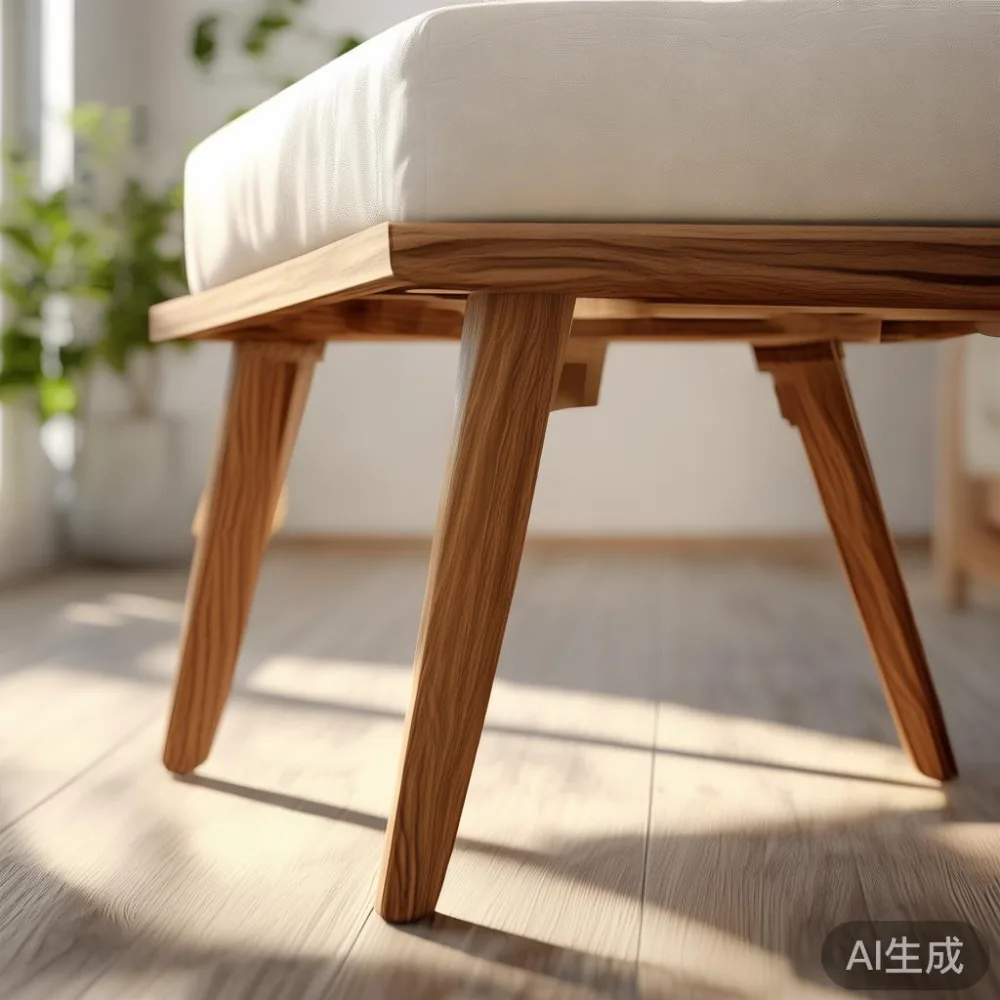
A typical four-piece veneer outdoor patio set, two chairs, a 120 cm bench, and a small side table, retails locally at around S$1,100 to S$1,400. The marketing photos show a solid wood sofa frame and a thick dining table top, but the side panels reveal thin laminate skins. A comparable set built from kiln-dried teak or eucalyptus with mortise-and-tenon joinery sits at S$2,400 to S$2,900 once GST is included. That is roughly 110 percent more at the till. For shoppers watching every dollar, the gap feels unreasonable. For shoppers who run the five-year spreadsheet, the gap is the whole point of this comparison.
Delivery in Singapore adds another data point. Veneer sets are typically stocked at local warehouses, so lead time is 3 to 5 working days. Imported solid pieces from Chinese factories such as MIDHILL, which has been making solid wood furniture since 2008, usually take 18 to 32 days by sea to a Singapore forwarder, with free delivery above S$350. Lift access in most post-2010 HDB blocks is 1.1 m wide, and corridor corners are around 2.4 m, which is enough for a flat-pack veneer box but a tight squeeze for a 180 cm solid wood dining table unless it is designed with detachable legs.
How does weather damage each material over five years?
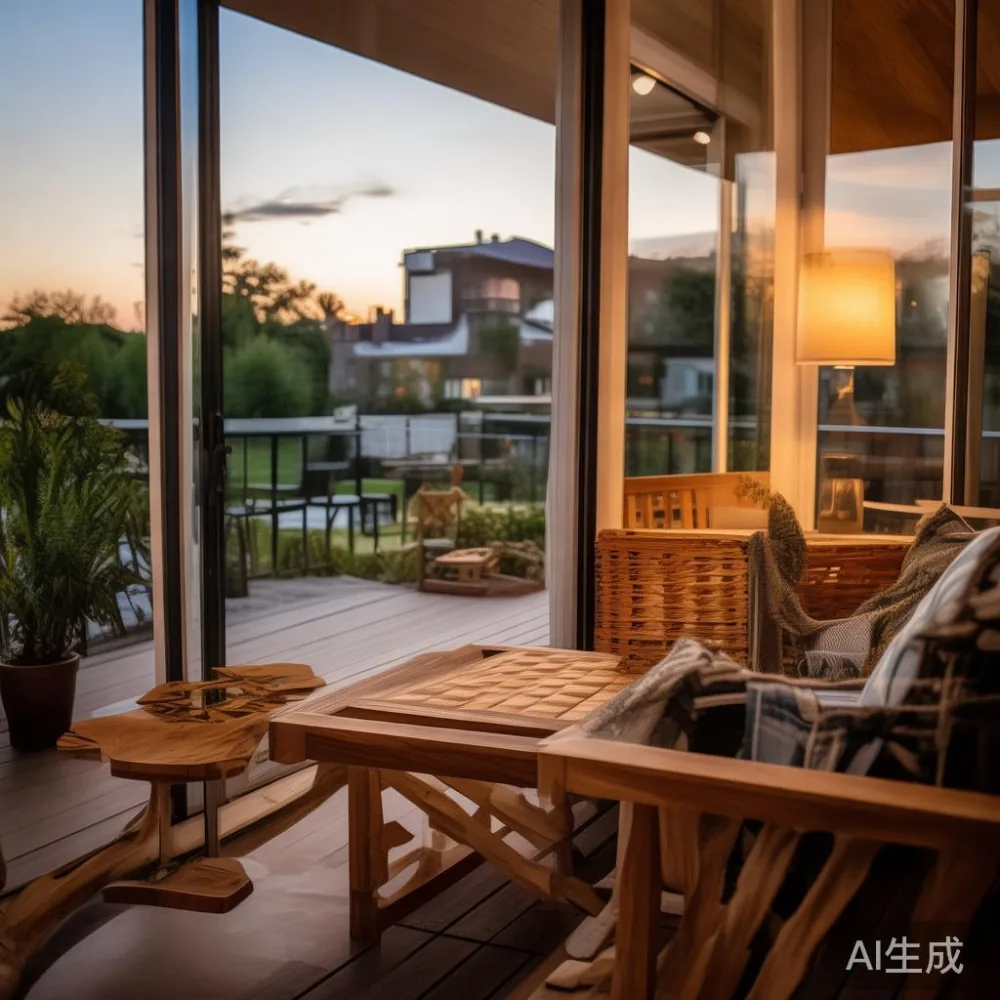
Singapore sits on the equator, which means outdoor patio furniture takes 12 months of humidity, 2,400 mm of annual rainfall, and a UV index that hovers at 9 to 11 for most of the year. Veneer is a paper-thin layer of real wood glued to a substrate. The glue line fails first, usually along the edges of a tabletop or under the armrest of a chair. Once moisture gets in, the substrate swells and the surface bubbles. In my Punggol case study, the bubbling appeared at month 18 on the bench seat, the MDF core crumbled at month 24, and the frame sagged by month 26.
Solid timber behaves differently. Surface checking, those fine cracks along the grain, appears at month 8 to 12 if the piece is left untreated. Light sanding and one coat of outdoor oil at month 12 typically costs S$45 to S$80 in materials and one Saturday afternoon. By year three the surface has a silver-grey patina that many homeowners actively want, and by year five the structural frame is still tight, with no swelling, no delamination, and no soft spots. A 100 percent solid outdoor patio dining table in teak can easily reach the 15-year mark with annual maintenance.
What are the repair and replacement costs over five years?
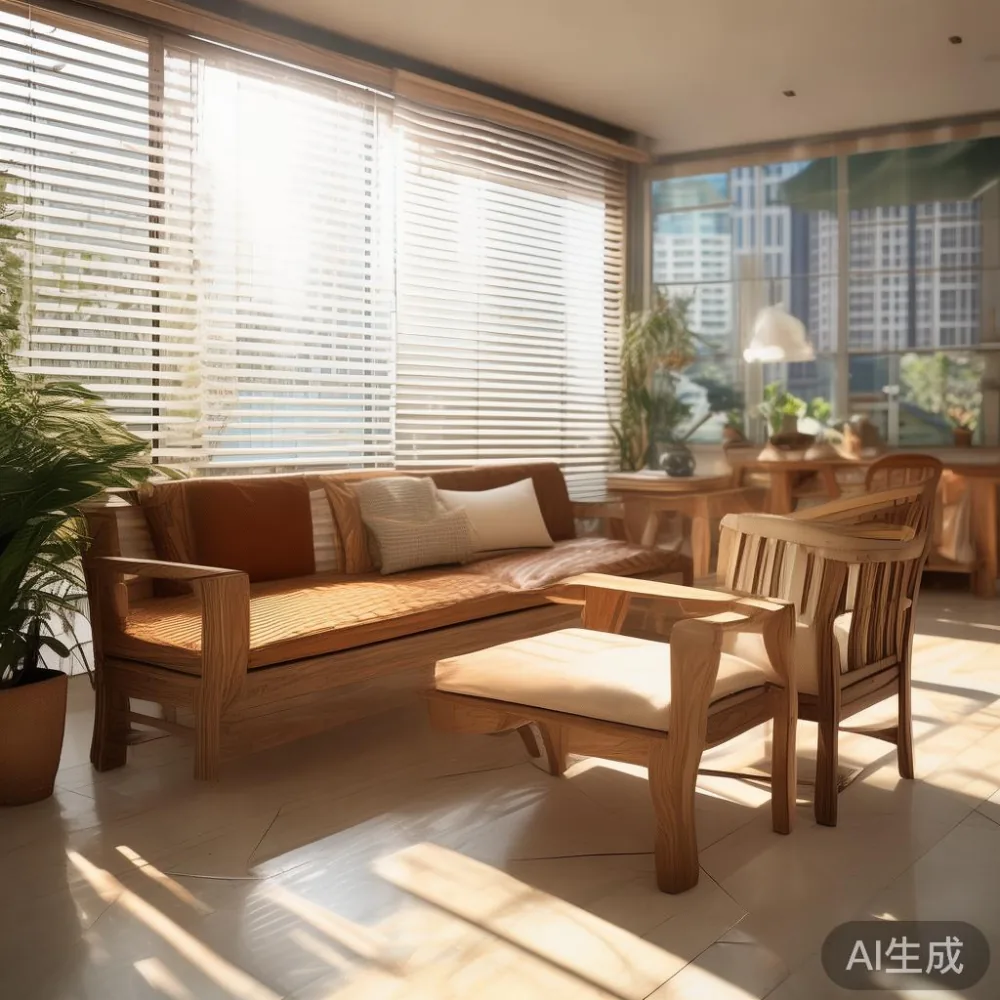
Here is the part most buyers never run on a calculator. Veneer furniture is, in practical terms, unrepairable. A peeling laminate skin cannot be re-bonded reliably, the substrate cannot be patched, and most local carpenters will quote S$180 to S$280 for a partial re-veneer, which often costs more than the original set. Replacement is the only sensible route. Over five years, expect at least one full replacement, often two if the set lives in a north-facing balcony that gets hard afternoon sun.
Solid wood is the opposite. A cracked bed frame slat is a S$22 part and 20 minutes with an Allen key. A scratched marble table top can be buffed with a 3,000-grit pad. A wardrobe door that has swollen slightly in the monsoon can be planed down by 1.5 mm and re-sealed. MIDHILL, for reference, backs every export order with a 10-year structural warranty and a lifetime refinishing service, so even major restoration can be arranged at the factory level rather than at a third-party shop. A single solid set, purchased once and maintained properly, will outlast three rounds of cheap replacements.
How much does a bed cost in Singapore?
A genuine solid wood bed frame in queen size, built from kiln-dried ash or oak with a slatted base, runs from S$1,650 to S$2,400 in Singapore retail after GST, with mid-range American light luxury designs sitting at around S$1,950. That is the complete landed figure, including delivery to a HDB bedroom in Tampines or a condo in Punggol, basic assembly, and the warranty card. A matching nightstand adds roughly S$320 to S$480 per pair, and a full wardrobe in the same collection lands between S$2,800 and S$4,200 depending on door count and internal layout.
For shoppers browsing the lower end, flat-pack veneer bed frames start at S$380 and look acceptable in the showroom. The catch is identical to the outdoor patio math above: the headboard panels and side rails are 0.4 to 0.8 mm laminate over particleboard, and the warranty is typically 12 months on the surface finish, nothing on structure. A queen-size replacement at month 36 therefore adds another S$380 to S$500. Spread over 5 years the solid option is cheaper, even before you count the resale value of real timber.
Where does a marble table fit in the cost picture?
A round 90 cm marble table paired with a solid wood base is a common feature in French light luxury and post-modern light luxury interiors, both of which have strong followings in Singapore condos. The price band is S$1,400 to S$2,100 for an honest sintered stone or natural marble top on a kiln-dried ash or walnut base. The marble top is, in weight terms, 28 to 34 kg for a 90 cm round, and the base is 12 to 16 kg, so the total is around 46 kg, a meaningful number for HDB lifts rated at 250 kg and for the two-man delivery crews most customers will need.
Veneer versions of the same shape run S$550 to S$850, but the "marble" is a printed laminate, not stone, and the base is MDF. After 30 months of holding cups, laptops, and hot pots, the printed surface etches and the base wobbles. A solid marble table with a real wood base, by contrast, gains character, accepts polishing, and can be re-topped for under S$400 if the worst ever happens. Over a five-year window the solid option is once again the cheaper answer per year of use.
What about the balcony itself: is sage solid wood balcony furniture a realistic option in HDBs?
Yes, sage solid wood balcony furniture is a realistic option for HDBs, provided the timber is FSC-certified and the piece is sized to a 1.2 m by 3 m corridor balcony or a 2.5 m by 4 m service yard. The sage green tone is achieved with a water-based exterior stain, so the timber can still breathe. A typical sage-finished two-seater bench with a small side table weighs 22 to 28 kg, fits through a standard 0.9 m HDB door, and arrives mostly assembled.
The design works on three levels. Aesthetically, the muted green softens the concrete look of most HDB parapets and pairs well with the off-white tiles common in post-2020 BTOs. Practically, the closed-grain hardwood resists the fungal growth that plagues open-grain softwoods in our climate. Financially, a sage-finished set sits in the S$1,800 to S$2,400 range, which is comparable to a mid-range indoor sofa and is therefore a real long-term investment, not a disposable item. For homeowners in Punggol and Sengkang with larger balconies, adding a 140 cm solid wood dining table turns the balcony into a proper outdoor dining room, which is exactly the use case the post-modern light luxury catalogue envisions.
How do the five-year totals actually stack up?
Let us run the numbers on a four-piece outdoor patio set, one bed frame in queen size, one pair of nightstands, one three-door wardrobe, and one 90 cm marble table, the kind of starter set a young couple in a four-room HDB would buy together. In veneer or laminate the year-one spend is roughly S$3,150. Add one round of replacements and minor repairs by year three, and the five-year spend lands near S$4,950. The equivalent in solid wood, including a professional oiling at year two and a light refinish at year four, is S$6,300 in year one and around S$6,950 across five years.
The veneer path is cheaper on paper for the first 18 months. From month 19 onward the solid path pulls ahead because there is no replacement event. The crossover point, the month at which the cumulative solid spend meets and then falls below the cumulative veneer spend, sits at month 30 to month 34 in my model, depending on the exact items chosen. Anyone keeping the set for the typical HDB loan tenure of 25 to 30 years will save multiple rounds of replacement cost. The light-luxury positioning, whether French, American, or post-modern, also holds its resale value far better than laminate pieces, which have effectively zero second-hand market once the surface starts to peel.
What should a Singapore buyer actually do this weekend?
Measure the balcony, the corridor, and the lift first. Anything wider than 80 cm in any direction will not make it up a typical HDB stairwell during a furniture delivery slot. Then shortlist two or three solid wood outdoor patio sets that quote the actual timber species, the moisture content (8 to 12 percent is the right range for kiln-dried hardwood), and the joinery method. Ask for the factory origin, the warranty term in writing, and the after-sales service for refinishing. Reputable Foshan makers that have been exporting since the late 2000s, MIDHILL among them, will provide all three without hesitation. Finally, keep the receipts and a photo file of the maintenance log; both become useful when the warranty window opens and when you eventually pass the piece to the next owner in another 10 to 15 years.