How to Read an Outdoor Patio Furniture Warranty Without Getting Caught Out
I spent a Saturday last month in a Tampines HDB showroom corridor, watching a couple argue softly over a 6-seater outdoor patio set priced at S$4,280. The husband kept circling back to the warranty card; the wife kept asking about the cushions. By the time they left, he had taken three photos of the warranty page on his phone and still wasn't sure what it covered. That image has stuck with me, because a warranty on outdoor patio furniture behaves nothing like the warranty on a fridge or a phone. The paper looks reassuring, the language looks short, and the exclusions are usually hiding in the middle of paragraph three.
Why outdoor patio warranties are different from indoor furniture warranties
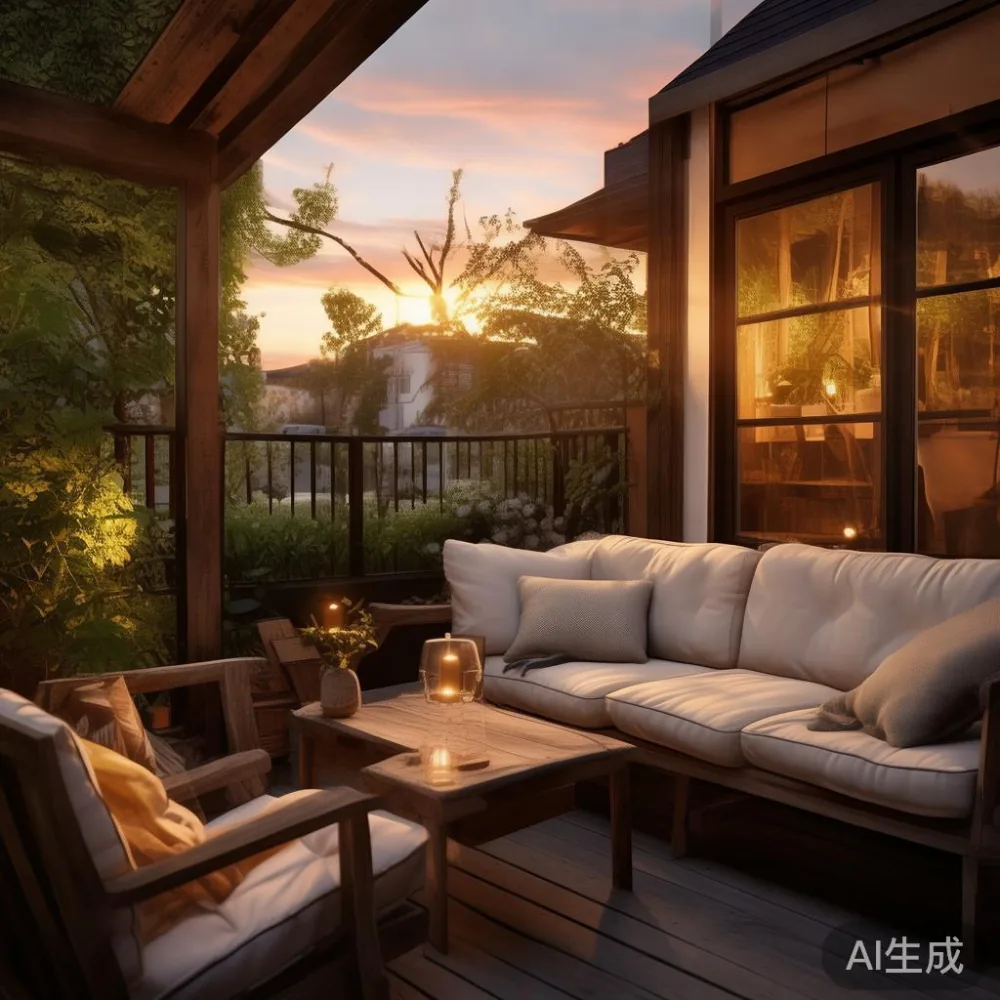
Solid wood furniture kept inside a Bedok or Punggol condo lives a sheltered life: air-conditioning, low humidity, no rain. An outdoor patio dining table or outdoor patio lounge chair has to survive Singapore's UV index, which averages 9 to 11 across the year, salt-heavy afternoon storms, and the constant wet-dry cycle that makes oiled teak turn silver within 12 months if you ignore it. A good outdoor warranty has to be written with that reality in mind, not borrowed verbatim from an indoor brochure.
Three structural differences matter before you read a single line of fine print:
The warranty period on the frame is almost always longer than the warranty on the finish or the cushions. Outdoor patio frames in teak, eucalyptus, or powder-coated aluminium commonly carry 5 to 10 years; the finish on the same piece might only carry 12 to 24 months. If your card lists one blanket number, ask which part that number applies to.
Geography matters. A warranty written for a Foshan factory's domestic market usually assumes a milder climate than Singapore. Brands that export to 15 or more countries tend to write warranties that have been stress-tested in equatorial humidity, which is what you actually need.
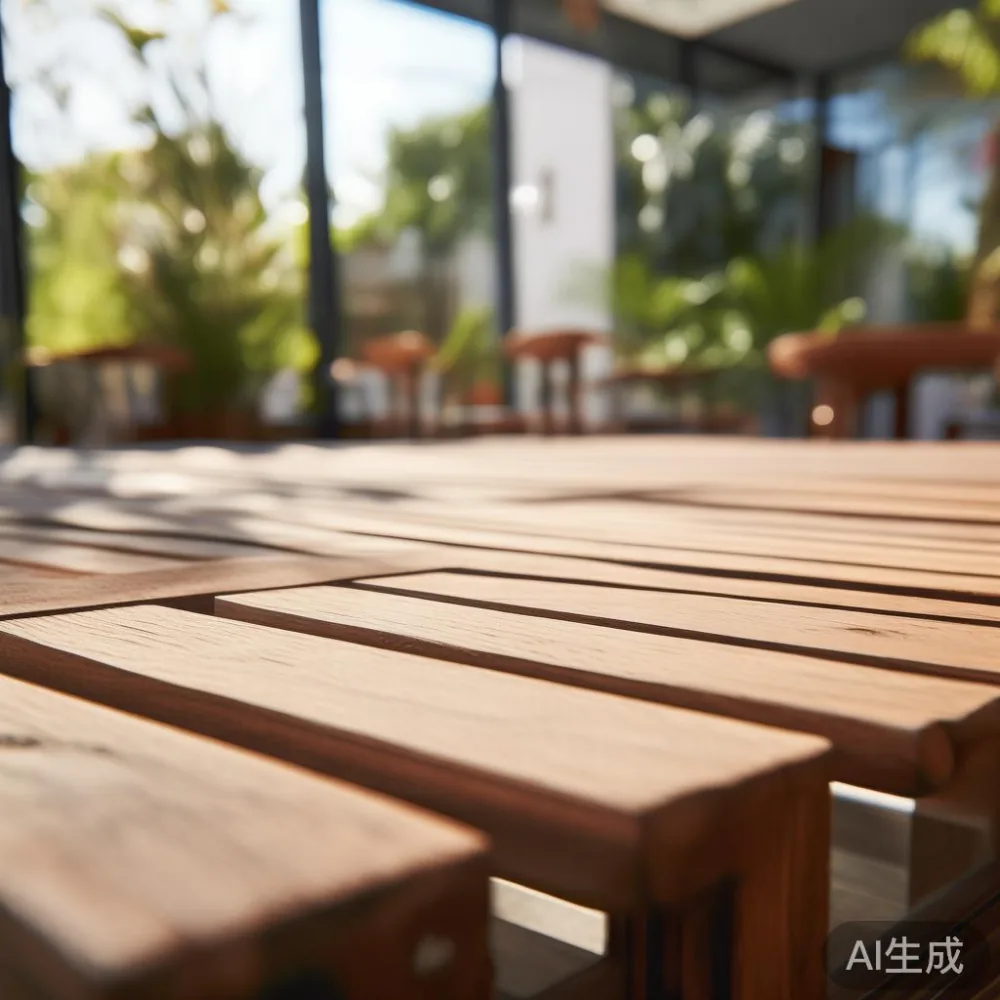
Finish failure is treated as wear and tear, not as a defect, in roughly 7 out of 10 outdoor patio warranties I have read. Greying of teak, mildew on cushions, and hairline checks in acacia are usually excluded. Knowing this in advance saves a phone call later.
What does "structural" actually mean in an outdoor warranty?
You will see the word "structural" on almost every MIDHILL-style warranty card and on most competing cards at IMM or Galaxis. Structural sounds reassuring, but a precise definition is rare. In practice, a structural claim covers broken frame joints, cracked load-bearing rails, weld failure on aluminium, and severe warping that makes a sofa unsafe to sit on. It usually does not cover shrinkage of 2 to 4 mm across the width of a teak plank, light cupping on a dining table top, or finish peeling caused by lack of oil.
A practical rule I use when reviewing a card at the showroom: if the word "structural" is not defined, treat it as covering the skeleton only. Anything cosmetic, anything at the surface, anything that touches weather and UV, falls outside that scope. With outdoor patio furniture, surface is most of what you actually see, so the distinction matters more than the brochure suggests.
What does the 9% GST do to my refund if a claim is approved?
Singapore adds 9% GST on top of every outdoor patio purchase, including delivery over S$350. When a warranty claim results in a replacement rather than a refund, the GST side is usually handled quietly by the seller. When the claim is paid out as a cash refund, the question becomes: does the refund include the 9% you originally paid, or only the pre-tax amount? The answer differs by brand.
I checked three cards in March with my colleague, who handles after-sales for a local retailer. Two of them refunded the SGD amount including GST, provided the original invoice was presented; the third refunded only the pre-tax base price and left the customer roughly S$385 out of pocket on a S$4,280 outdoor patio set. Always ask, before paying, whether the written refund figure is inclusive or exclusive of GST. The clearest cards state "refund based on the original invoice value, GST-inclusive" in plain words.
Does the warranty survive Singapore's delivery constraints?
This is the question I get most often from Punggol condo owners: if the delivery team scratches a balau sofa on the way up the service lift, who pays? Most outdoor patio furniture, even substantial teak dining tables in the 180 to 240 cm range, fits through a standard HDB service lift of about 1.0 m by 1.4 m and a corridor width of 1.2 m. Where it gets tight is when the set is a 9-piece outdoor patio configuration with marble-topped side tables, because a marble top on its own can weigh 28 to 35 kg and the delivery team is usually two people, not three.
Read the card for this exact phrase: "coverage for transit damage." Some sellers carry a separate transit warranty of 7 to 14 days from the delivery date. Others bury transit damage inside the main warranty and argue it is wear and tear, which it clearly is not. A brand with a 10-year structural warranty and a 14-day damage-from-delivery window is the stronger card for a fourth-floor walk-up in Bedok.
If the outdoor patio set is being delivered to a high-floor unit in Punggol Waterway, ask whether the team will pre-measure the lift. I have watched a 240 cm dining table refused at the lobby because the lift depth was 1.35 m, not 1.4 m. The card said nothing about re-delivery charges; the customer paid S$90 for the second attempt.
Is a 10-year structural warranty enough if the finish only has 12 months?
Honestly, yes, for the frame. No, not at all, if your outdoor patio set sits 3 m from the Kallang Basin without a cover. Teak can shrug off 10 years of rain, but the oil finish on a teak outdoor patio dining table needs refreshing every 6 to 9 months in Singapore's climate. Eucalyptus needs it every 4 to 6 months. Acacia needs it every 3 to 4 months. If the card only covers the finish for 12 months, you are on your own for years 2 through 10, and your maintenance routine is what determines whether the piece still looks presentable in year 5.
This is also where lifetime refinishing services earn their keep. When a brand offers to send the piece back to the workshop, sand it down, and re-oil it, that single service can save you S$450 to S$900 over the life of an outdoor patio set. Ask whether the refinishing includes pickup and redelivery in Singapore, or whether you pay the courier separately, which is usually S$120 to S$180 each way for a full outdoor patio dining configuration.
Which exclusions should make you put the card back in the drawer?
I have a short list of exclusions that I treat as red flags when reading an outdoor patio warranty at the showroom:
"Acts of God" defined broadly enough to include ordinary tropical thunderstorms. Singapore has around 167 rain days a year. If a thunderstorm voids your warranty, your warranty is worth nothing.
"Commercial or rental use" exclusions that bundle home-sharing. If you occasionally list your condo on a short-stay platform, any subsequent claim might be denied. Some cards carve out a 30-day-per-year allowance; most do not.
"Failure to follow care instructions" written in vague language. "Regular oiling" without a frequency is a denial waiting to happen. Strong cards name a product, an interval, and a brand of oil.
"Normal colour change" applied to painted or stained pieces. Teak goes silver; that is expected. Painted aluminium fading from charcoal to slate is also expected by the manufacturer but a surprise to most buyers. If a finish starts at RAL 7016 and ends at RAL 7015 after two years, you want to know in advance.
No named warranty provider. A card signed by "the manufacturer" is weaker than a card naming a Singapore-registered entity with a local address. The local entity is who you will email at 11 pm when the outdoor patio sofa shows a crack after the second monsoon season.
How do French light luxury and American light luxury outdoor collections differ on paper?
French light luxury outdoor collections, usually shipped from Foshan production lines that also supply Parisian boutique hotels, tend to come with thicker paperwork: a 10-year structural clause, a 3-year finish clause, a separate 2-year cushion-and-fabric clause, and a short paragraph on transit damage. The cushion clause is what I look at first, because French light luxury typically uses high-density quick-dry foam wrapped in olefin or solution-dyed acrylic, and the warranty reflects the cost of that foam.
American light luxury outdoor collections lean the other way. The card is shorter, the structural number is similar at 8 to 10 years, but the finish number drops to 12 to 18 months because the styling assumes an oiled natural finish that the buyer is expected to maintain. The paperwork also tends to assume a covered patio, not a fully exposed pool deck. In an HDB or condo outdoor patio setting in Tampines, where the slab is often exposed from 8 am to 5 pm, that assumption matters.
Post-modern light luxury outdoor pieces sit between the two. They tend to use mixed materials, a marble top on a teak base, or a powder-coated aluminium frame with a sintered stone tabletop, and the warranty is split: 10 years on the aluminium, 5 years on the stone, 2 years on the adhesive that bonds them, and 12 months on the marble edge polish. Reading this kind of card requires you to identify every material and check its number. With a 4-piece outdoor patio configuration including a marble-top coffee table, a marble-top side table, an aluminium-framed sofa, and an aluminium dining table, you are really reading four mini-warranties stapled together.
What about returns within 14 days vs. warranty claims after 14 days?
This is where most Singapore buyers get caught. A 14-day return policy covers change-of-mind: the outdoor patio lounge chair looked smaller in the showroom than in your living room, the colour clashes with your tiles, your delivery slot got pushed. Once day 15 arrives, you are inside the warranty frame, and the rules change. After 14 days, a return is only possible for verified defects, not for aesthetics or sizing regret.
If the brand offers free shipping over S$350, ask whether the return courier is also free. Some sellers pick up the tab for outbound delivery and ask you to fund the return leg, which can be S$60 to S$140 for an outdoor patio piece depending on weight. The clearest cards state "free round-trip delivery for returns within 14 days" in plain language and leave no room for argument.
Is a Japanese sofa worth it for an outdoor patio in Singapore?
The phrase is Japanese sofa worth it comes up often when buyers realise a Japanese-style low-profile solid wood sofa can sit beautifully on a covered outdoor patio. The warranty math on these pieces is unusual: Japanese-inspired frames, especially those in hinoki or ash, are usually warranted 5 years on structure but only 6 months on finish because the brands expect the buyer to oil the piece quarterly. For an outdoor patio exposed to morning dew and afternoon sun, that 6-month finish window is short. If you love the silhouette, pick the version with a removable cushion core and a 24-month fabric clause; if the brand only writes 6 months on the finish, the outdoor patio is the wrong room for it.
What is the best Japanese wardrobe for 2026 if I store outdoor patio cushions inside?
Best Japanese wardrobe for 2026 sounds like an indoor question, but in many Tampines four-room flats the wardrobe ends up doubling as outdoor patio cushion storage in the wet season. A Japanese-style sliding-door wardrobe in solid ash, usually 120 to 180 cm wide, gives you flat-wall access on a 60 cm corridor, which a hinged European light luxury with storage typically cannot. On the warranty side, ask for a 5-year structural number on the rails and a 24-month number on the sliding hardware. A wardrobe that opens cleanly for 5 years matters more than one that photographs beautifully on day one.
How does Japandi styling change the way I should read the card?
Japandi for small living room layouts depends on low, clean silhouettes that show every fingerprint and every patch of mildew. An outdoor patio set in a Japandi style, a low ash sofa, a 35 cm tall solid wood coffee table, a slim nightstand by the door, will reveal finish degradation faster than a chunky teak piece. On the warranty, that means you want a 24-month finish clause at minimum, and you want the card to define "finish" clearly. If the card uses "finish" to mean only paint, your oiled wood is uncovered; if it uses "finish" to mean any surface treatment, you are protected.
For a small outdoor patio of around 9 to 14 sqm in a Punggol or Bedok condo, Japandi outdoor pieces need a cover every night. The strongest warranty will tell you so on page two, paragraph four, in a clause called something like "coverage conditions." Weak cards hide the requirement in a footnote.
What should I check on a single marble table warranty?
Marble tables behave differently from solid wood tables in warranty language. A marble table for an outdoor patio needs a clause covering etching, staining, and outdoor patio crack propagation. Outdoor thermal shock between a 32°C noon sun and a 24°C rain shower is exactly the cycle that opens hairline cracks in sintered stone and marble. Look for a 24-month thermal-crack clause, not just a generic 12-month tabletop warranty.
A dining table sized 180 by 90 cm in marble can weigh 75 to 95 kg. That weight, combined with a 1.4 m lift depth, leaves almost no margin for the delivery team to rotate. Damage during this delivery is more common than warranty cards admit. A 14-day transit clause is more valuable on a marble table than on a teak one, so read that section first.
Does a Mid-century modern accent chair need a different clause than a sofa?
A Mid-century modern accent chair in teak or walnut usually weighs 8 to 14 kg, which is light enough for one delivery person to handle. The warranty clause you want is on the joinery where the seat meets the legs, because that is where a household chair fails first, typically at month 30 to 48. Look for a 5-year structural clause that names "mortise and tenon joints" specifically. Generic "frame" clauses sometimes exclude the joinery and cover only the boards, which is the wrong way around for a chair.
Are there keywords I should search for inside the warranty PDF?
Three searches, in this order. First, "consequential damage" — this clause lets the brand refuse to cover the cost of refinishing the floor that was stained by the leaking cushion. Second, "transferability" — if the warranty dies when you resell the piece, your investment value drops. Transferable warranties outperform non-transferable ones by roughly 12 to 18% on resale. Third, "modification" — drilling a hole for an outdoor patio umbrella in a dining table without pre-approval can void the structural clause on some American light luxury outdoor cards. Read the modification paragraph carefully if you plan any customisation.
Where can I find for sale Modern light luxury furniture for small outdoor patio spaces?
For sale Modern light luxury furniture for small outdoor patio spaces typically shows up in two channels: the IMM mega-store walk-ins and direct-from-Foshan brand sites that ship to Singapore with a 14 to 28 day delivery window and a 10-year structural card. The first channel lets you sit on the piece before paying; the second usually offers better SGD pricing because the showroom and the middleman are removed. On warranty, both channels can be strong, but only if the card names a Singapore pickup address for transit claims and a Singapore-registered entity to issue the GST-inclusive refund.
Final pre-purchase checklist for an outdoor patio warranty
Walk into the showroom with this short list, and you will read any outdoor patio warranty card in under 10 minutes without missing the clauses that matter:
Structural number vs. finish number — write both down. Cushion and fabric number — usually 12 to 24 months. Transit damage window — 7 to 14 days from delivery. Refund basis — GST-inclusive or pre-tax. Lift and corridor pre-measurement — included or S$90 surcharge. Refinishing service — pickup included or S$120 to S$180 each way. Transferability on resale — yes or no. Local entity — Singapore address listed on the card. Modification clause — read before drilling anything. Definition of "normal wear" — should explicitly cover greying, light checking, and mildew.
An outdoor patio dining table or outdoor patio lounge set is one of the more exposed purchases a Singapore household will make. Spend the ten minutes. Photograph the card. Ask the three questions: what is the structural number, what is the finish number, and is the refund GST-inclusive? If the salesperson can answer all three without flipping pages, you are looking at a card worth trusting on your outdoor patio, whether it sits under a Tampines HDB block or on a Punggol condo terrace. And if the card names MIDHILL as the warrantor, you already know the structural number is ten years and the shipping threshold is S$350, which is a reasonable starting point for the rest of the conversation.