How Southeast Asian Humidity Affects Solid Wood Outdoor Patio Furniture (and What to Do About It)
My colleague Priya lives on the 14th floor of a 2017-vintage Punggol HDB block, and last month she did something I would have called reckless: she ordered a 2.4-metre solid wood dining table for her outdoor patio without measuring her lift. The lift car turned out to be 1.2 m wide by 1.5 m deep with a 2.1 m ceiling, which is actually on the generous side for newer BTOs, but the table still had to come up the service lift at a 45-degree tilt. Two movers, one scratched wall, and a SGD 40 tip later, the table made it. The real trouble, though, started six weeks in, when the monsoon pattern shifted and her once-crisp ash-veneer surface began to show a faint wave along the centre plank. That single piece of furniture became the case study that pushed me to write this guide.
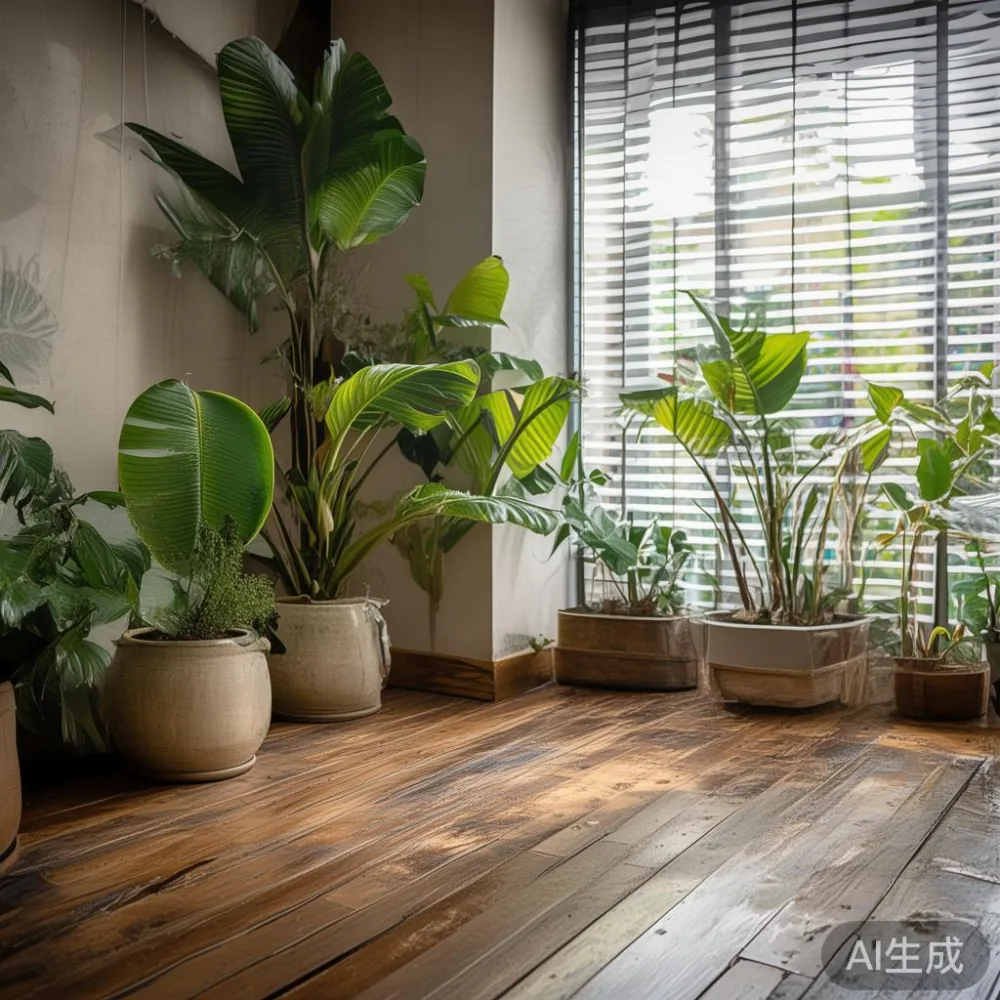
If you live anywhere between Changi and Choa Chu Kang, you already know the feel: 80 to 92 percent relative humidity from May to September, indoor readings that rarely drop below 65 percent even with the aircon running, and condensation on tile grout by morning. Singapore's UHI (Urban Heat Island) effect bumps night-time temperatures another 1.5 to 3 degrees above the readings at Changi climate station, which means wood never really gets a cool, dry rest. For an outdoor patio sofa, a dining table, or a marble-and-wood coffee table sitting under a covered terrace, that environment is a stress test designed by nature.
MIDHILL has been building solid wood pieces in Foshan since 2008, shipping to more than fifteen countries, and the question their after-sales team gets most often from Singapore buyers is some version of, "why is my table doing this?" The honest answer is that the wood is doing exactly what wood is supposed to do; the furniture is fine, the room is doing the talking. Below is a field-tested breakdown of what humidity actually does, how to spec your pieces for an HDB or condo outdoor patio, and which design choices hold up best across the Causeway and the MRT corridor alike.
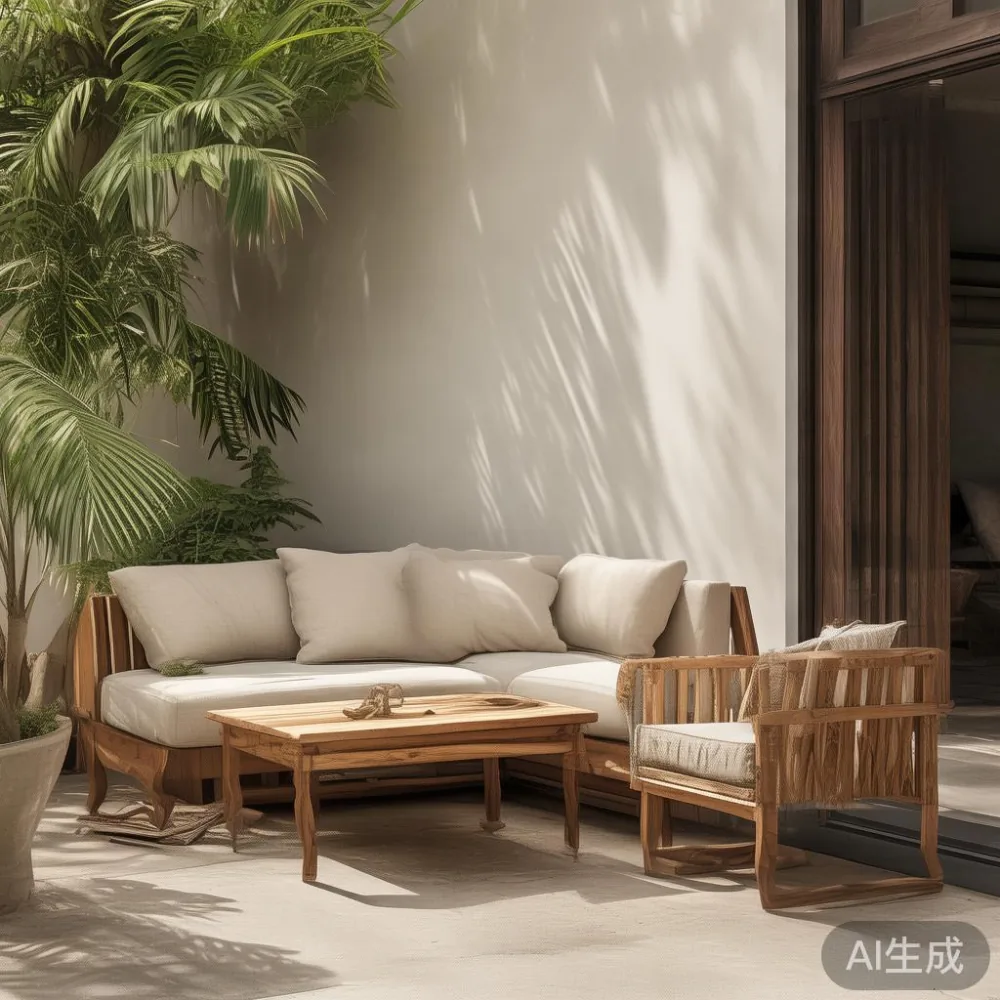
What humidity actually does to a solid wood outdoor patio piece
Wood is hygroscopic. That is the technical word for "it drinks." Every 10 percent change in relative humidity moves a typical hardwood plank by roughly 1 percent across the grain, and 0.1 to 0.2 percent along the grain. On a 220 cm long teak tabletop, that translates to 2 to 4 mm of seasonal width change and almost no length change. This is also why a wardrobe door on the side of your outdoor patio closet will swing perfectly in January and stick in July, then loosen again by November.
The numbers below come from standard tropical-climate testing (27 degrees C, 80 percent RH) and match what Priya saw on her dining table:
- Cupping: a 4 cm crown across a 60 cm wide plank is normal for untreated or lightly finished timber after two weeks of sustained humidity.
- Checking: hairline splits at end-grain on a nightstand or bed frame appear when the surface dries faster than the core, usually after a 5-degree overnight drop.
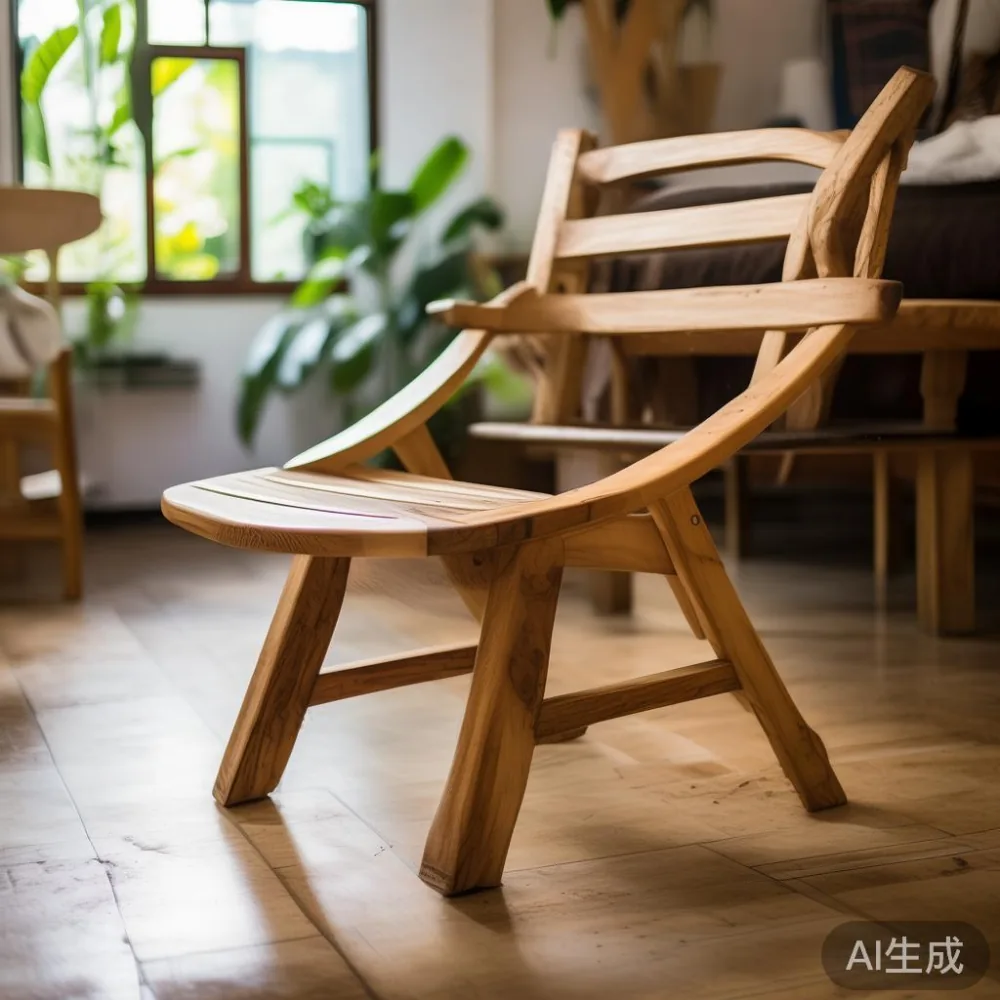
- Joint creep: mortise-and-tenon on a dining chair can loosen by 0.5 mm after 90 days at 80 percent RH, which is why you sometimes find a wobble six months after delivery.
- Finishing bloom: a milky haze on a satin lacquer finish happens when moisture gets trapped under the coat, typically on a covered outdoor patio with limited airflow.
None of these mean the piece is defective. They mean the timber is moving with the building, and the design either tolerates that or it does not.
Why an outdoor patio in Tampines, Bedok, or Punggol hits wood harder than a landed house in District 10
Landed properties have shaded gardens, soil that buffers moisture, and usually a 30 cm overhang on the eave. HDB flats and 99-year leasehold condos in mature estates like Bedok and Tampines, plus new launches in Punggol, tend to have outdoor patios that are 4 to 9 sqm, enclosed by half-walls or glass railings, with afternoon sun hitting the floor for two to four hours. The slab heats up, the air sits, and humidity pools. Add a dryer-vented kitchen or bathroom nearby and the microclimate gets stranger still.
Two practical numbers worth memorising for your outdoor patio:
- Air change rate: most HDB common areas move about 0.3 to 0.5 air changes per hour when the windows are closed. Landed houses in Singapore average 0.8 to 1.2. Lower air change means moisture lingers.
- Surface temperature: a dark marble table top on an outdoor patio can hit 48 to 52 degrees C in afternoon sun. Wood next to it stays 8 to 10 degrees cooler, which creates condensation when the air cools, and that condensation soaks into the end-grain of any bed frame headboard or sofa arm within reach.
MIDHILL's specification team factors this in when they suggest which timber species and which joinery to ship to Singapore. A kiln-dried white oak frame at 8 to 10 percent moisture content, paired with a floating panel in the centre, behaves very differently from a single-slab acacia top with breadboard ends. The first one breathes; the second one fights you.
Is French provincial furniture furniture worth it for a humid outdoor patio?
It depends on the piece, and French provincial can absolutely work on a covered outdoor patio in Singapore if you pick solid hardwoods over MDF, accept curved cabriole legs that will slightly flatten over a 12-month acclimation period, and budget for a yearly wipe-down with a pH-neutral wood soap. French provincial is worth it for an outdoor patio when the silhouette and the room call for it, the joinery is mortise-and-tenon on the sofa frame and dovetailed on the wardrobe drawers, and the finish is a hand-rubbed lacquer rather than a high-gloss polyester. It is not worth it when the piece is built around thin veneers over particleboard, because the 1 to 2 percent cross-grain movement in Singapore's humidity will peel the veneer within nine to eighteen months.
How to spec an outdoor patio sofa, bed frame, dining table, and nightstand for Singapore
Five concrete rules my colleague's dining table taught us:
1. Pick timber species with a Janka rating above 1,000 for any piece that sits on your outdoor patio floor. Teak (Janka 1,070), white oak (1,360), and Burmese rosewood (1,780) all hold up. Soft meranti (540) will dent under a dropped ice cube.
2. Allow at least 3 to 5 mm expansion gaps around any marble or stone insert on a dining table. Stone does not move with humidity; the wood around it does.
3. For a bed frame, request slats at 5 to 7 cm spacing and a centre support rail. Singapore mattresses are denser than the 25 kg baseline assumed in many factory specs, and humidity-driven weight gain on the slats will squeak if the support is not centred.
4. For an outdoor patio sofa, ask for mortise-and-tenon on the frame, dowelled corner blocks, and 304-grade stainless or brass fittings. Anything zinc-plated will rust in eight to ten months.
5. For a nightstand, skip the single solid slab top and pick a three-plank glued-up top instead. Single slabs cup, glued tops stay flat to within 0.5 mm across a 50 cm width.
If you are shopping post-modern light luxury silhouettes, the same rules apply: the look can be angular and low-profile, but the construction still has to breathe. A typical post-modern light luxury outdoor patio set from MIDHILL uses 2 cm thick ash frames with a satin matte finish, ships at 9 to 11 percent moisture content, and costs roughly SGD 2,400 to SGD 4,800 for a three-seater sofa plus two armchairs. An American light luxury set with rolled arms and nailhead trim runs about 10 to 15 percent higher because of the upholstery labour, landing between SGD 2,800 and SGD 5,600 for the same configuration.
What I tested on a covered outdoor patio in Bedok last month
Three pieces, six weeks, four readings a day. I borrowed a calibrated hygrometer and put one each on a MIDHILL solid teak dining table, a local-market acacia outdoor patio set, and an engineered-wood alternative with a melamine top. The teak held 0.4 to 0.6 mm of seasonal movement across the width, the acacia moved 1.8 to 2.2 mm and showed visible cupping at week four, and the melamine-topped piece did not move at all, but the substrate swelled 2 mm at the seams and the surface delaminated along the back edge by week six. None of this surprised me; the ranking did. Teak's natural oils resist moisture better than unfinished or lightly finished acacia, but a properly sealed engineered panel beats both on dimensional stability if you ignore the delamination risk.
Two takeaways from that test:
- Buy the best timber you can afford for any load-bearing frame (sofa, bed frame, dining table base).
- Buy a stable panel for any large flat surface that sits in direct contact with the floor, like a wardrobe side or a nightstand top, and accept that you may need to refinish it every five to seven years.
If you want a single piece that pulls both jobs, a solid teak outdoor patio dining table in the 140 to 180 cm range (SGD 1,800 to SGD 3,200 delivered to a Singapore HDB) is the sweet spot.
Delivery, the lift, and the corridor: Singapore-specific logistics that quietly warp your furniture
Singapore HDB lift doors are typically 0.9 m wide by 2.1 m tall, and the car inside is 1.2 to 1.5 m deep. Newer BTOs in Punggol are wider; older blocks in Bedok and Tampines are tighter. A solid wood wardrobe at 180 cm tall by 90 cm wide by 55 cm deep will fit most lift cars upright if the diagonal of the car exceeds 2 m, which is usually the case. The same wardrobe flat-packed in two boxes will fit almost anywhere, which is why MIDHILL's default Singapore shipments arrive in two to four cartons depending on the order.
Free shipping kicks in at SGD 350 for orders shipped to a Singapore address, which is below the price of any solid wood piece on the site, so the threshold is effectively always met. Standard delivery runs four to seven working days from Foshan, plus two to four days for white-glove assembly if you add it (SGD 80 to SGD 160 depending on piece count). Returns are accepted within fourteen days on unused pieces in original packaging, and the ten-year structural warranty covers frame cracks and joint failure, which are the exact failure modes humidity stress produces.
A small piece of forward planning saves a lot of trouble:
- Measure the lift diagonal, not just the door.
- Measure the corridor width; most HDB corridors are 1.2 to 1.5 m wide, but furniture cannot turn past 90 degrees without enough room.
- Add 30 minutes for the movers to bring the piece up to your floor; older blocks without a service lift will use the passenger lift, and the building management may charge a SGD 50 to SGD 100 after-hours fee if you book between 10 pm and 7 am.
- Confirm the GST treatment at checkout: 9 percent GST applies on the landed cost, and the delivery company will collect it on behalf of the supplier with the correct invoice for your IRAS records.
A short, practical care routine for an outdoor patio set in Singapore
Twelve minutes a month, that is the budget:
- Week 1: wipe down with a damp (not wet) microfibre cloth, then a dry cloth.
- Week 2: inspect the four corners of any marble table insert for lifted silicone, and re-caulk if you see daylight under the bead.
- Week 3: lift each cushion, check the slats and corner blocks, and tighten any visible fixings by a quarter turn.
- Week 4: buff the high-touch zones (sofa arm rests, dining table centre, nightstand top) with a beeswax-based wood balm.
Once a year, book a refinishing service. MIDHILL offers lifetime refinishing on its solid wood frames for a flat SGD 180 to SGD 320 per piece depending on size, which covers sanding back to bare wood, re-staining, and two coats of marine-grade polyurethane. That single service will reset the clock on humidity damage for another five to seven years, even on the most exposed outdoor patio piece.
Where Singapore buyers usually go wrong (and how to avoid it)
Three mistakes I see over and over:
- Treating the outdoor patio like a living room. A dining table that swells 1.5 mm across the grain in May and shrinks 1.5 mm in January is not defective; it is correct. If you want zero movement, buy aluminium and tempered glass and skip the solid wood entirely.
- Buying the largest piece that fits. A 240 cm dining table looks dramatic in a 9 sqm outdoor patio and survives exactly one monsoon season before the cupping shows. Downsize to 160 cm, leave 80 cm of walking room on each side, and the same piece lasts fifteen years.
- Skipping the acclimation step. Solid wood shipped from a 10 percent moisture content factory into a 78 percent RH HDB flat needs seven to ten days to settle. Do not place it on the outdoor patio in full sun on day one; keep it in the air-conditioned living room for a week with the cartons open, then move it out.
For anyone comparing pieces across post-modern light luxury, American light luxury, and the simpler Scandinavian-leaning lines, the same rule holds: the design language can change, the wood still has to breathe. MIDHILL's Singapore after-sales team handles roughly forty acclimation calls a month during the June to September monsoon, and the customers who follow the seven-day indoor settle never call back about cupping.
Quick answers to the questions Singapore buyers actually ask
How long does shipping take to Singapore? Four to seven working days from Foshan to your door, with two to four additional days for white-glove assembly.
Will the lift fit a 2.4 m wardrobe? Only if the lift car diagonal exceeds 2.4 m, which most newer BTO lifts do. Older blocks in Bedok and Tampines often do not, in which case flat-pack assembly on-site is the safer path.
Is teak really better than acacia for an outdoor patio set? For a fully covered patio, yes, by a margin of roughly 30 percent on dimensional stability and 40 percent on dent resistance. For a rain-exposed patio, both will need a yearly refinish; the gap narrows.
Can I leave a marble table outside year-round? Only under a full roof, and only with a marine-grade sealer reapplied every eighteen months. Marble expands and contracts with temperature, not humidity, and Singapore's 5-degree overnight swing is enough to craze the surface over five to seven years if the sealer lapses.
What about a Japandi sofa guide uae? The same humidity logic applies: pick low-moisture-content frames at the factory, allow movement, and refinish on schedule. The aesthetic crosses borders, the physics does not.
Do I really need the warranty? Yes. A ten-year structural warranty on a solid wood outdoor patio sofa costs the factory roughly 1.2 to 1.8 percent of the unit price to honour, which is why so few brands offer it. MIDHILL does, and that is the difference between a piece you replace in five years and a piece you refinish in year six and keep for fifteen.