Outdoor Patio: What Actually Drives the Price of Solid Wood Furniture in Singa
Last month I visited a Tampines HDB flat in Block 138A to help a friend measure her corridor before a delivery. The lift opening came in at a tight 80 cm wide by 210 cm deep, and the corridor turning radius was, in her words, 'optimistic at best.' We spent forty minutes with a steel tape and a notepad, mapping every doorway, lift, and stairwell corner. The piece she wanted — a 2.4 m solid wood dining table — weighed roughly 78 kg in the version she was eyeing, and 92 kg in a heavier specification. That afternoon taught me something the price tags at showrooms never quite spell out: the sticker on a solid wood dining table, a marble table, or a wardrobe is the sum of a dozen decisions made long before the piece reaches your condo in Punggol or your walk-up in Bedok. Below, I'll walk you through the seven variables that genuinely move the number, with Singapore dollars, lift dimensions, and real factory details so you can judge any quote with a clearer eye.
1. Wood Species and Board Thickness — Where the Price Starts Moving
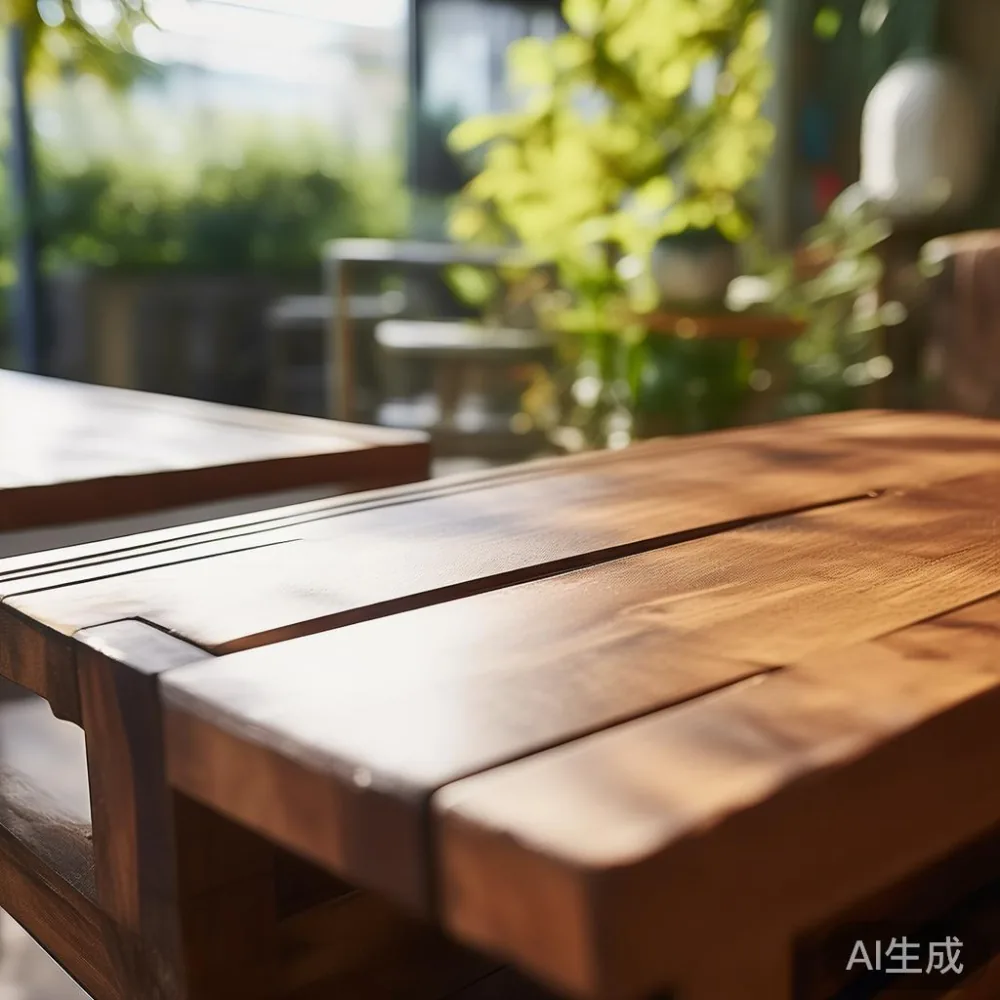
Not all 'solid wood' is the same species, and not all boards are the same thickness. A dining table top made from 2.5 cm-thick FAS-grade white oak will cost noticeably more than one made from 1.8 cm-thick rubberwood, because the cubic volume of premium timber per piece is higher, and the yield from a single log is lower. The same logic applies to a bed frame, a nightstand, or a wardrobe — if the panels are 2.2 cm or thicker and the species is oak, ash, or walnut rather than poplar or pine, the cost of raw material alone climbs by 25–60%.
Two species dominate the light-luxury category right now: white oak (Quercus alba) for American light luxury lines, and European beech or ash for French light luxury and French provincial accent chair silhouettes. White oak tends to price 30–45% above ash at the board level, while ash itself runs roughly 20% above standard poplar. A solid wood sofa frame in oak, for example, can easily add S$300–S$600 to the landed cost compared with the same frame in beech — a gap that almost always shows up in the showroom price.
If you are shopping in the under 2000 Industrial furniture bracket or the under 2000 Post-modern furniture bracket, the species choice is often the first thing quietly trimmed to hit the price point. I have seen spec sheets where the legs are listed as 'solid hardwood' with no species name — that is usually rubberwood or a mixed tropical hardwood, and it is not the same animal as a named oak frame.
2. Joinery, Hardware, and the Hidden Engineering Inside a Drawer
Open a drawer on a cheap nightstand and you'll see plastic cam locks, staples, and thin 0.6 cm panel bottoms. Open a drawer on a properly built piece and you'll see dovetail joints at the corners, full 1.2 cm plywood or solid bottoms, and soft-close runners rated for 80,000–100,000 cycles. The hardware budget on the latter is roughly four to seven times higher, and the labour time to assemble dovetails is roughly three times longer than stapling a particleboard shell.
For a wardrobe, the price gap between a basic cam-lock assembly and a dovetailed, mortise-and-tenon carcass can be S$400–S$900 before you even discuss doors or finish. For a bed frame, the difference between dowel-and-glue corner brackets and a through-tenon with a wood wedge is the difference between a bed that creaks in year three and one that stays silent for a decade. Foshan workshops producing light luxury for hotel projects typically spec German or Italian soft-close runners and hidden hinges because commercial clients demand 50,000+ cycle ratings — and the residential line tends to inherit that hardware, which is why the consumer price is higher than what a flat-pack competitor offers.
3. Finish, Lacquer, and the Hours Behind a 'Matte' Surface
A open-pore matte oak finish looks deceptively simple, but it takes six to eight coats of sealer, toner, and topcoat, with hand-sanding between coats using 240-, 320-, and 400-grit paper. A high-gloss piano finish takes 12–14 coats and frequent polishing. Each coat adds roughly 45–90 minutes of labour and a curing interval of 4–12 hours in a dust-controlled spray booth. A wardrobe with six doors and matching panels can absorb 30–40 labour-hours just in finishing.
Water-based lacquers (low-VOC, required for indoor air comfort in Singapore HDBs with limited airflow) cost 20–35% more per litre than standard nitrocellulose, and they take longer to build. If a quote mentions 'Italian ceramic lacquer' or 'conversions sealer,' expect a meaningful jump. Marble tables, by the way, have their own finish logic — the stone is sealed with a penetrating resin that costs roughly S$8–S$18 per square metre of surface, and the polishing stage for a 1.4 m round marble table can run two to three hours of hand work.
Is a Higher Price Always Better Quality?
This is the question I get asked at almost every Tampines or Bedok home visit, and the honest answer is no — a higher price is not always better quality. It is sometimes better marketing, sometimes a thicker retailer's margin, and sometimes a more expensive species that you genuinely don't need for a rental flat you'll leave in two years. What a higher price does indicate, when you read it carefully, is which compromises were avoided. A piece quoted at S$2,400 for a 1.8 m solid wood dining table in oak has clearly spent money on at least three of the following: thicker top, dovetailed drawers (if any), water-based finish, named hardware, kiln-dried timber, and a real factory warranty.
A piece quoted at S$1,100 with the same dimensions has clearly cut at least three of those. The trick is knowing which cuts matter for your use case. A young family in a Punggol condo with two kids under six probably needs the finish and the hardware; they may not need the 2.5 cm top. A couple furnishing a five-room flat for the next fifteen years probably wants every box ticked. A landlord staging a rental in Bedok probably wants a mid-grade piece and a short warranty, because the next tenant will scuff it anyway.
4. Factory Origin, Certifications, and the Real Cost of a 10-Year Warranty
Origin matters because the labour rate, timber supply chain, and regulatory environment all feed the price. A factory in Foshan with direct timber import access and an in-house kiln can price 15–30% below a European workshop doing the same joinery, because the raw board, the lacquer line, and the assembly labour are all on the same industrial cluster. That gap is why a MIDHILL European light luxury bed sourced from a Foshan factory with kiln-dried oak and dovetailed joinery can land in Singapore at a price that an Italian equivalent cannot match.
A 10-year structural warranty is a quiet price driver, too. To honour it, a maker has to keep replacement stock, run traceability on every batch, and staff a claims team. The cost of that infrastructure — say 3–5% of revenue — is built into the unit price. Lifetime refinishing, which several Foshan makers now bundle, adds another 1–2% because it ties up workshop capacity years after the sale. Free shipping over US$350 (about S$480) exists because the average order clears that threshold easily, so the maker can absorb lorry, lift, and manpower into a single margin rather than charging line items.
5. Outdoor Patio Specs — Weather, Weight, and Why Garden Pieces Cost More Per Kilo
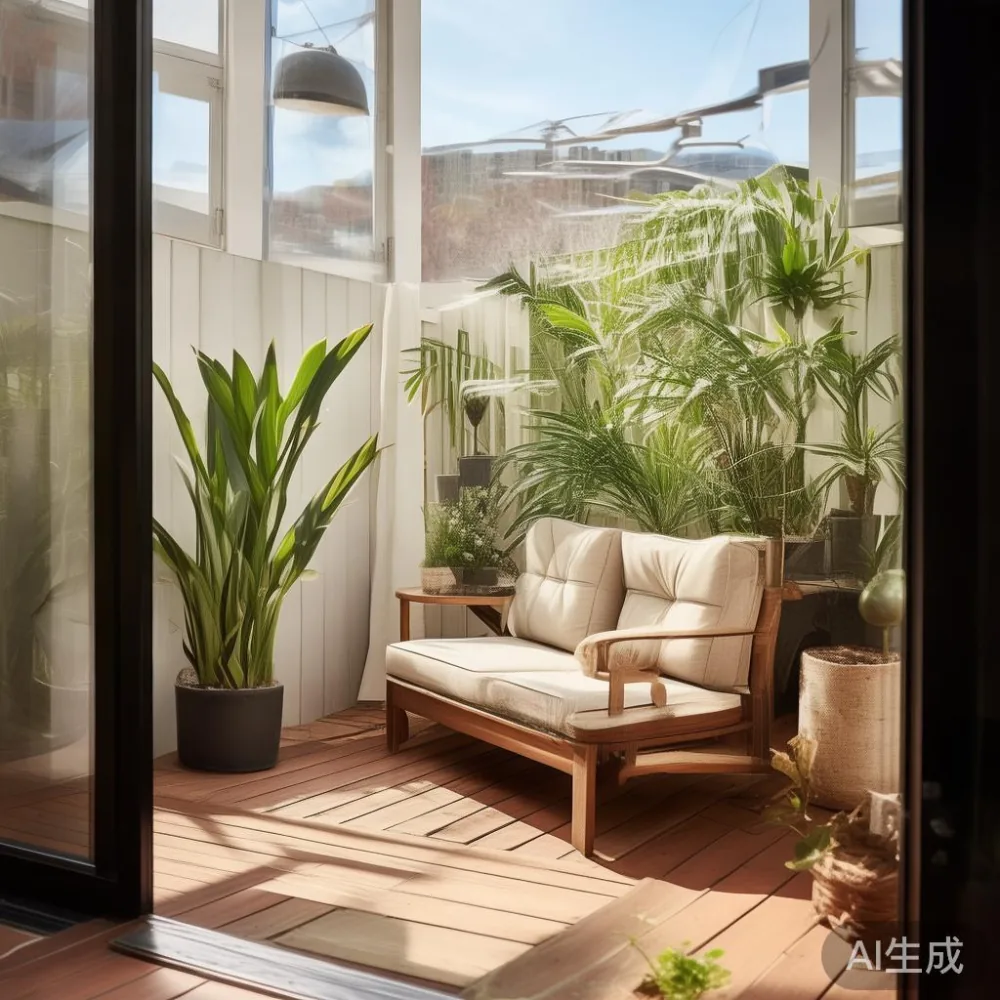
The site's core outdoor-pato category carries a price premium that surprises almost every first-time buyer. The reason is straightforward: a teak outdoor patio dining chair has to survive UV, monsoon humidity, salt air (relevant if you're in a Sentosa condo or a East Coast ground-floor unit), and 30–40°C surface temperatures, all while holding a person who weighs 70–90 kg. The wood is usually teak, eucalyptus, or a FSC-certified acacia, kiln-dried to a lower moisture content (8–10%) than indoor furniture (10–12%) so the boards don't cup when the afternoon rain hits.
Joinery on outdoor patio pieces is either stainless steel 304 hardware or solid mortise-and-tenon with marine-grade adhesive, because standard zinc-plated brackets will rust within a year. Finishes are either a UV-inhibiting teak oil (reapplied every 9–12 months) or a no-finish teak that grey-patinates over 6–9 months. All of this pushes the per-kilo price well above indoor oak. A 45 kg outdoor patio bench in teak can carry the same material cost as a 90 kg indoor sofa frame — and weigh half as much, which actually helps with Singapore corridor logistics on the way up the lift.
For outdoor patio dining sets, the table top is often a slatted design with 6–8 mm gaps between boards so rainwater drains instead of pooling. That slat work adds fabrication time and waste factor, both of which feed the final price. A solid marble table used outdoors is a different story entirely: it needs a sealed substrate, a marine-grade adhesive layer, and a UV-stable topcoat, and even then most makers recommend a covered outdoor patio because thermal shock can crack a 3 cm marble slab over time.
6. Logistics, GST, and the Last 100 Metres to Your Door
In Singapore, logistics quietly inflate the sticker by 6–9% once you add GST (9% as of 2024, moving to 10% by 2026 on most goods), lift access surcharges, and disposal of packaging. A typical HDB lift takes a crate up to roughly 220 cm tall and 90 cm on each side, with a weight rating of about 1,000 kg for the cabin and 1,500 kg for the lifting mechanism. A 2.2 m wardrobe in two flat-pack sections is fine; the same wardrobe in one assembled piece is not. Makers who offer free delivery over a US$350 threshold usually pre-plan the crate dimensions to fit a standard lift, which is why the API at api.midhill.co lists both assembled weight and packed volume for every item — so you can sanity-check it against your block.
For landed property in areas like Bukit Timah or Sentosa Cove, the logistics are simpler but the manpower still adds S$80–S$180 per delivery. For condos with service lift access, booking the service lift window is often the trickiest part — a 90-minute slot needs to be reserved, and missed slots cost the mover another trip. If you live on a high floor without a service lift, expect a S$60–S$120 per-flight-of-stairs surcharge for anything over 25 kg, which a 78 kg dining table will trigger even on a tenth floor.
7. The Design Premium — French Light Luxury, American Light Luxury, and Why Curves Cost More
Light-luxury positioning adds a design layer that is hard to quantify but easy to see. French light luxury leans on cabriole legs, hand-carved aprons, and soft linen upholstery on a solid wood sofa; American light luxury uses cleaner lines, through-tenon joinery, and brass-tipped legs on bed frames and nightstands; post-modern light luxury combines both — curved marble tables with fluted oak bases, for example — and is where you see the under 2000 Post-modern furniture bracket doing some of its most interesting work right now. Each of these silhouettes costs more to produce than a plain Shaker or Mission shape, because curves, carvings, and flutes all generate extra CNC programming time and waste factor at the saw.
A French provincial accent chair, with its carved crest rail and cabriole front legs, can absorb 4–6 hours of carving labour per chair even on a CNC router — plus hand-sanding to soften the edges the machine leaves. A post-modern marble table with a sculpted pedestal base can cost 40% more in stone-cutting labour than a round pedestal of the same diameter, because the curved profile requires a 5-axis CNC rather than a standard lathe. These design premiums are why a luxury European light luxury furniture line typically lands 25–60% above a flat-pack oak alternative, even when the wood species and the hardware are identical.
If you're specifying light luxury for hotel or commercial-lobby work, the premium grows further: contract-grade fabrics (usually 50,000+ Martindale cycles), fire-retardant foam, and reinforced frames all add roughly 20–35% to a comparable residential piece. That's why a residential MIDHILL European light luxury bed at, say, S$2,300 looks reasonably priced next to its hotel-spec sibling at S$3,400 — the bones are similar, but the upholstery and the testing certification are different.
8. How to Read Any Quote in Five Minutes
Once you know the seven drivers above, a quote becomes legible. Ask for four things before you commit: the wood species and board thickness (in mm), the joinery method on the main stress points, the finish type and number of coats, and the total landed weight plus packed dimensions. With those four data points you can compare any two quotes fairly. A quote that hides species, hides joinery, or lists only 'solid wood' with no further detail is one where the seller is protecting margin you cannot verify. A quote that openly lists them is one where the price reflects decisions you can audit.
A practical Singapore rule of thumb: a solid wood dining table in oak or ash, 1.8–2.2 m long, with dovetailed aprons and a water-based matte finish, delivered to your HDB with lift access, currently lands somewhere between S$2,200 and S$3,600 depending on the slab thickness and the base design. A marble table in the same length range starts around S$3,800 for a porcelain slab on an oak base and climbs past S$7,000 for a real marble top with a sculpted pedestal. A solid wood bed frame in king size runs S$1,900–S$3,400. A wardrobe 2 m tall with six doors and dovetailed drawers ranges S$3,200–S$6,500. Outdoor patio sets in teak usually start at S$2,800 for a four-chair dining configuration and rise from there.
Those ranges are wide because the seven drivers above genuinely vary. The point of knowing the drivers is not to chase the cheapest number; it is to recognise which piece, at which price, is honestly built — and which piece is priced on marketing alone. After a decade in this category and one too many Tampines lift measurements, I can tell you the difference almost always shows up in the second year of ownership, not the showroom floor.