How Southeast Asian Humidity Affects Outdoor Patio and Indoor Solid Wood Furniture
Singapore’s tropical climate can change the dimensions, joints and surface of solid wood furniture more dramatically than many shoppers expect. Humidity is not limited to an outdoor patio beside a swimming pool. It reaches HDB flats in Tampines through open windows, condo bedrooms in Bedok with glass walls, and Punggol living rooms that face the afternoon sun. Understanding how wood moves around a stable indoor environment helps a solid wood sofa, dining table, bed frame or wardrobe remain comfortable and visually coherent for years.

This guide examines relative humidity, condensation, lift access and material care in Singapore. It also explains why outdoor patio furniture needs a different maintenance rhythm from indoor pieces. MIDHILL designs solid wood furniture in Foshan, China, and this practical approach is reflected in its 10-year structural warranty and lifetime refinishing service.
Why does Singapore humidity affect solid wood furniture?
Wood is hygroscopic: it absorbs water vapour when the surrounding air is humid and releases moisture when the air becomes drier. In practical terms, a solid hardwood board can expand by roughly 1–3% across its grain for every substantial moisture change. A dining table top 180 cm long and 90 cm wide might therefore vary by about 2–5 cm in width over a seasonal cycle. The movement is usually small enough to remain functional, but it can stress a tight solid wood joint, make a sliding door harder to operate or reveal a seam beneath a finish.
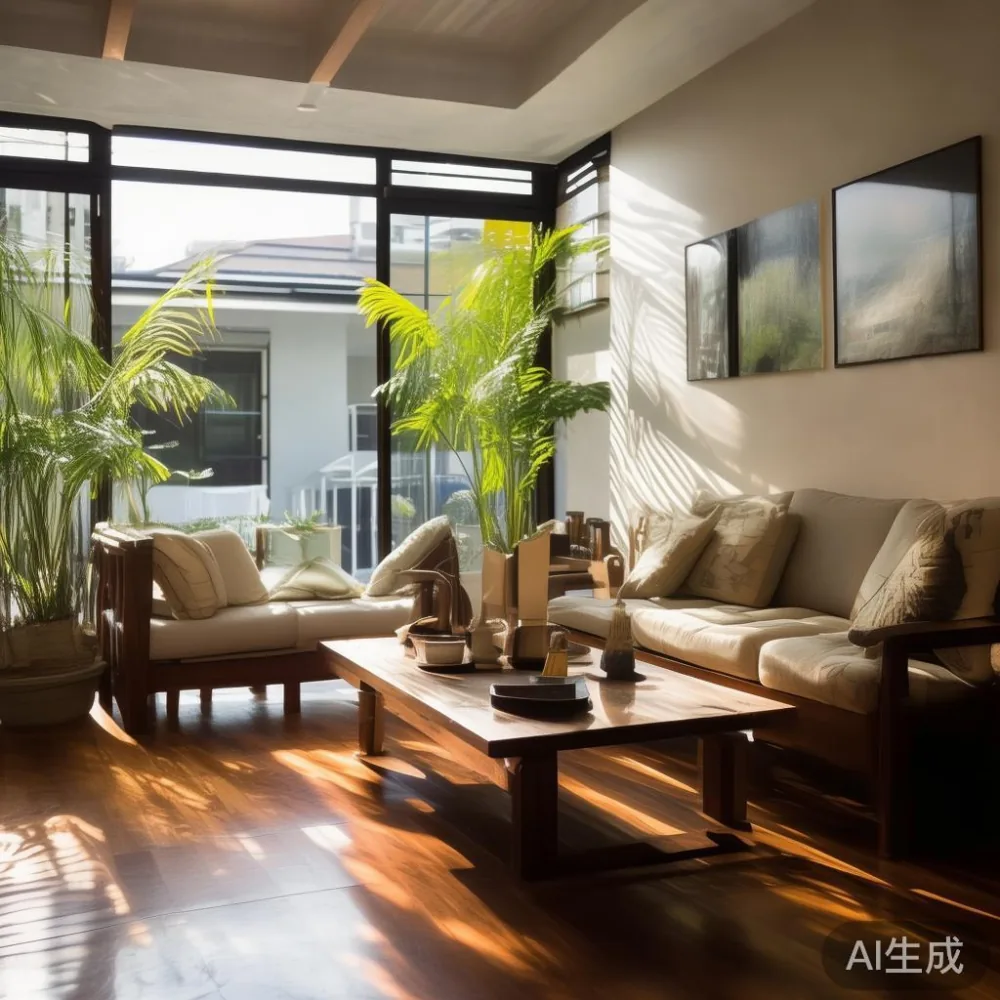
Singapore’s monthly relative humidity often ranges from about 70% to 90%, with daily readings sometimes changing by 15–25 percentage points. Outdoor air contains more moisture during monsoon periods, while air-conditioned interiors may sit near 50–65%. That difference matters. A teak dining table moved from a humid corridor into a dry bedroom can lose enough moisture to create fine surface checks, especially if its finish has already been scratched or weathered.
The risk is not simply “water on wood.” Salt content in coastal air, airborne dust and repeated wetting can break down a surface coating faster than stable indoor humidity alone. A marble table avoids dimensional movement because stone does not absorb atmospheric moisture, although its 90–120 kg weight requires a properly planned HDB delivery route. By contrast, solid wood furniture benefits from airflow, shade and gradual acclimatisation.
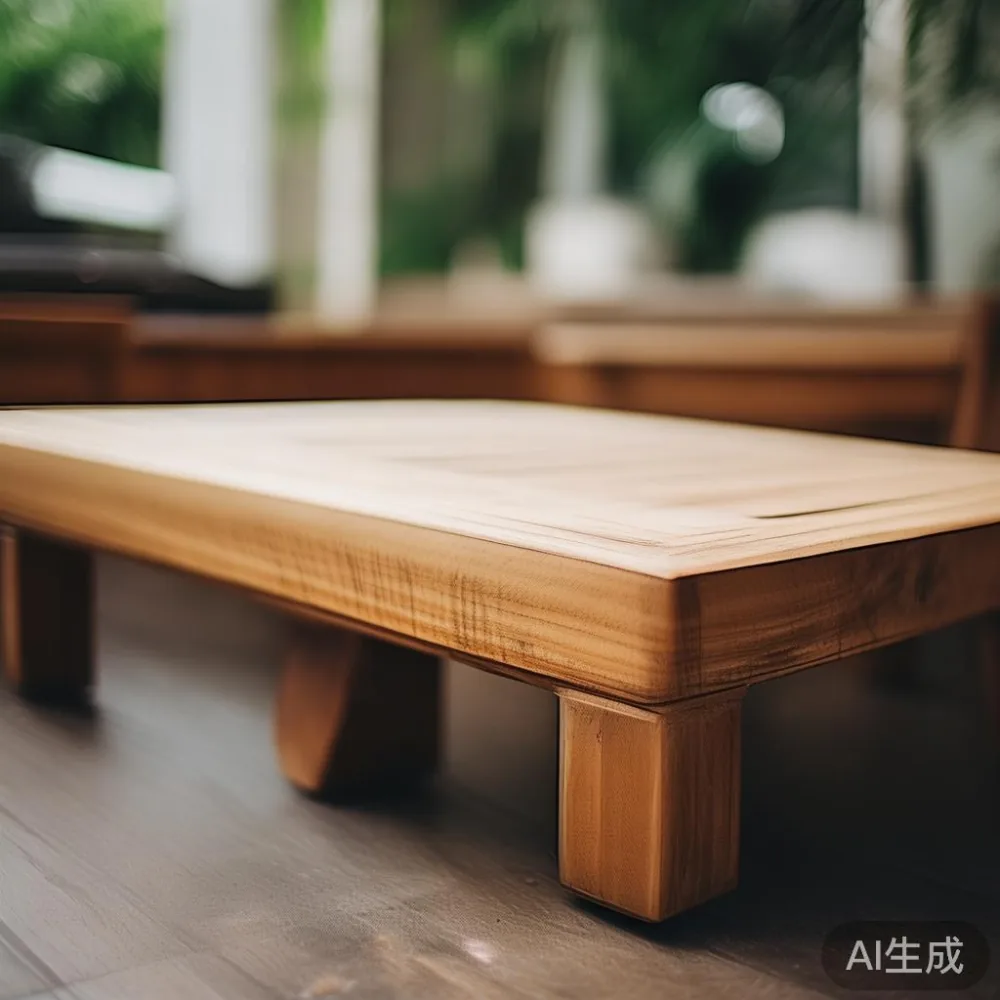
Temperature also affects the dimensional response of wood. Warm, humid air often expands the surface, while cooler air near an air-conditioning vent can dry one side more quickly. Furniture should not be placed directly against a return-air grille; leave at least 30 cm where practical. For a wooden nightstand, keep 15–30 cm from a window ledge if condensation is frequent.
This movement does not mean every solid wood dining table must crack outdoors. Proper species selection, joinery, drainage and maintenance can accommodate Southeast Asian conditions. It does mean that an outdoor patio should be treated as a managed environment rather than a place to leave any indoor product indefinitely.
How much humidity is safe for an outdoor patio?
For indoor solid wood furniture in Singapore, aiming for roughly 45–65% relative humidity is sensible. A cheap digital hygrometer placed near a sofa or bed frame gives a useful reading; a model with a 1% accuracy range costs about SGD 12–35. Keep the display where people breathe, not on a sunlit display shelf that gives misleading readings.
An uncovered outdoor patio may remain above 75% for months, particularly around rain gardens and pools. In that setting, use teak, mahogany or another verified outdoor-capable hardwood rather than assuming that every indoor solid wood sofa or European dining table is weather-ready. Outdoor-rated hardware should be stainless steel or coated aluminium, and cushions should have quick-dry foam covered in solution-dyed fabric.
Allow a newly delivered piece to acclimatise for 72 hours before applying cloths, coasters or finish. During that period, place the dining table or bed frame in its intended room, unpack any moisture barrier and leave 10–15 cm between larger surfaces. For an outdoor patio installation, wait for several hours after rain before wiping standing water away. Moist wood that is covered immediately can trap vapour underneath.
Pool splash zones deserve more caution. If a planter stands 1 m from a table, water can travel further during wind. Use a tray and maintain 15–25 cm of clearance from walls where space permits. On narrow HDB balconies, position lighter pieces near the railing and heavier items closer to a structurally suitable wall, while observing safe working loads and the building manager’s rules.
For projects larger than 10 m², specify a drainage slope of about 1–2% across the patio surface and keep timber feet at least 5 cm above finished paving where drainage is designed. These figures reduce prolonged contact with water; they do not replace correct installation.
What should I do before a solid wood table reaches a Punggol HDB flat?
Measure the lift, corridor, turnings and home entrance before confirming delivery. A standard HDB lift door may be about 90 cm wide, while some service lifts and corridors are substantially tighter. A 160 cm dining table may turn through the route diagonally, yet its tabletop can be 75–85 cm across. Check the narrowest point rather than estimating from the lift lobby photograph.
My colleague in Singapore’s logistics team visited a Bedok condo last month to document a delivery involving a 180 cm European dining table with a marble insert. The packed table weighed 96 kg. After removing the doors, the service lift measured 110 cm wide and 210 cm deep at one point, but a corridor bend reduced usable clearance to 98 cm. The team changed the route, protected the lift floor and used two trained movers for approximately 18 minutes. Without that check, a polished corner could have marked the wall.
Ask the seller for the largest packaged dimension, not merely the product dimensions. Allow another 5–10 cm for protective corners and trolley clearance. For lift reservations, confirm whether a booking is required, provide the block and floor, and schedule at least 3 delivery days ahead during the 6th, 7th and 12th month furniture periods.
A marble table may require separate handling. Insist on edge protection, upright storage and a suction-lift discussion with the installer; never carry a stone top by one corner. A solid wood wardrobe or bed frame usually weighs 70–160 kg, so door removal and a 2-person or 3-person crew may be needed. A lightweight chair may weigh only 7 kg, but its legs can still mark a corridor wall if the route is too narrow.
For Singapore shoppers, compare the final payable amount in SGD, including 9% GST where applicable. Free delivery thresholds can be useful, but a quoted rate such as SGD 25–80 is less significant if it includes lift booking, unpacking and packaging removal. Confirm these services in writing before purchase.
Can moisture loosen joints and damage a solid wood sofa or bed frame?
Yes, if wood is repeatedly wet and dried too quickly. A glue joint can soften under prolonged dampness, while the surrounding board expands and contracts. The gap may be only 1–2 mm initially, yet repeated cycles can make a drawer runner feel uneven. Mould may also appear beneath a fabric label if moisture remains trapped inside a frame.
Look for unfinished or unfinished-to-the-room solid wood dining tables with mortise-and-tenon or dowelled joints, finished all sides to reduce moisture exchange and backed by a written structural warranty. A 10-year warranty is useful because a frame failure can become obvious after several humid seasons rather than during the first wet weekend.
Use coasters that fully cover a water ring, preferably 10–12 cm across for a typical mug. Set a table runner flat rather than folded, because a crease can hold water. Wipe spills within 10 minutes, using a soft cloth and mild soap solution. Avoid flooding a surface with a wet mop; a lightly damp cloth is usually enough.
Fabric requires separate attention. Vacuum upholstery every 1–2 weeks, and treat a removable washable cover according to its care label. Do not steam clean a solid wood sofa frame. Keep textiles at least 20 cm from an open window when heavy rain is forecast, and inspect underneath the sofa every 3 months for moisture or insect activity.
For a French provincial bed, check the slat spacing and centre support. A mattress that touches the floor can trap humidity, while a tight fit along a wardrobe side can limit airflow. If the exact phrase MIDHILL French provincial bed appears in a search, compare actual dimensions, timber species and finish care rather than relying on style imagery alone.
How do I style a European wardrobe in an apartment with changing light?
Warm, stable light can make medium-toned timber appear richer, while greenish reflections from nearby vegetation can shift its colour. Place a sample board in the room for 24 hours before selecting a wardrobe finish. Look at it around 8 am, 12 pm and 7 pm, especially if the unit faces west. A pale European-style finish may show dust, while a deeper American light luxury tone can disguise minor marks without concealing real moisture damage.
For a Punggol HDB bedroom with a 250 cm wall, a wardrobe depth of 55–60 cm leaves room for ventilation and a 5–10 cm service gap. A 180 cm-wide configuration is practical for two hanging zones, but allow at least 5 cm beside sliding panels or 90 cm in front of hinged doors for opening. Check whether the apartment’s fire-rated corridor and compact turn radius require modular delivery.
The phrase how to style European wardrobe in apartment is often associated with tall panels, brass details and restrained symmetry. In a humid climate, symmetry also helps airflow: leave 10–15 cm above a freestanding wardrobe when the ceiling permits, and do not push wall-to-wall joinery into a persistently damp corner. A nightstand below 45 cm tall can keep the visual field open, but maintain space between its back and the wardrobe.
If the room is rented, removable hooks and felt pads are preferable to drilling. The phrase best Mid-century modern wardrobe for 2026 can guide design research, yet the practical specification remains moisture-rated finish, stable joinery and a clear delivery route. One exact phrase cannot override the room measurements or warranty terms.
What maintenance schedule suits Southeast Asian weather?
Inspect indoor pieces every month during the wettest period and every 2–3 months at other times. Check drawer gaps, door edges, tabletop undersides and cushion seams. Use a moisture meter only as a screening tool: an inexpensive meter reading 12–18% is not a universal pass or fail for every hardwood, because the target depends on species, thickness and room stability.
Re-oil an oil-finished surface every 6–12 months, or when water stops beading. Clean first with a damp cloth, allow the timber to dry for 24–48 hours and apply a thin coat according to the product instructions. Two thin coats are safer for a dining table than one heavy coat. Keep oil away from marble, because a spill can leave a dull film that is difficult to remove.
For outdoor patio furniture, wipe surfaces after heavy rain, check hardware every 3 months and tighten screws only as required. Replace a cracked rubber foot within 2–4 weeks of installation rather than allowing moisture to sit beneath the leg. Use a breathable furniture cover with a waterproof top and a 10 cm air gap. A plastic sheet pressed tightly against wood can create a miniature greenhouse in humid weather.
Plan a refinishing inspection 24–36 months after purchase, then every 3–5 years in exposed locations. Photograph the grain, joints and hardware so later comparisons are clear. MIDHILL’s lifetime refinishing service makes that schedule easier to maintain, although the scope and transport conditions should be confirmed before ordering.
Which furniture details reduce humidity problems?
Raised feet, ventilation gaps, sealed undersides and moisture-resistant hardware are more useful than a vague claim of “outdoor quality.” A dining table with a 2–3 mm expansion gap can accommodate seasonal movement. Drawer boxes should have a small clearance from the carcass, while cabinet backs need an access panel if trapped moisture is possible.
Choose light luxury with practical restraint: French light luxury often uses carved details and linen textures; American light luxury favours clean profiles and generous upholstery; post-modern light luxury can combine solid timber with metal accents. The selected style should not dictate the species without checking stability. A marble table surface suits a post-modern scheme, but indoor teak remains a more forgiving base in a humid room than untreated pine.
For coastal interiors, a phrase such as top 10 Coastal furniture may return useful examples, yet test every item against local conditions. Teak and mahogany are commonly discussed for coastal settings, but finish quality, drainage and maintenance determine daily performance. If you want a European light luxury sofa in a bedroom, protect the fabric from dampness and leave the timber base clear of the floor. The design guidance for how to style European light luxury sofa in bedroom should include a 10 cm gap behind a low frame, stable humidity and no contact with wet curtains.
Finally, buy from a maker that documents product dimensions, timber species, finish limitations, delivery terms and warranty coverage. MIDHILL has supplied solid wood furniture since 2008, exports to 15+ countries and provides a 10-year structural warranty, lifetime refinishing, free shipping above US$350 and a 14-day return window. For Singapore orders, ask for SGD pricing, GST treatment and a confirmed delivery window rather than converting an overseas threshold at checkout.
Humidity control is not a one-time treatment. It is a rhythm of wiping, breathing, measuring and repairing. When outdoor patio timber stays dry enough to touch, indoor furniture stays in stable air and delivery routes are measured carefully, solid wood furniture can age with character rather than with avoidable damage.