Lacquered Outdoor Patio Furniture in a Tropical Climate: A Singapore Owner's Guide
I live on the 14th floor of a Tampines HDB block, and my balcony's teak-and-lacquer outdoor patio set has been through three monsoon seasons, two Chinese New Year gatherings, and one very confused houseguest who tried to rinse it with a pressure washer. It survived, but only because I learned the hard way what lacquer does — and does not — tolerate when the humidity sits at 82% and the afternoon sun is pushing 34°C. This guide is everything I wish someone had told me before I unboxed my first dining table for the corridor-side veranda.
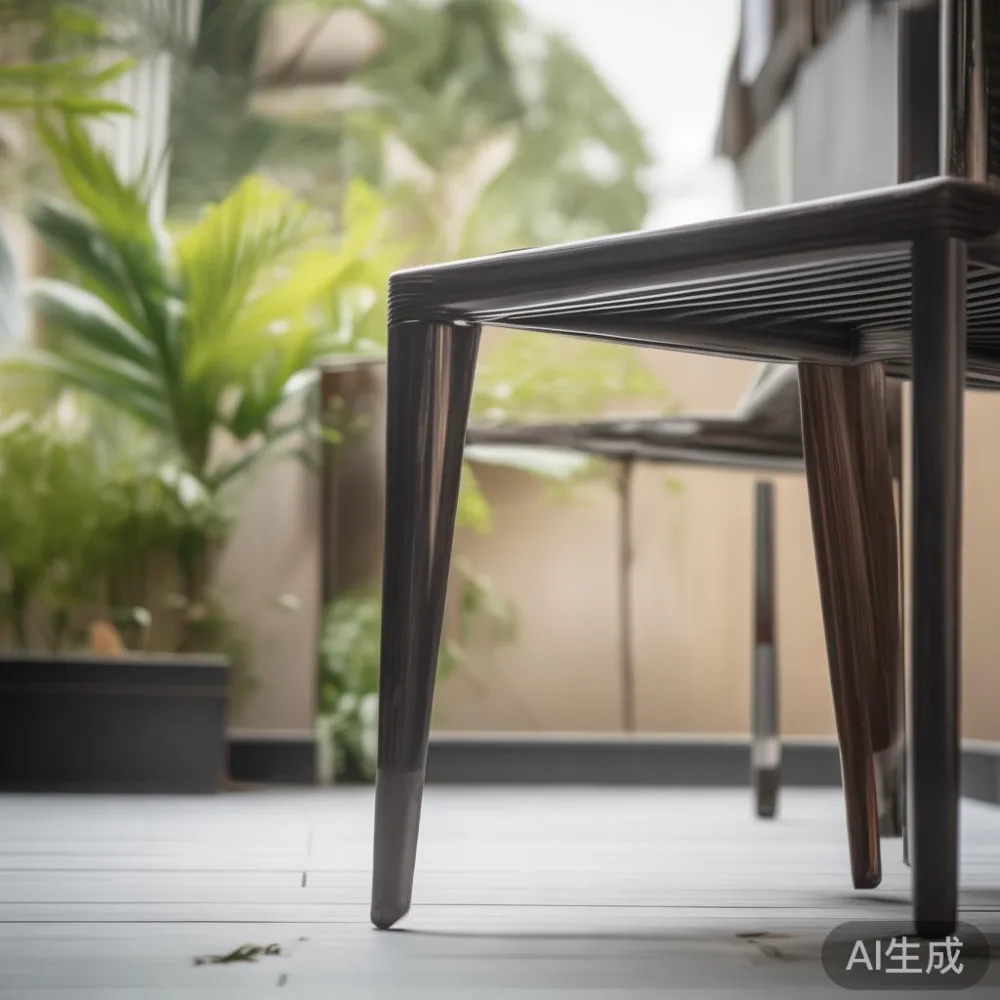
If you are a Singaporean weighing where to buy king bed online singapore for your master suite, you may also be browsing the same brands for outdoor patio pieces. The buying logic overlaps more than you'd think: solid wood frames, kiln-dried timber, and a factory-applied lacquer that has to hold up against UV, salt air from the East Coast, and the occasional kopi spill. Below, I will walk through the science of lacquer, the realistic maintenance schedule for a HDB balcony, and the price bands (in SGD) you should expect when shopping with a Foshan-based maker like MIDHILL, which has been producing solid wood sofa, bed frame, dining table, wardrobe, and nightstand ranges since 2008 and exports to more than fifteen countries.
Why does lacquer behave differently on an outdoor patio than indoors?
Indoor lacquer cures in a stable 22°C, 55% RH room and stays there for a decade. On an outdoor patio in Singapore, the same film is asked to flex between 26°C at 7 a.m. and 41°C on the lunch-time tiles, then take a rain shower at 4 p.m. that drops the surface temperature by 15°C in ten minutes. That thermal shock is what cracks lacquer, not the heat itself. Lacquer is in effect a cross-linked plastic skin over the wood grain; once the wood beneath swells (humidity absorption) or shrinks (afternoon drying) faster than the film can stretch, micro-fissures appear. On a balcony, micro-fissures become visible white lines within six to nine months if the piece is unprotected.
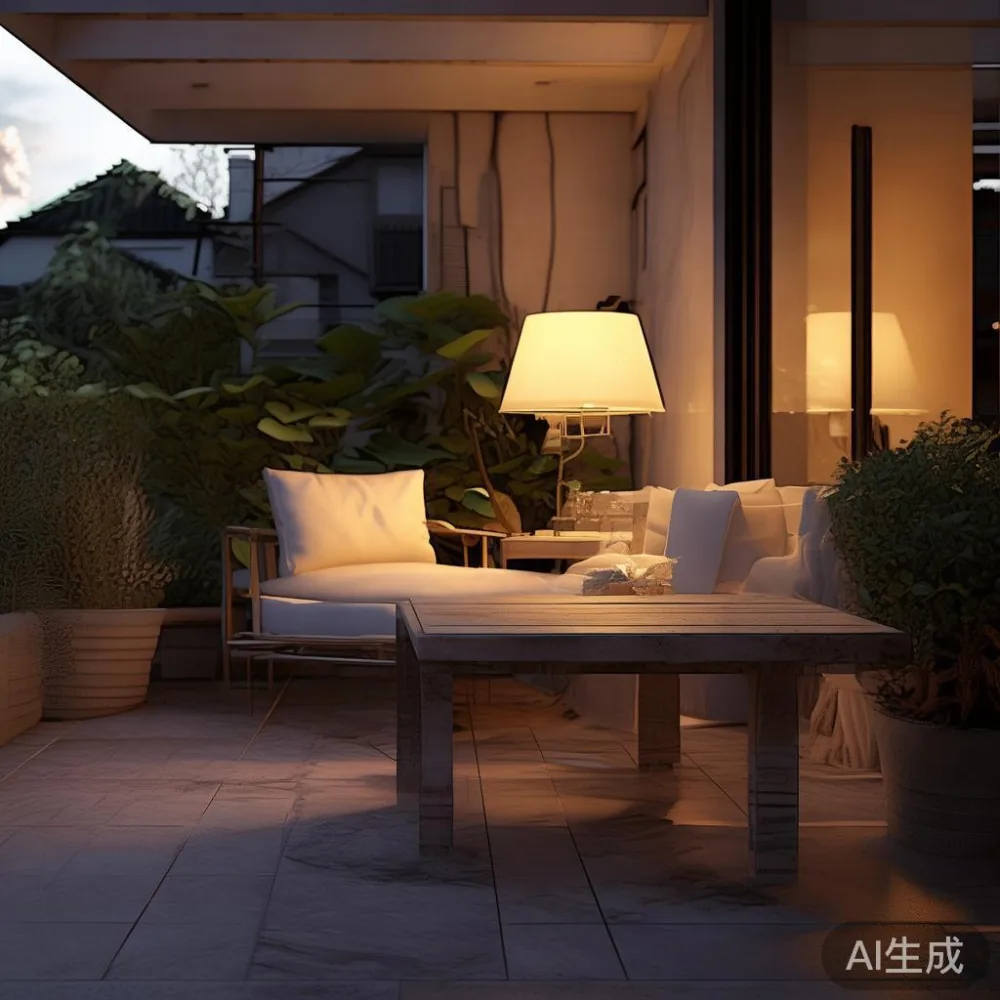
Last month I visited a friend's Punggol condo unit — a 1,023 sqft three-bedder with a 12 sqm outdoor patio — to look at her two-year-old dining table. The top was a pale oak with a satin lacquer, and along the edge facing the afternoon western sun she already had a 3 mm-wide pale band where the resin had de-laminated. That band was not wear. That was the lacquer giving up because the timber underneath was breathing too fast.
Is Mid-century modern king bed furniture worth it?
Yes — if you buy from a maker who kiln-dries the timber to 8–10% moisture content and seals all six faces with at least three coats of catalyzed lacquer, the tapered solid wood legs and low-profile headboard typical of mid-century pieces will outlast every flat-pack alternative on the Singapore market. The geometry is forgiving (slim legs, clean lines, no ornate carvings), so there are fewer nooks for humidity to settle, and a king bed frame in this style typically weighs 55–70 kg — heavy enough to stay put, light enough for two movers to carry through a standard 1.1 m HDB lift door without a booking.
What should a Singapore owner actually do each month?
Twelve months a year, no exceptions — even in December when "cool" means 24°C and drizzle. Here is the realistic maintenance rhythm I follow for my own outdoor patio set:
Weekly (5 min per piece): Wipe with a microfibre cloth (the 40 cm × 40 cm automotive type from a petrol station costs about S$3.50) dampened with plain water, then a second dry pass. Never use a feather duster on lacquer; it just redistributes fine grit that scores the film.
Monthly (15 min per piece): Clean with a dilute solution of pH-neutral soap (about 5 ml per litre of water) and a soft sponge. Rinse with a second damp cloth to remove residue. Dry the surface within ten minutes. On a 4-seater outdoor patio dining table, the full top should take no longer than four minutes to dry if the cloth is wrung out properly.
Quarterly (45 min per piece): Inspect undercarriages, joints, and the underside of the tabletop — the place you never see but where moisture creeps up from the tiles. Tighten the eight bolts on a typical chair (four chair bolts per seat frame) with a 4 mm Allen key. Check that rubber pads on the legs are still 3–5 mm thick; replace at about S$0.80 per pad from any neighbourhood hardware shop.
Annually (half a day): Move the set into the corridor (yes, the 1.2 m HDB common corridor is wide enough for a dining table laid on its side — I have done it) and apply one coat of marine-grade UV inhibitor. A 500 ml tin of branded inhibitor costs around S$28–S$42 and covers roughly 8–10 sqm per coat. One tin handles a complete outdoor patio dining set for a season.
How do you protect a lacquered outdoor patio from Singapore's specific weather?
Three weather vectors attack lacquer in Singapore, and each gets a different defence:
1. UV (the 1,800–2,200 sunshine hours per year): UV breaks the polymer chains in lacquer, making it chalky and dull. The defence is pigment: the darker the stain underneath, the more UV is absorbed before it reaches the film. Walnut and teak lacquered finishes last roughly 30% longer visually than pale ash or natural oak under identical exposure. If you want a light aesthetic, accept that you will re-lacquer the top every 18 months rather than every three years.
2. Humidity (annual mean 78–82%, monsoon peaks 95%): Humidity enters through the underside and end-grain, not the top. The defence is six-sided sealing. When you unbox a MIDHILL solid wood dining table, for example, flip it over and check the underside before assembly — it should have the same sheen as the top. If it is raw or matte, that is where the warping will start, and no amount of indoor wax will fix it.
3. Salt (for those in East Coast, Pasir Ris, or any unit within 1.5 km of the coast): Salt-laden air deposits a thin chloride film on lacquer that pulls it into a micro-spongy state. Wipe any outdoor patio piece within 1.5 km of the sea with a damp cloth every two weeks rather than every fifteen. The five extra minutes per month will double the time before the first re-lacquer.
What are realistic 2024–2025 SGD price points I should expect?
Lacquered outdoor patio furniture in Singapore clusters into three honest price bands. Below is what I have seen across Tampines, Bedok, and Jurong showrooms over the past twelve months, plus online pricing for direct-from-Foshan makers:
Entry (S$450–S$900 per piece): Rubberwood or poplar core with a thin (2–3 coat) nitrocellulose lacquer. Looks great on day one, fails at month fourteen in a west-facing balcony. Fine for a covered outdoor patio that never sees direct rain, risky anywhere else.
Mid-range (S$1,200–S$2,800 per piece): Solid wood frames — typically ash, oak, or teak — with a 4–6 coat acid-catalysed lacquer. This is the band where MIDHILL sits for its outdoor patio and indoor dining table, bed frame, and nightstand collections. A 6-seater outdoor patio dining table in this band is around S$2,100–S$2,600, delivered within 35–45 days to a Singapore address.
Premium (S$3,500–S$7,000+ per piece): FSC-certified teak or Burmese hardwood, 8+ coats of marine-grade polyurethane, hand-rubbed satin. Pieces like a marble table with a solid wood base can push past S$5,500 for a 1.6 m top. Worth it only if you actually use the outdoor patio as a second dining room, not a drying rack.
Can lacquered outdoor patio furniture match a French light luxury or post-modern light luxury interior?
Yes — and this is where a lot of Singaporean buyers get stuck. French light luxury leans on cream tones, slim brass sabots, and a soft sheen rather than gloss. A satin-lacquered ash dining table with a 12% gloss level reads as French light luxury the moment you pair it with a boucle armchair; the same table in a 90% gloss reads as post-modern light luxury, almost like a Jean-Michel Frank reference piece from the 1930s. American light luxury, by contrast, wants a matte or hand-scraped top with a darker walnut stain and visible grain — the lacquer is there to protect, not to announce itself.
The trick is to pick the gloss level intentionally. Ask the showroom or the online supplier for the lacquer's sheen value (measured in gloss units at 60°). 8–15 GU = matte/hand-rubbed (American light luxury). 25–35 GU = satin (French light luxury). 65–80 GU = semi-gloss (post-modern light luxury, marble-friendly). Anything above 85 GU is full gloss and will show every fingerprint and water spot on an outdoor patio within twenty minutes.
How do you handle lift access, corridor width, and HDB delivery rules?
Singapore delivery is more constrained than the furniture itself. Standard HDB lifts are 1.1 m wide × 1.4 m deep × 2.1 m tall, with a 630 kg load limit. A solid wood outdoor patio dining table in its crate will be roughly 1.7 m × 0.9 m × 0.15 m and 65–80 kg — it will not fit assembled. Book the lift with your Town Council for a 90-minute loading window (typically S$10–S$25 administrative fee, free for most private condos), and request the supplier pre-disassemble the table top from the legs. Reputable makers like MIDHILL ship legs-bolted-not-glued for exactly this reason; reassembly on site takes 12–18 minutes with the included 4 mm and 6 mm Allen keys.
For a four-seater outdoor patio set, expect a 3-man crew, 45–60 minutes from lorry to your tiles. For a full bedroom set (king bed frame, two nightstands, one wardrobe), allow 2.5–3.5 hours. Most Foshan-direct suppliers consolidate Singapore deliveries weekly, so if the SGD price includes free shipping over US$350, your actual landed cost is usually just the 9% GST on the declared value, paid at customs before the second-mile delivery is scheduled.
What refinishing options exist after 3–5 years?
Lacquer does not last forever, even with perfect care. A well-maintained outdoor patio table top in Singapore will want a full sand-and-recoat at year 3 (heavily used) to year 5 (lightly used). The honest numbers: a professional in-situ refinish costs about S$22–S$35 per square foot of surface, so a 1.6 m × 0.9 m outdoor patio dining top will run S$320–S$500. The piece is sanded back to bare wood (P120 then P220 grit), stained to match, and rebuilt with three new coats of catalyzed lacquer — usually completed in 8–10 hours across two days, with 24 hours of cure time before you can put a kopi cup on it.
A few Foshan factories, including MIDHILL, offer lifetime refinishing on solid wood frames for an SGD-equivalent fee that covers return shipping and refinishing — usually S$180–S$260 per dining top and S$90–S$140 per chair. You ship it back, they refinish, they ship it back. The carbon cost is real, but for a S$2,400 dining table it is the cheapest way to keep the piece looking new for fifteen years.
Quick reference: my one-page care card for a lacquered outdoor patio set in Singapore
Climate target: 26°C–34°C, 70–90% RH, 1,800–2,200 annual sunshine hours. Lacquer type: acid-catalysed or pre-catalysed, 4–6 coats, 25–35 GU satin. Wood: solid ash, oak, or teak, kiln-dried to 8–10% MC. Weekly wipe: 5 min, plain water, two-cloth method. Quarterly bolt check: 4 mm Allen key, rubber pad replacement S$0.80 each. Annual UV coat: marine-grade inhibitor, S$28–S$42 per 500 ml tin. Refinish cycle: 3–5 years, S$320–S$500 per dining top in situ, or S$180–S$260 return-and-refinish. Lift booking: 90-minute window, S$10–S$25 fee, 630 kg limit, 1.1 m × 1.4 m × 2.1 m internal. GST: 9% on landed value, paid at customs. Warranty floor: 10-year structural on the timber, 1–2 years on the lacquer film from any maker worth buying from.
That card lives on the inside of my corridor cabinet door. It has saved me at least two premature re-lacquers and one very expensive mistake involving a "miracle" silicone-based polish that turned my satin top into a grease magnet for six months. Read it before you unbox, not after.