What Actually Drives the Price of Solid Wood Furniture (Especially for Singapore Outdoor Patios)
Have you ever wondered why a teak outdoor patio set in Singapore can retail for SGD 3,800 while a similar-looking acacia set sits at SGD 1,250? I had the same question last month when I visited a friend's new Punggol HDB flat and saw his balcony furnished with what looked like two nearly identical four-seater patio sets — except one was a quarter of the price of the other. He laughed, sat me down, and said: "One will outlast my daughter. The other will outlast my kopi." That visit pushed me to dig into the real numbers behind solid wood pricing, and the findings surprised me more than the price tags did.
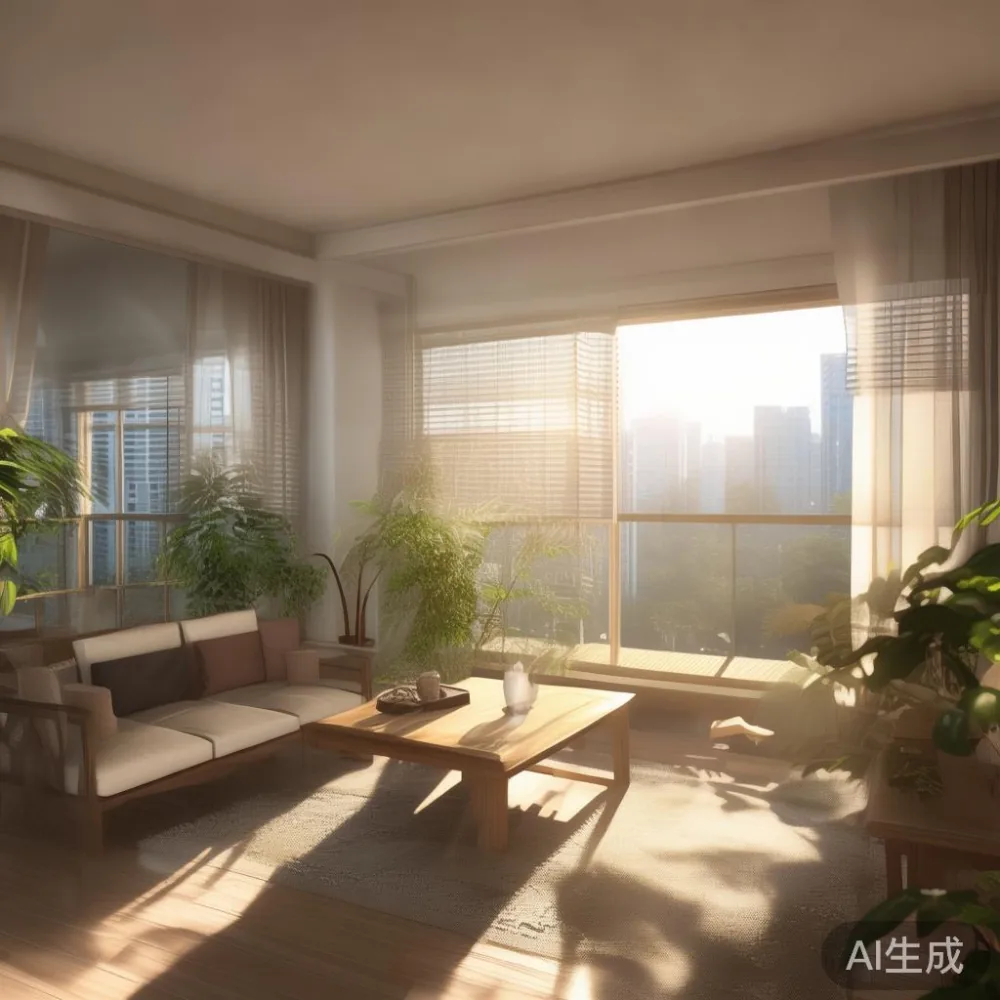
For Singapore buyers — whether you're a young couple in Tampines, a family in Bedok, or a new homeowner in Punggol — understanding what drives the price of solid wood furniture matters more than in most markets. Floor area here is small (typical HDB living room: 18–22 sqm), lift openings are narrow (often 0.9 m wide by 2.1 m tall in older blocks), and the outdoor patio — be it a balcony, a service yard, or a strata-titled roof deck — bakes in tropical humidity that punishes anything less than real, properly dried wood. Add the 8% GST (rising to 9% in 2024, and 9–10% in subsequent years depending on budget announcements) and the usual SGD 80–180 delivery surcharge for furniture, and a "cheap" patio set stops being cheap very quickly.
What is solid wood, exactly, and why does the label change the price so much?
Solid wood furniture is built from single pieces of sawn timber — not veneers, not particleboard, not MDF wrapped in a 0.6 mm oak skin. That distinction matters because solid wood can be sanded, refinished, and repaired over decades. A solid wood dining table can be refinished four to six times across its life (each sanding removes roughly 0.5–1.0 mm of surface), while a veneered table usually fails after one or two attempts because the decorative layer is only 0.3–0.6 mm thick.
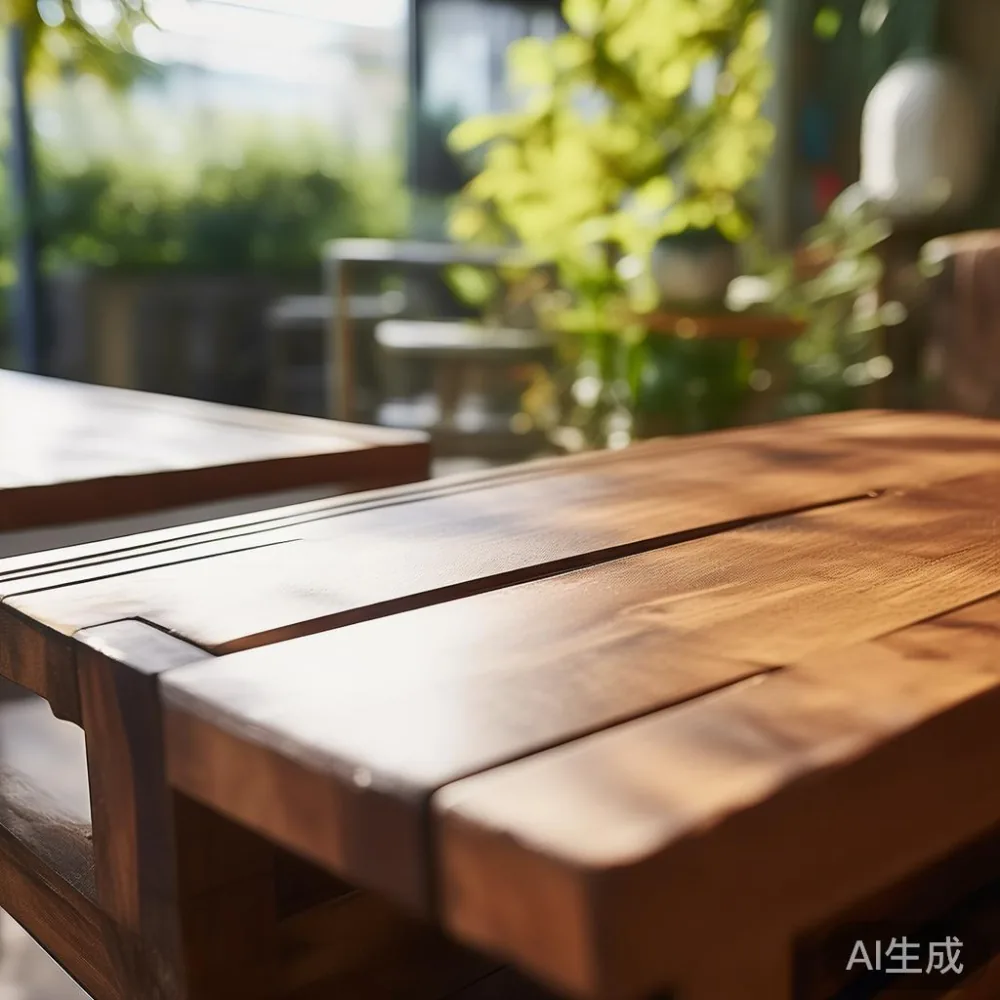
That structural advantage is also why the price tag looks bigger. A solid wood bed frame in king size can weigh 65–90 kg of actual timber; a comparable engineered-wood frame weighs 28–40 kg. You're paying for the volume of fibre, not the volume of air around glue.
The wood species — the single biggest price lever
Species accounts for roughly 30–45% of the final retail price on any solid wood piece. Here's a realistic range for the woods you'll most commonly see in Singapore outdoor patio and indoor settings:
| Species | Typical price per m³ (SGD-equivalent retail, finished) | Why the price sits there |
|---|---|---|
| FSC Teak (Burma/plantation) | SGD 4,200 – 6,800 / m³ | Natural oils resist rot; heartwood content 60–80%; can last 25+ years outdoors |
| White Oak (American) | SGD 2,800 – 4,100 / m³ | Tight grain, tannin-rich, popular in French light luxury and post-modern light luxury lines |
| Black Walnut (American) | SGD 3,400 – 5,200 / m³ | Cocoa-brown colour, low movement, used in American light luxury bed frames and dining tables |
| Rubberwood (acacia family) | SGD 900 – 1,400 / m³ | Byproduct of latex industry; eco-friendly but needs chemical treatment for outdoor use |
| Chinese Ash / Fraxinus | SGD 1,300 – 1,900 / m³ | Common in mid-tier solid wood sofas and nightstands; straight grain, takes stain well |
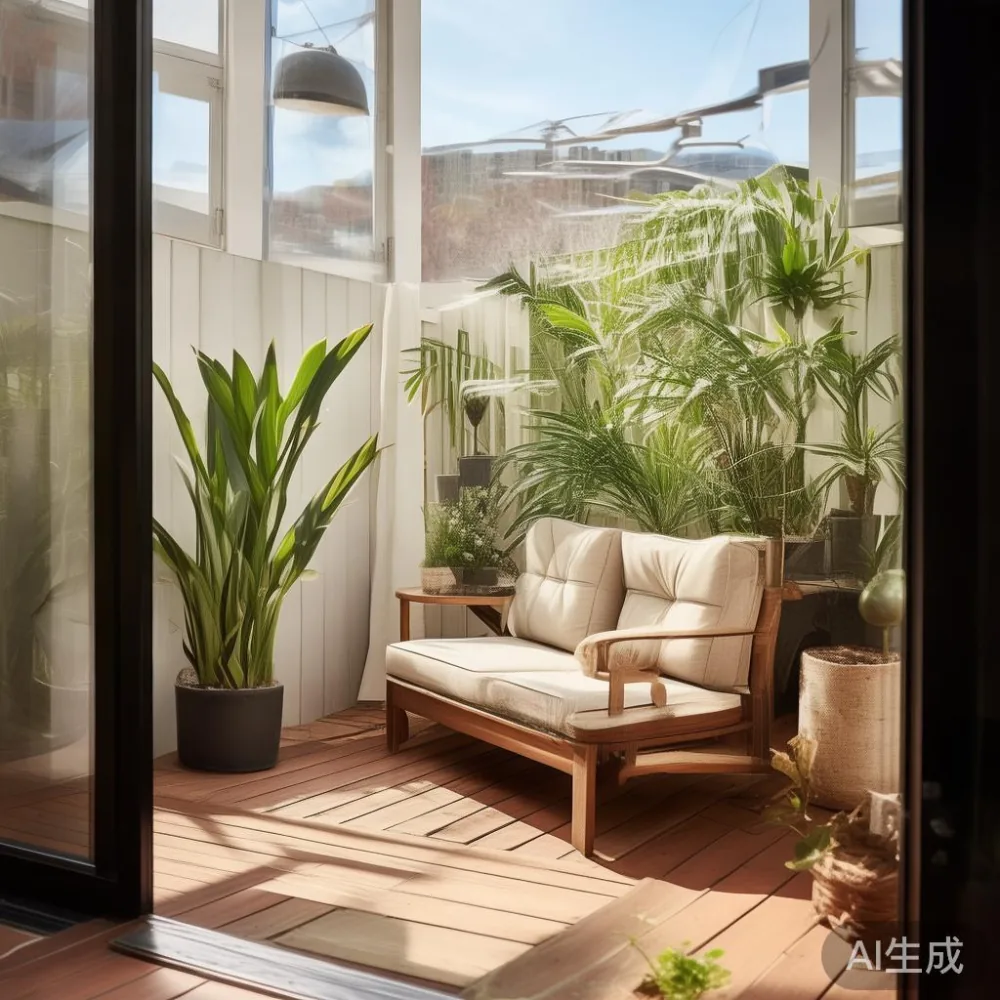
A four-seater outdoor patio dining set in teak can therefore land at SGD 3,500–5,800, while an equivalent ash or rubberwood set ships at SGD 1,200–2,000. The wood itself, not the brand or the marketing, is the lion's share of that gap.
Moisture content, kiln drying, and the Singapore climate
Singapore's relative humidity sits between 70% and 90% year-round. Wood for furniture should be dried to 8–12% moisture content for indoor pieces and 12–15% for outdoor patio pieces (a touch higher so it doesn't over-dry in your shaded balcony). Kiln drying is expensive: a 12,000-litre kiln running for 21 days on a 6 m³ charge uses roughly SGD 380–520 of energy. Some makers skip this step and air-dry instead, which can leave moisture content at 18–22% — and that's the piece that cracks open in your Tampines living room within six months.
My colleague ordered a solid wood outdoor patio bench from a small local workshop last year. The bench arrived with visible end-grain checking within eight weeks. The workshop explained the timber had been air-dried for only 40 days. He learned the hard way that kiln-dried wood costs more for a reason.
Joinery, hardware, and the hidden 15% of the price
Mortise-and-tenon joints, dovetail drawer boxes, and through-tenons on chairs cost more in labour but last longer. A typical solid wood sofa from a maker using traditional joinery requires 14–22 hours of bench work; one using dowels and staples takes 4–6 hours. That 3–4× labour difference often shows up as a 12–18% price premium.
Hardware counts too. A wardrobe with soft-close Blum or Hettich runners adds SGD 90–160 per pair over a basic roller runner. A solid wood bed frame with corner brackets and centre-rail supports rated for 350 kg adds SGD 70–120 over a knock-down bolt-together version. None of this is visible at first glance, but it determines whether the piece survives 10 moves or one.
Quick checklist of hidden build details that justify a higher price
- Kiln-dried to 8–15% moisture content (ask for the certificate)
- Mortise-and-tenon or dovetail joinery in load-bearing areas
- Through-tenons or corner blocks on chair legs and bed frame posts
- Soft-close hinges and runners on wardrobes and nightstand drawers
- FSC or PEFC certification for the timber (adds 6–10% but verifies source)
- Multi-layer marine-grade finish on outdoor patio pieces (3–5 coats, not 1–2)
How do I choose a entryway furniture for a HDB living room?
For a HDB living room in Singapore, choose entryway furniture that is solid wood, under 35 cm deep, and under 1.2 m wide so it clears the standard 0.9 m corridor width and 2.0 m door frame without tilting or disassembly.
That single sentence is the rule I'd give any friend in a 4-room BTO. Beyond the dimensions, look for a slim console table (typically 30 cm deep, 100–120 cm wide, 75–80 cm tall) that doubles as a drop zone for keys, a marble-top tray, and a lamp. Solid wood handles Singapore's humidity far better than engineered wood at the entryway, where shoes, umbrellas, and rain-soaked bags create constant moisture swings. Avoid anything taller than 1.2 m wide — you simply won't get it up the lift on moving day without removing legs. A good entryway piece here costs SGD 380–720 in solid wood, versus SGD 180–300 for the same shape in MDF.
Surface finishes, marble accents, and the "light luxury" premium
French light luxury — think pale oak, tapered legs, brushed brass handles — has become the most searched style in Singapore condo interiors over the last 18 months. American light luxury leans heavier: walnut, deeper cushioning, oversized solid wood bed frames (often 1.8 m or 2.0 m wide). Post-modern light luxury splits the difference with curved edges, fluted panels, and marble inlays on nightstands or dining tables.
A real marble top on a dining table adds SGD 600–1,400 to the price depending on whether it's Carrara (cheaper, more veining) or Calacatta (rarer, cleaner background). Marble tables also need sealing every 12–18 months in Singapore's climate — a fact that often surprises buyers who assume stone is maintenance-free.
For finishes, a quality outdoor patio set receives three to five coats of marine-grade oil or polyurethane, with sanding between each coat (320-grit, then 400-grit). That process alone accounts for 6–9% of the retail price but determines whether the set fades in eight months or in eight years.
Shipping, GST, and the Singapore-specific cost stack
A solid wood dining table that fits in a 4-room HDB has to travel from the Foshan workshop (about 4,100 km from Singapore by sea) through a 14–21 day ocean crossing, then a Singapore-side logistics partner, then a lorry that often must work through HDB carpark height limits of 2.1–2.3 m. That's why shipping is rarely free for individual pieces — though MIDHILL, for example, covers shipping on orders over US$350 (roughly SGD 480) and offers lifetime refinishing alongside a 10-year structural warranty, which together offset some of the freight risk for the buyer.
The full Singapore cost stack on an imported outdoor patio set typically looks like this:
- FOB factory price: 55–65% of the retail price
- Ocean freight + insurance (per m³, roughly SGD 220–340): 6–9%
- Singapore GST (8%, rising on schedule): 8–10%
- Last-mile delivery + lift-up surcharge (SGD 60–180 per trip): 3–6%
- Retail margin + showroom overhead: 15–22%
That breakdown is why a "USD 1,200" Chinese-made teak set lands at around SGD 2,400 in Singapore, not SGD 1,600. The wood didn't get more expensive at the border — the journey, tax, and last 50 metres through your corridor did.
Warranty, refinishing, and the long-tail price
A 10-year structural warranty sounds like marketing, but it has a hard cost. A maker offering that has to over-build joints by 15–20% because the warranty assumes real-world use, not showroom use. Lifetime refinishing, as MIDHILL offers, implies the wood is thick enough (typically 22–30 mm tabletops rather than 15–18 mm) to be sanded back multiple times. A 15 mm tabletop can usually be refinished once before the edge profile starts disappearing; a 28 mm one can handle three or four refinishes across 30+ years.
Cheaper pieces often use 12–15 mm tops and skip the warranty entirely. The upfront saving of SGD 200–400 evaporates the first time the top cups from humidity or the corner block cracks — and there is no one to call.
What does a realistic Singapore price look like across categories?
For buyers budgeting a full solid wood home in 2025/2026, the realistic Singapore retail ranges are:
- Solid wood sofa (3-seater, fabric upholstery): SGD 1,800 – 3,800
- Solid wood bed frame (king size, with headboard): SGD 1,400 – 3,200
- Solid wood dining table (6-seater, rectangular): SGD 1,600 – 4,500; marble top version adds SGD 800 – 1,800
- Wardrobe (3-door, 1.8 m tall): SGD 2,200 – 4,800
- Nightstand (pair, with two drawers each): SGD 480 – 1,100
- Outdoor patio 4-seater dining set (teak): SGD 3,500 – 6,000
If you see prices 40–60% below these ranges, something is being given up — usually wood thickness, kiln drying, or hardware quality. None of those compromises is visible on day one, but all three show up by year three.
Is a higher price always better?
No. A 60% premium over a credible mid-tier maker usually buys you aesthetics and brand cachet, not durability. The real value curve flattens between the "kiln-dried, FSC-certified, mortise-and-tenon" tier and the "premium designer label" tier. For a Bedok family furnishing a 4-room HDB, the smarter move is to spend on the bed frame and the outdoor patio set (the two pieces you'll keep longest and use hardest) and save on the nightstand or the entryway console, where a SGD 480 piece will genuinely look and feel like a SGD 700 one for the first decade.
For readers hunting internationally, the same principle applies: when comparing a Japandi sectional sofa canada listing against a Singapore retail equivalent, check the kiln-dried certification, the joinery photos, and the warranty terms — not the rendered lifestyle images. A Japandi sectional sofa canada advertised at SGD 2,200 with full FSC paperwork and a 10-year frame warranty will outlast a SGD 1,400 Singapore-floor-stock alternative with stapled joinery, regardless of where it ships from.
Practical checklist before you click "buy"
- Confirm wood species in writing, not in a marketing photo
- Ask for moisture content (8–15%) and FSC/PEFC certification
- Measure your lift opening (width × height) and your corridor — including the turn at the top
- Add 8% GST plus SGD 80–180 delivery to the listed price for a true Singapore landed cost
- Check the warranty length in years, not months — anything under 5 years on a structural claim is a red flag
- For outdoor patio pieces, confirm the finish is marine-grade and re-coatable, not a single spray of lacquer
Solid wood furniture is one of the few home purchases where paying more upfront actually saves money over 15–25 years. The trick is knowing which line items on the price tag are real (kiln drying, FSC wood, mortise-and-tenon, multi-coat finish, longer warranty) and which are decoration. Once you can tell those apart, the price of solid wood furniture stops looking mysterious — and starts looking like a set of engineering choices you can read on a spec sheet.