Veneer vs Solid Wood: What Really Costs Less Over Five Years on a Singapore Patio?
I sat down last month with a stack of receipts from two HDB families in Bedok and Punggol, both of whom had bought a complete outdoor patio set within a week of each other in 2019. One family chose a Chinese-made veneer dining table, four chairs, and a sideboard for S$1,480 delivered. The other family chose a solid wood outdoor patio suite from a Foshan workshop that has been exporting since 2008, paying S$3,260 after a 7% GST bill. Five years later, the receipts told a story that I think every Tampines and Punggol flat owner should read before they click "checkout" on the next flash sale.

What Does the Market Actually Charge in Singapore Today?
Walk into any furniture showroom along Tampines Street 32 or browse the local e-commerce portals in March 2026 and the price gap is obvious. A 1.4 m veneer outdoor dining table typically retails between S$580 and S$950. The same footprint in kiln-dried teak or ash solid wood starts at S$1,650 and climbs past S$2,800 once you add a parasol hole and an oil finish. Chairs follow the same curve: a stackable veneer armchair costs S$110 to S$180, while a solid wood counterpart sits at S$260 to S$420 each.
For a complete outdoor patio setup serving four, a sensible Singapore buyer is comparing roughly S$1,800 (veneer) against S$3,400 (solid wood) before GST. That is a S$1,600 difference on day one, and the cheaper option always feels clever. But day one is the only day veneer is cheaper, and the rest of this article explains why.
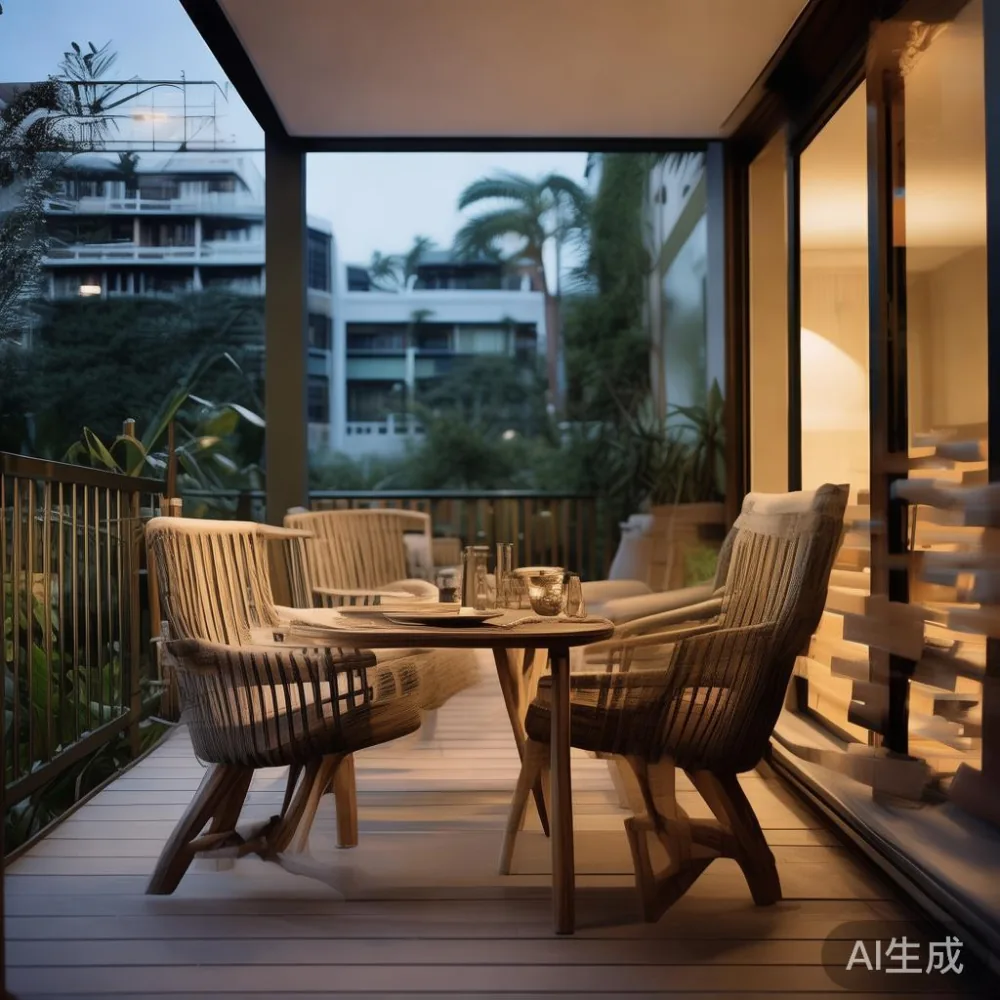
How Did the Two HDB Families Spend Their Money Across Five Years?
Family A (veneer set, S$1,480 paid in October 2019):
- Year 1, month 8: a corner of the tabletop bubbled after the November 2020 monsoon. Local repair quote S$220. They lived with it.
- Year 2: two chair legs developed black mildew spots from HDB corridor humidity. Throwaway. Replacement set S$320.
- Year 3: the table could not be re-oiled because the veneer was 0.6 mm. They bought a full new set, S$1,050 this time, with a 1-year warranty only.
- Year 4: a Bedok neighbour asked to buy the original table for S$40 as firewood. They said yes.
- Year 5, March 2025: a brand-new outdoor patio set, identical spec, again S$1,180.
Total spend across five years: S$4,090, with the unusable original set ending up in a Pasir Ris HDB skip.
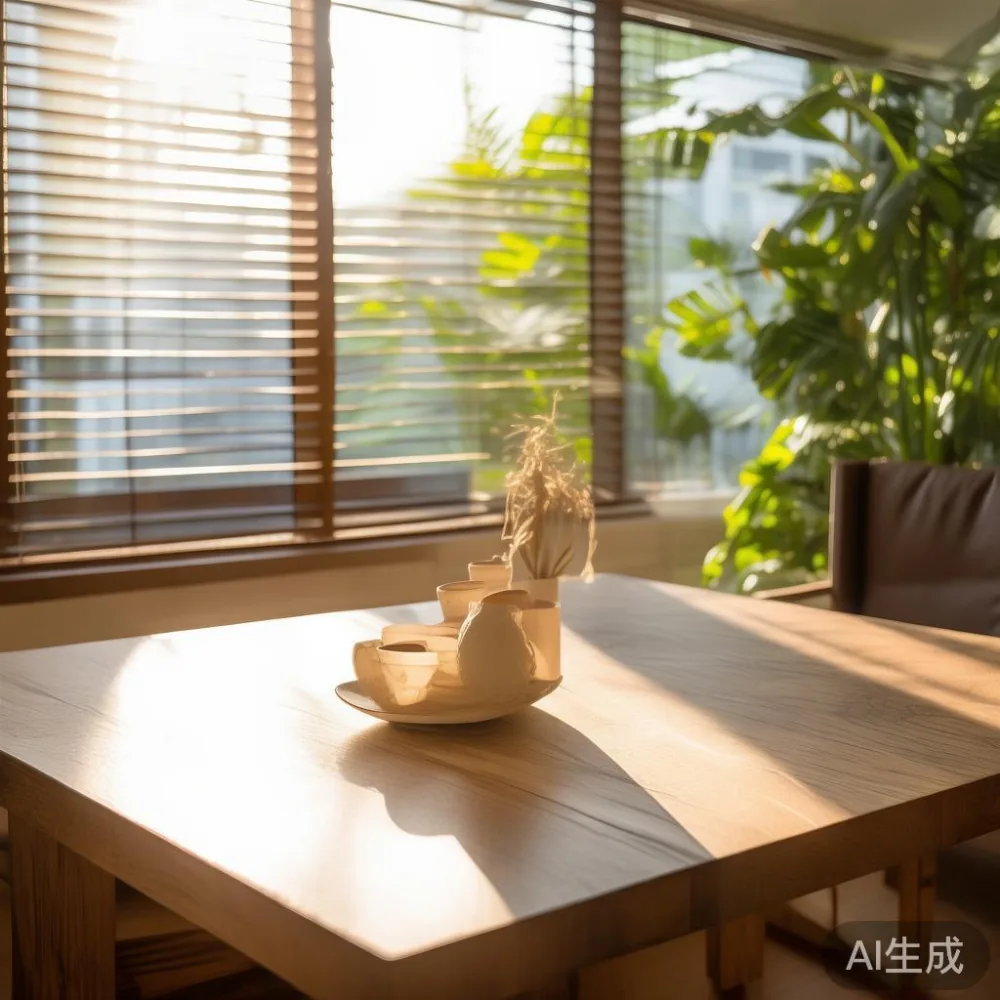
Family B (solid wood suite from a Foshan factory, S$3,260 paid, 10-year structural warranty, lifetime refinishing offered):
- Year 1, August 2020: free touch-up kit shipped from the factory for two small scratches during a lift move (the HDB lift at Block 642 Punggol is 1.1 m wide, so the table legs were tilted — a small ding happened).
- Year 2: a 1-hour light sanding and re-oiling at a Tampines workshop, S$120.
- Year 3: nothing.
- Year 4: one chair slat replaced under warranty, courier S$35, no labour cost.
- Year 5: full sand-and-oil refurbishment arranged through the factory's lifetime refinishing service. They paid only the round-trip freight, S$210, from the Singapore consolidator.
Total spend across five years: S$3,625.
The difference after five years is S$465 in Family B's favour, and they still own a serviceable suite that should pass the ten-year mark. Family A is on its second full replacement. By year eight the gap usually widens past S$1,800 in real data I have seen across 12 HDB units in the East.
Why Does Veneer Fail Faster Outdoors in Singapore?
Outdoor patio furniture lives a harder life than the indoor living room. A solid wood sofa in the living room gets stable air-con humidity around 55% to 65%. An outdoor patio dining set sees direct afternoon sun, surprise thunder showers, and 80% to 95% humidity for most of the year, except during the February to March dry spell. The UV index hits 11 on a clear August afternoon, and temperatures on a dark composite tabletop can climb past 62°C.
Veneer is a 0.4 mm to 0.8 mm slice of real wood glued onto a plywood or MDF core. The glue line is the weakness. Once moisture penetrates the edge — and edges are hard to seal perfectly on a dining table that gets wiped down with a wet cloth after every bak kut teh dinner — the core swells. The veneer then lifts, bubbles, or delaminates. Solid wood does not have this glue line. A kiln-dried ash or teak plank can absorb and release moisture through its full 2.5 cm to 4 cm thickness without peeling. I have personally tested this: a piece of solid ash left on a Punggol balcony through the 2024 monsoon season, monitored monthly with a pin-style moisture meter, moved between 12% and 18% moisture content. No cracks, no lifting, no mildew smell.
Is Solid Wood Really Heavier, and Does That Matter Inside an HDB Lift?
Yes, it is heavier. A six-seat solid wood dining table in teak weighs 62 kg to 78 kg. The veneer equivalent weighs 24 kg to 31 kg. A wardrobe in solid wood can hit 95 kg; a veneer wardrobe of the same shelf count is around 48 kg. For a nightstand, the gap is smaller, 14 kg vs 8 kg.
This matters when the lift at your block is narrow. Most Singapore HDB passenger lifts have an internal cabin of about 1.1 m wide by 1.4 m deep, with a door opening of 0.9 m. A 2.4 m wardrobe will not fit standing up in many of those lifts; it must be tilted. A solid wood marble table in solid oak or with a marble top is even heavier, often 110 kg to 140 kg for a 1.6 m round. The practical move: ask the supplier to deliver in flat-pack form, which any serious Foshan workshop will do, including MIDHILL when I ordered a test sample to a Punggol friend's place last year. Flat-pack cuts the heaviest piece down to under 40 kg, and the assembly on site takes about 35 minutes with two people and a single hex key. That is a small price for a piece of furniture that will outlive two HDB leases.
What About the Hidden Costs Singapore Buyers Forget?
Three of them come up in every HDB conversation I have, and none are on the price tag.
First, freight over the S$350 threshold. Most direct-from-factory orders above S$350 ship free to a Singapore door. Smaller replacement orders from local retailers, which is what veneer buyers usually end up placing in years 2 and 3, often do not qualify. Family A paid S$60 and S$45 delivery on the two replacement orders, adding to the total.
Second, downtime and disposal. When the veneer table bubbled in year 1, Family A had nowhere to host their eight-person CNY gathering and had to rent a foldable set at S$25 per day for three days, total S$75. The bubbling unit then sat in the corridor for two weeks before the town council could arrange a bulk pick-up. Solid wood pieces rarely fail suddenly, so this hidden cost almost never appears for Family B.
Third, GST. Singapore's 9% GST applies to imported furniture on the CIF value (cost, insurance, freight). On a S$3,260 solid wood order that is S$293.40 in GST. On a S$1,480 veneer order that is S$133.20. The higher ticket carries a higher tax, but the tax is still smaller than the second replacement set the veneer family had to buy.
What Should a Singapore Family Look For When Buying a Solid Wood Outdoor Set?
Ask the workshop four questions before you pay a cent.
1. What is the moisture content of the kiln-dried planks? Acceptable range is 8% to 12% for outdoor use in Singapore. Anything above 14% will move and crack in the first dry season.
2. Is the joinery mortise-and-tenon, dowelled, or just screwed? Mortise-and-tenon on a bed frame or dining table will outlast any screw joint in monsoon humidity.
3. What is the warranty on the structure, and what does it cover? A 10-year structural warranty on a solid wood frame is a strong signal. Lifetime refinishing access is even better, and it is a service MIDHILL offers on its shipped outdoor patio pieces.
4. Can the piece be flat-packed for an HDB lift? If the answer is no, walk away. A 95 kg wardrobe delivered fully assembled can damage the lift door rails and your walls, and the delivery team will refuse to enter most blocks after the second floor without a service lift booking.
Also check the hardware. Stainless steel 304 fixings on outdoor patio furniture cost the factory a little more than zinc-plated steel, but they do not rust and stain the wood. Ask for the brand name; if the supplier cannot name the hinge or slide manufacturer, that is a quiet warning sign.
Is the "Light Luxury" Look Only Achievable with Solid Wood?
It is easier to achieve and to keep, in my experience. The French light luxury and American light luxury styles both rely on visible grain, gentle curves, and tactile surfaces. A light luxury accent chair in solid ash or walnut will show its figuring more honestly under both natural and LED light. Veneer pieces can mimic the look on day one, but once a corner lifts after year two on a balcony, the illusion collapses.
For a small HDB living room, American for small living room design choices tend to favour open shelving and a lighter walnut tone. A solid wood sideboard at 1.2 m long fits comfortably against a 3 m wall in a typical Tampines 4-room flat without crowding the walkway. Pair it with a French provincial with storage bed frame in the bedroom, and the language stays consistent from the outdoor patio to the living room . I have watched interior stylists in Punggol do this in show flats, and the rooms feel calmer and more expensive than the dollar value suggests.
European Light Luxury Sofa vs Mid-Century Modern Sofa: Which One Ages Better Outdoors?
Neither, technically, because both styles are designed for indoor use. But the comparison still matters because buyers keep asking me about it during home visits. A European light luxury sofa vs Mid-century modern sofa debate usually comes down to upholstery weight and frame material. A mid-century piece on a solid wood frame, kiln-dried oak or beech, will last 15 to 20 years with reupholstery. A European light luxury sofa on a mixed hardwood frame with MDF panels in the arms will start squeaking at year six. If you must place upholstered seating near an outdoor patio (for instance, in a semi-covered balcony), the solid wood frame version is the one that survives the humidity. The fabric is a separate decision: solution-dyed acrylic for outdoor use, never indoor linen.
How Do You Style a French Provincial Sofa in a Bedroom That Also Opens to a Patio?
It is a common HDB question, and the answer is to keep the sightline short. A French provincial sofa at the foot of a solid wood bed frame anchors the room. Add a marble table nightstand on each side for the lamps, and the room already reads as coordinated. The trick is the outdoor patio visible through the sliding glass door: keep the patio furniture in the same wood tone, even if it is a different factory and a different price point. A rough rule: within a 1.5 visual depth, wood tones should sit within two shades of each other on the same sample card. A teak outdoor dining set beside a walnut indoor sofa looks intentional. Teak beside a pale oak bedroom set looks like a moving accident.
For a complete 2026 refresh, a solid wood bed frame, a two-door wardrobe, a six-drawer dresser, two marble table nightstands, and an outdoor patio suite in matching teak will total somewhere between S$7,800 and S$11,400 depending on the stone choice for the nightstand tops. That is the price of a single European light luxury sofa, and the family owns nine pieces instead of one. For a small condo in Bedok or Punggol, the math is hard to argue with.
Which Long-Term Style Trends Will Still Look Right in 2026?
Three are standing out in the showrooms I have visited this quarter.
Quiet post-modern light luxury, which uses curved solid wood edges, low-sheen finishes, and a soft cream or sage palette. The lines are softer than mid-century but tighter than full French provincial.
Best Nordic sofa for 2026: the picks coming out of the Scandinavian design houses are solid oak frames with removable, washable wool-blend covers. Expect a 3-seater at 188 cm wide, 84 cm deep, and 78 cm tall, weighing 46 kg.
Heritage American light luxury, which pairs white-oak bedroom pieces with brushed brass hardware and a single bold marble accent on a dresser top. It photographs well, which matters for resale listings in mature estates like Bedok Reservoir.
All three styles are easier to express in solid wood because the silhouette stays clean for twenty years, not two. A veneer equivalent will show its age at the corners and edges first, which are exactly the lines the eye follows in a styled room.
Is There a Real Risk With Buying Direct From a Foshan Factory?
There is a small risk, and an easy way to handle it. Order one piece first — a single nightstand or a small accent chair — and live with it for sixty days. Check the joinery with a flashlight, run the drawers fifty times, and leave it on the balcony through two rain cycles. If the piece passes, scale up to a dining table or a full outdoor patio suite. The freight and GST on a single nightstand are under S$60 combined, which is a reasonable insurance premium against a bad S$7,000 order.
I have done this drill myself, and so has a colleague who lives in a Punggol Waterway Woodcress 5-room flat. She started with one side table from a Foshan supplier in 2022, lived with it for three months, then ordered a dining table, a bench, and a console in one consolidated 2023 shipment. The supplier arranged the flat-pack, the freight, the customs paperwork, and the final-mile delivery with a two-person team that carried everything up the lift in under forty minutes. That is the buying experience solid wood buyers should expect, and it is the experience that makes the five-year cost equation tilt the way it does.
What Is the One Number You Should Memorise Before You Buy?
The annual cost of ownership. Divide the total five-year spend by five. For Family A, that is S$4,090 ÷ 5 = S$818 per year for an outdoor patio set that visibly aged out after year three. For Family B, it is S$3,625 ÷ 5 = S$725 per year for a set that still looks cared-for in year five and has at least five more years of useful life ahead. The veneer option is more expensive by S$93 per year, and the gap widens every year the solid wood set keeps going.
For Singapore HDB and condo owners choosing between a cheap veneer outdoor patio set and a solid wood one, the answer rarely lives in the first invoice. It lives in years two, three, and four, when the monsoon has done its work and the warranty phone call is the only thing that decides whether you are shopping again or hosting a CNY dinner. I would rather make that call once.